

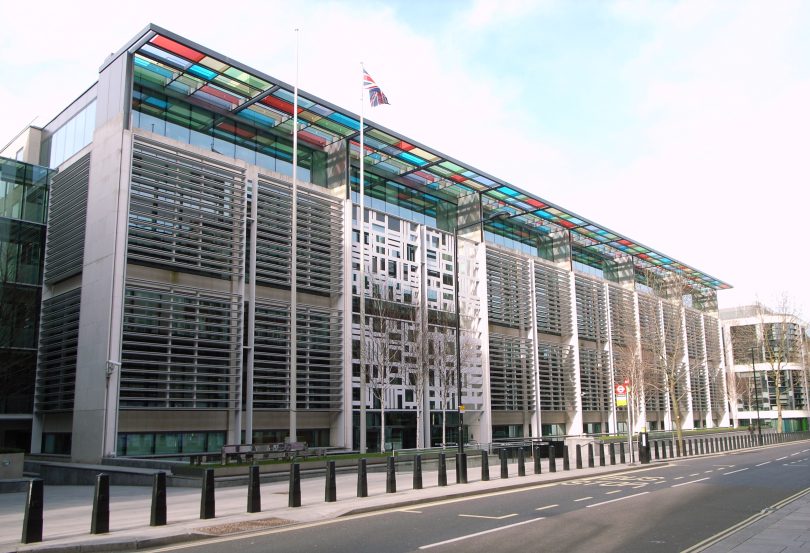

In September 2024 History Reclaimed was contacted by a civil servant who told us about a history course in the Home Office that civil servants were effectively obliged to attend. Ostensibly about the history of migration and diversity in Britain, it was full of distortions and errors about British history in general. We wanted to find out more about the course and submitted Freedom of Information requests to release the course documentation. These were denied and we published the lengthy and specious response from the Home Office justifying their refusal in an article entitled ’The Home Office and the Distortions of History’ https://historyreclaimed.co.uk/the-home-office-and-distortions-of-history/
The issue was picked up by a journalist, Camilla Turner of the Daily Telegraph, who found ways of accessing the documents and published an article about the course which you can read here: https://www.telegraph.co.uk/
The Rt. Hon. Yvette Cooper, MP
Home Office,
2 Marsham St,
London SW1P 4DF
Dear Home Secretary,
We are writing to you to raise concerns about a Home Office course in British History which has been brought to our notice. We are historians with extensive experience of teaching in the History Faculties in Cambridge and Oxford. We represent other historians, authors and subscribers in an organisation called History Reclaimed (www.historyreclaimed.co.uk) which seeks to combat historical distortion and misrepresentation.
While we would welcome civil servants being seriously taught the history of the country they serve, we are very concerned by what we have seen of the course, which forms part of the training on ‘serving diverse communities’. Not only is it intellectually impoverished and full of elementary inaccuracies but it also presents Britain’s colonial past as purely exploitative and prejudicial. It omits discussion of the many beneficial and humanitarian aspects of the empire; it distorts the economic history of modern Britain; and it falsifies the history of migration. Not least, in its listing of immigrant groups who now form part of the nation (sometimes confusing invasion with immigration) it overlooks the important arrival of Jewish refugees from tsarist Russia and Nazi Germany. Jews made up the largest ethnic group in the United Kingdom in 1939. If this omission is inadvertent, it is serious; if it is deliberate, it is scandalous.
The course is focused on slavery and colonialism and presents the common error that Britain’s economic prosperity since the eighteenth century was solely based on these factors. There seems to be no mention of the Industrial Revolution and the real sources of British wealth: the coal, iron, engineering, textile and shipbuilding industries, for example. Nor is there any discussion of the ways in which British technological, medical and scientific developments transformed the modern world, making it possible to sustain billions of people at much higher standards of living than at any time in history.
Nor does the course mention the anti-slavery movement in Britain which emerged in the 1780s and became the largest mass movement up to that time in British history. The teaching material is premised on British ideas of racial superiority when, in fact, thinking was much more complex and egalitarian. The anti-slavery movement, whose petitions were signed by hundreds of thousands of people, was led by Christian evangelicals and Quakers who believed that everyone was equal in the eyes of God. Its most famous emblem was the slave medallion mass-produced by the Wedgwood firm inscribed with the words ‘Am I not a man and a brother?’ Far more people owned one of these than had anything to do with slavery.
There are serious errors of fact. For example, the course claims that 22.6 million Britons left these shores between 1815 and 1914 when the correct figure, including Irish migration after the famine of the 1840s, was 8 million. It is also claimed that India’s share of global GDP fell from 27% in 1700 to 3% in 1947 which is presented as the fault of British colonialism. In fact, this was a function of the prior industrialisation of many other parts of the world where productivity was greatly enhanced as compared with India. There is no mention of India being by 1947 Asia’s leading industrial economy.
While the document we have seen lists the benefaction made by Christopher Codrington, a slaveholder, to All Souls College, Oxford on his death in 1710, it does not mention his much larger gift that founded Codrington College in Barbados, where black students have been taught for generations and which was linked to Durham University for a century. As this particular example demonstrates in a small way, the history of colonialism is complex and nuanced. But this history course has made no effort to explain that complexity to civil servants: on the contrary, its propagandistic tone is a barrier to understanding.
Like any national history, Britain’s has had its moral failings, injustices and lapses. But those must be understood in the context of periods and people who thought differently from us. Hindsight, and the judgments it gives rise to, is easy, but it distorts the past.
British history must also be balanced by consideration of the many beneficent and generous acts that also define the British experience. Not only is the anti-slavery movement completely omitted but there is no mention of the West Africa Squadron which, for more than half a century after the slave trade was abolished in the British empire in 1807, patrolled the Atlantic in the suppression of the slave trade continued by other nations. Nor is there mention of British attempts to cajole other American, European and African nations into ending slavery. Nor does the document discuss our suppression – often at the request of Africans – of the slave trade within African tribal groups who enslaved each other into the twentieth century. The effective efforts made by the British to combat the appalling Arab slave trade in central and eastern Africa is completely ignored.
Britain has made enormous, positive contributions to the modern world, not least through its successful practice of parliamentary democracy, in which you, Secretary of State, play a daily role. Many Commonwealth nations follow that parliamentary model with great success. Any well-constructed survey of British history must include these examples also, rather than distorting the past to support divisive ideological propaganda.
If it is thought necessary to teach British history to Home Office civil servants we hope you will ensure that it is well-taught, by experts rather than activists, and that it draws upon accurate and balanced information. The present course is a disgrace to a great department of state.
Yours faithfully,
Professor Robert Tombs (Fellow, St. John’s College, Cambridge)
Professor David Abulafia CBE, FBA (Fellow, Gonville and Caius College, Cambridge)
Professor Lawrence Goldman (Emeritus Fellow, St. Peter’s College, Oxford)

This is Suella Braverman’s tweet:
https://x.com/suellabraverman/status/1870401437273870492?s=48
As she writes:
‘As Home Secretary I was appalled by the mandatory training that Home Office civil servants had to undergo. It was a waste of time, a bad use of taxpayer money and fundamentally wrong. I went through it personally to find tonnes of material criticising the British Empire in a wholly unbalanced way, presumptions of ‘white privilege’ and ‘unconscious bias’ and recommended books written by left-wing academics supporting these damaging ideas.
I embarked on a programme of work to scrap it all. There was a lot of resistance. I was told I would be “on the wrong side of history” for doing so. I ploughed on but left office before the work was complete: a win for the senior civil service! This needs to stop. Civil servants are supposed to deliver ministerial instructions, not engage in left-wing activism.’


