

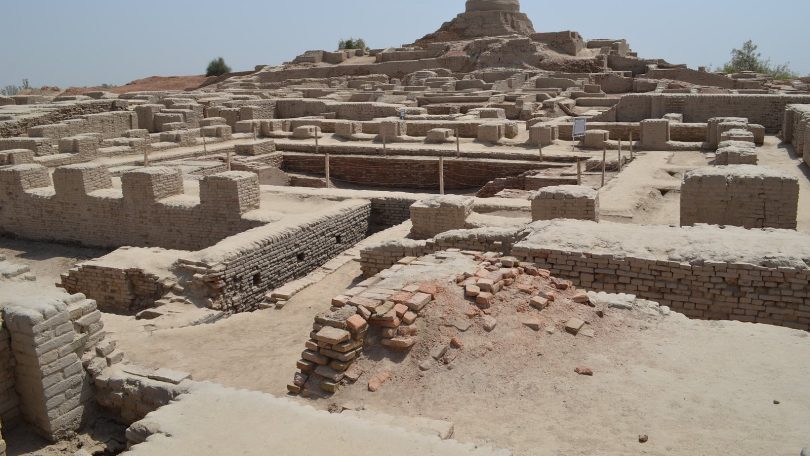

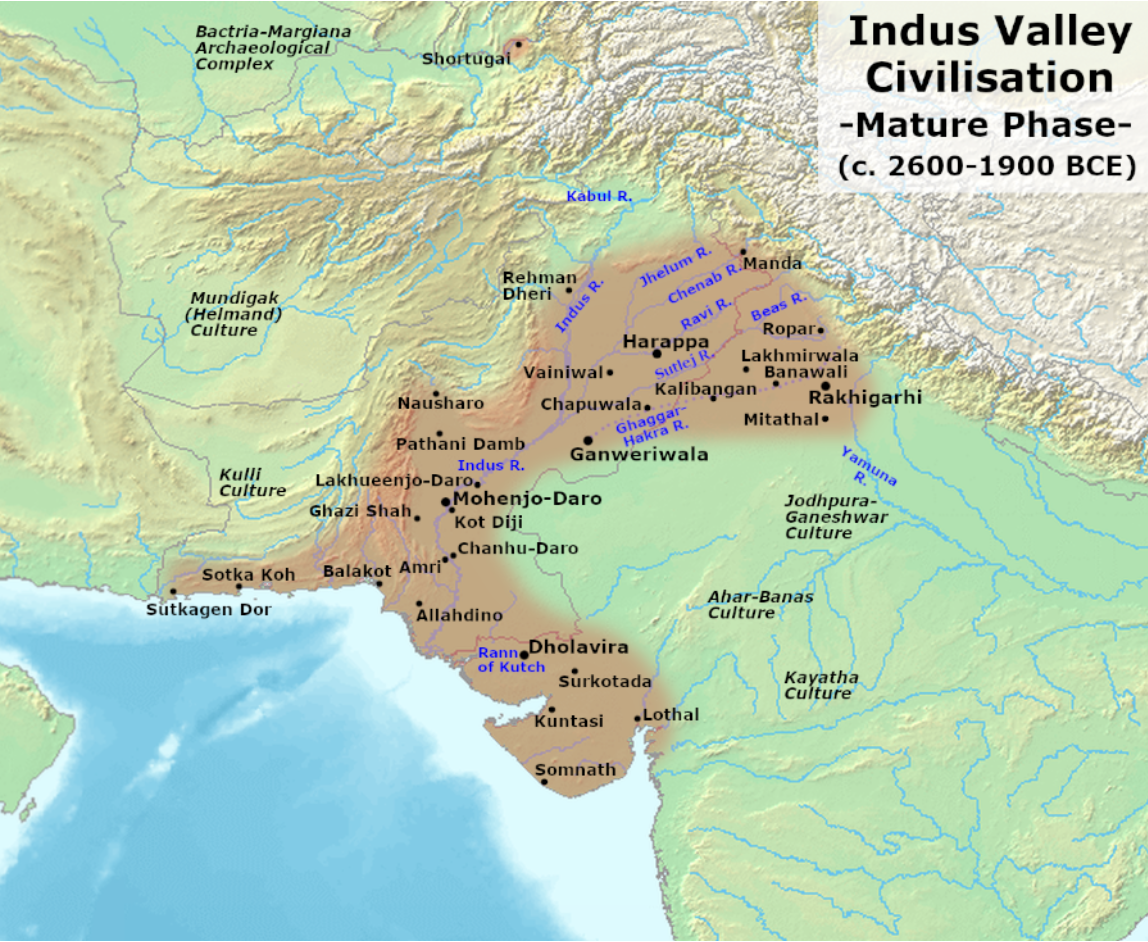
A century ago archaeologists working in India for the Archaeological Survey of India (ASI) made one on the most astounding archaeological discoveries in history when they discovered the Indus Valley civilisation. The discovery was announced to the world by Sir John Marshall, the Director General of the ASI, in the Illustrated London News on the 20 Sept 1924. His excitement at the discovery can be seen, and its significance described, in his article which begins:
‘Not often has it been given to archaeologists, as it was given to Schliemann at Tiryna and Mycena, or to Stein in the deserts of Turkestan, to light upon the remains of a long-forgotten civilisation. It looks, however, as if we are on the threshold of such a discovery in the plains of the Indus.
Hitherto India has almost universally been regarded as one of the younger countries of the world. Apart from Palaeolithic and Neolithic implements and such rude primitive remains as Cyclopean walls of Rajagriha, no monuments of note were known to exist of an earlier date than the third century BC, when Greece had already passed her zenith and when the mighty empires of Mesopotamia and Egypt had been all but forgotten. Now, at a single bound, we have taken back our knowledge of Indian civilisation some 3000 years earlier and have established the fact that in the third millennium before Christ, and even before that, the people of the Punjab and Sind were living in well-built cities and were in possession of a relatively mature culture with a high standard of art and craftsmanship and a developed system of pictographic writing’.
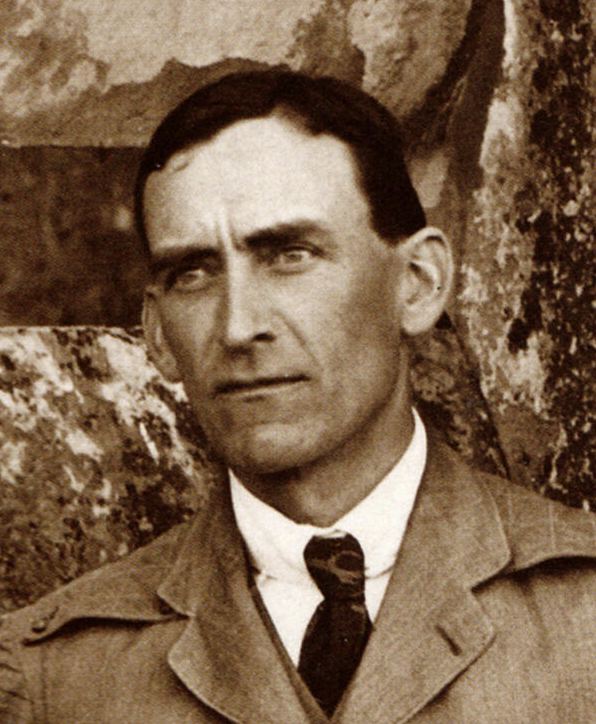
The sites of these discoveries are at Harappa in the Punjab and Mohenjo-Daro in the Sind provinces. Harappa was earlier visited by Sir Alexander Cunningham, the first Director-General of the ASI, in 1872-3. He described it as ‘the most extensive of all the old sites along the banks of the Ravi (river)‘. He found several artefacts including a number of stone implements but his most intriguing discovery was a seal of smooth black stone, engraved with a ‘bull’ and a line of inscription in pictographic characters above the figure. The seal was purchased by the British Museum and Marshall had seen the seal in London before he was appointed to head the ASI in 1902.

After his appointment he arranged for several of his colleagues in the ASI to survey the site. In 1914 Harappa was inspected by H Hargreaves who suggested that the site should be excavated and part of it was purchased under the Ancient Monuments Preservation Act. Excavations were started by Daya Ram Sahni in 1921 who unearthed many artefacts including two seals similar to the ones noted by Cunningham fifty-two years earlier. At this stage came the astounding discoveries made by R D Banerji at Mohenjo-Daro, four hundred miles away in 1922. The remains of an ancient city, hidden by a series of mounds, were found embracing an area of about 240 acres with every indication that originally it must have been more extensive.
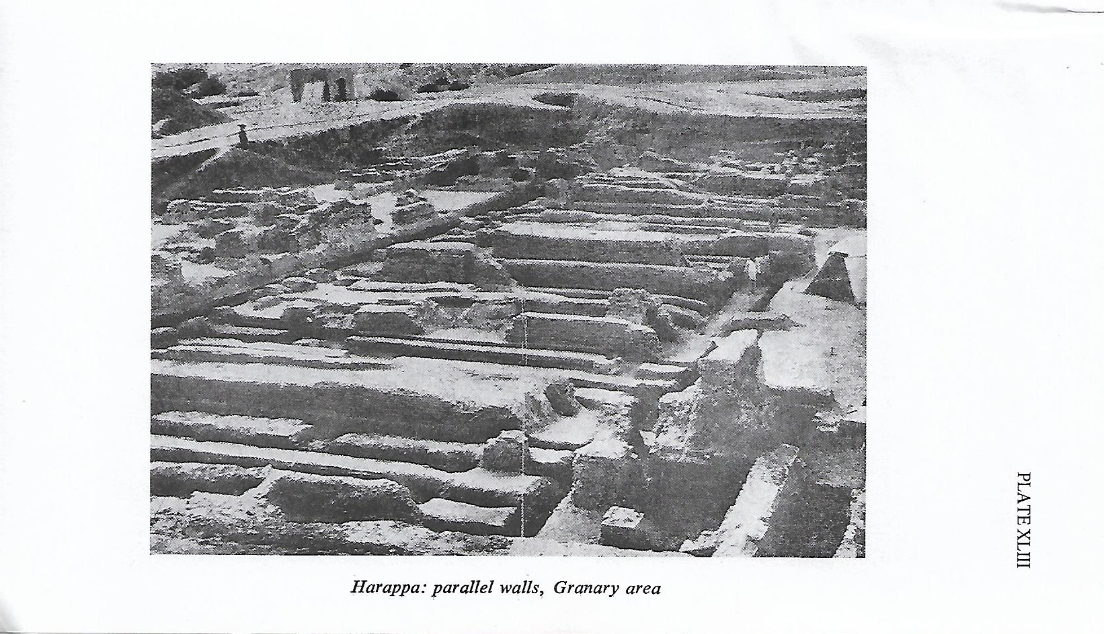
The discoveries at Harappa and Mohenjo-Daro convinced Marshall in 1924 that ‘they belonged to the same stage of culture and approximately to the same age, and that they were totally distinct from anything previously known to us in India’. This led to the announcement in London.
Marshall organised further excavations at the sites and they brought to light a highly sophisticated Bronze Age civilisation, with densely populated cities, carefully planned with harmonious rows of brick houses and streets crossing each other at right angles. These were elaborately furnished with wells, drains, bathrooms and other sanitary arrangements. There were highly skilled industries which were organised, standardised and controlled by a central authority.
Further evidence of a highly cultured society was pottery painted with a black design and, finally, by a pictographic script, the use of which was probably limited to a ruling minority. There were no large structures or palaces. This suggested that there was no royalty and that their society was egalitarian.
The anniversary was reported extensively in the Indian press in 2024 with considerable coverage given to Marshall’s role. A film on the discovery has also been produced ( https://www.youtube.com/watch?v=Yp-ec-7n-AA) as well as a summary of Marshall’s achievements (https://www.harappa.com/content/john-marshall). The Indus Valley civilisation is of special interest in Tamil Nadu as research suggests that the Indus Valley language and culture had Dravidic roots in common with those of peoples of Southern India.
A 3-day conference on the ‘Discovery of Indus Civilisation – Centenary’ (https://indus100.com/) was held in Chennai in January 2025. The Chief Minister of Tamil Nadu, Mr M K Stalin, has announced that a life-size statue of Marshall will be erected in in the state.
It is disappointing that in Britain there has not been any coverage of this outstanding colonial discovery or of Marshall’s role in it. This is probably due to a combination of ignorance and the political correctness that permeate our academic institutions and media. Hopefully, this paper will enable readers to experience some of Marshall’s excitement a century ago.
References
Sir John Cumming (1939) Revealing India’s Past (The India Society).
Sourindranath Roy (1961) The Story of Indian Archaeology 1784 -1947 (Archaeological Survey of India)
Hrithik Kiran Bagade (02 Oct 2024) ‘Walking with the Harappans’, The New Indian Express
Divya Chandrabahu, (21 Sept 2024) ‘British Archaeologist’s Statue to Mark 100 years of Discovery of Indus Valley Civilisation’,Hindustan Times


