


Dear History Reclaimed,
Professor Robert Tombs writes that “an extraordinary number of Scottish officers ran the Army from the 18th century onwards. Many were successful, including Archibald Wavell, who came from a Black Watch family, and as the last effective Viceroy of India sorted out the appalling Bengal Famine … Scottish lairds were vastly over-represented as governors and viceroys, and legions of middle-class Scots served as colonial administrators, engineers and doctors … One of the most dutiful of proconsuls, the 8th Earl of Elgin, went from governing Canada (where he was pelted by a Tory mob) to China and then to India as Viceroy, where he died on tour after a heart attack crossing a rickety wooden bridge. His son also became Viceroy.”
Perhaps the most interesting thing of all is that the longest-serving Viceroy of India (as well as the tallest) was also Scottish. Victor Alexander John Hope, second marquess of Linlithgow served as the Crown’s antepenultimate representative in New Delhi from 1936 to 1943 (when he was succeeded by the aforementioned Lord Wavell) — having been chosen, as his biography in the ODNB explains, for having “developed a close knowledge of India as chairman (1926–8) of the royal commission on agriculture in India and, importantly, as chairman (1933–4) of the joint select committee on Indian constitutional reform” (the labours of which eventuated in the Government of India Act 1935, the longest statute ever to have come out of Westminster until the advent of the Greater London Authority Act 1999).
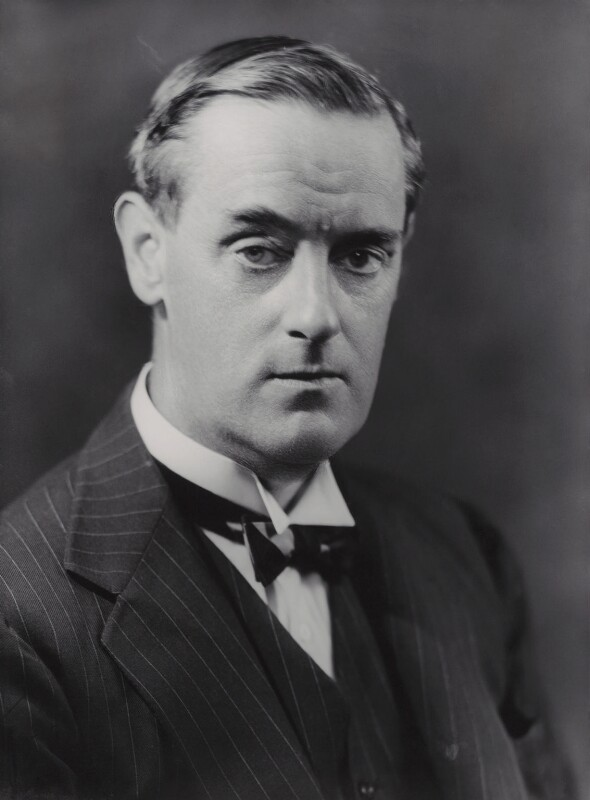
Victor Alexander John Hope, 2nd Marquess of Linlithgow, KG, KT, GCSI, GCIE, OBE, TD, PC, FRSE (24 September 1887 – 5 January 1952)
During his time in India, Lord Linlithgow, among other things, presided over the landmark provincial elections of 1937, made the declaration (to the fury of the Indian National Congress, which had not been consulted beforehand) that India too was at war with Germany on 3 September 1939, gently and consciously pushed the Muslim League in the direction which soon induced that party to proclaim the Lahore Resolution of 1940 (a harbinger of the eventual partition of India in 1947), crushed the Congress-led Quit India Movement of 1942, and won the dubious distinction of seeing the dreadful Bengal Famine break out in the final year of his viceroyalty (one of the strangest things being his refusal to overrule restrictions introduced by provincial governments in India on the transport of surplus food to Bengal).[1] For some reason, the phrase Little Englander (or, in this case, ‘Scotlander’) is not the first that comes to mind when one contemplates the fairly chequered record of Lord Linlithgow as Viceroy of India.
Professor Tombs also notes that since “the Scots, more than the English, were enthusiastic imperialists, as migrants, soldiers, rulers, businessmen and missionaries … If that upsets today’s decolonising Scottish nationalists, they might reflect that even more enthusiastic imperialists were the Irish.” Regrettably, though, it would seem that fortune does not always favour the brave (or enthusiastic). The fourth Viceroy of India was Richard Southwell Bourke, 6th Earl of Mayo — i.e. an Irishman. Best remembered today for having founded the Mayo Hospital in Lahore (which remains Pakistan’s largest hospital even today), and for having posthumously given his name to Mayo College (frequently nicknamed the ‘Eton of the East’) in Ajmer, Lord Mayo, tragically, was also the only Viceroy of India to have been assassinated while in office (Lord Mountbatten, the only other Viceroy to have been assassinated, having long ceased to hold office when he breathed his last in 1979).
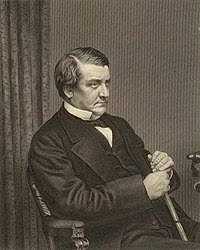
Richard Bourke, 6th earl of Mayo
His assassin — an Indian Pashtun who, in spite of having faithfully served the British during the Mutiny, had come to nurse a private grievance against the state for having sentenced him to life imprisonment for murdering a rival of his — was a convict doing time in the British Indian penal colony on the Andaman and Nicobar Islands, which Lord Mayo was visiting at the time of his assassination (and which had earlier belonged to the Danes).
I am, Sir,
Yours sincerely,
Bilal Haider Junejo, CertHE (Oxon) AdvDip (Cantab) LLB LLM (Lond) MA (Dunelm).
[1] Linlithgow was too respectful of the provincial autonomy that had been granted to Indian states under the aforementioned 1935 Government Of India Act. (Ed.)


