



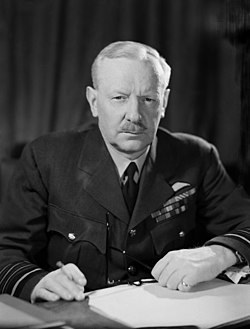
Air Chief Marshal Sir Arthur Travers Harris (1892-1984) in 1944
In September 2025 the annual RAF history conference convened at the RAF Museum in Hendon, north London. At the end of one talk, when the role of Air Chief Marshal Sir Arthur Harris, Commander-in-Chief of wartime Bomber Command, was discussed, several academics in the audience stood up and began hurling insults. It showed, once again, the depth of feeling against Harris, who is held responsible for thousands of unnecessary civilian casualties.
Britain, perhaps uniquely, has an unpleasant track record of abandoning its war heroes as soon as victory is declared. Seaman coming ashore after the defeat of the Spanish Armada were left to starve. Crimean war veterans were left with pitiful pensions. Since World War II the tradition has been maintained whenever the reputation of RAF Bomber Command is raised. If one part of Britain’s role in WWII remains ‘controversial’ it is that of the RAF’s five-year-long bombing campaign.
Analysts and historians have criticised the bombing of Germany, claiming the attacks failed to reduce its war industries but instead killed so many innocent civilians. In 1963, that most controversial of historians, the late David Irving, published The Destruction of Dresden which became an international bestseller when it grossly exaggerated the number of civilian casualties and laid the blame firmly on the RAF. As a result, Dresden became the ‘Guernica’ of WWII, the city hit by German bombers during the Spanish Civil War eight years earlier. In retrospect, it is clear that Irving’s book was the first stage in his historical assault on the Allies, designed to denigrate Britain and raise sympathy for Germany.
Dozens of critics have subsequently condemned Harris for unleashing a ‘brutal and immoral’ campaign. Since 1945 approximately 430 books have been published on Bomber Command, including excellent studies of individual operations, squadrons, and outstanding air crew, but no in-depth study had examined the full effects on Germany – until now.
Fourteen years ago I attended the unveiling of the new Bomber Command memorial at Green Park in London, and spoke to many of the surviving air crew. They asked: “How could it be possible for Germany to be bombed to ruin by 1945 and yet for so many writers to claim Bomber Command had not been successful?”
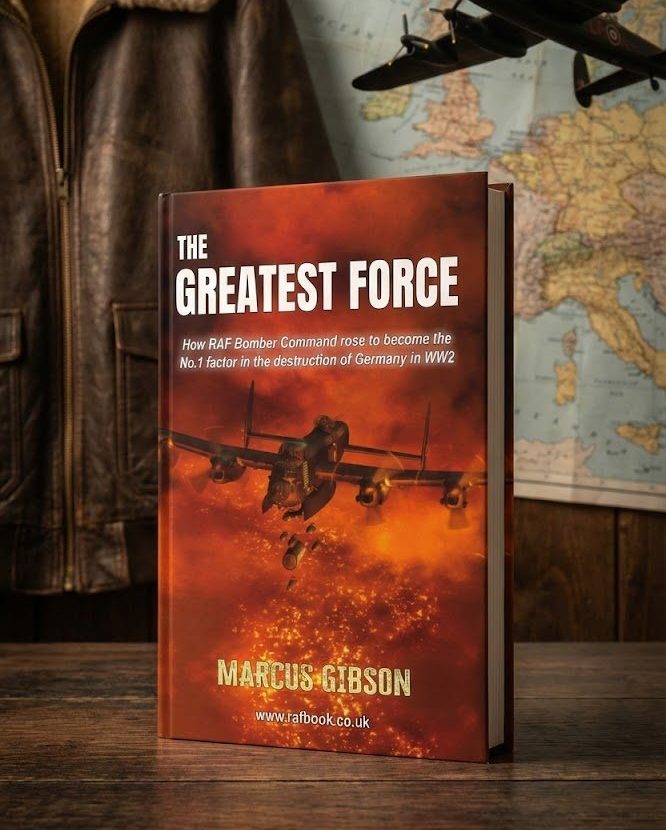
In 2025 after two years of research I completed a new book ‘The Greatest Force’ which criticises previous histories and dismisses claims that the campaign was ‘ineffective, costly and even a war crime’. The evidence shows it was stunningly successful. As a research journalist and not a professional historian I thought the task would be difficult – but in truth the evidence was not difficult to find.
=
Work in German archives showed that the RAF wreaked much greater initial damage than previously assumed. I found a hefty batch of individual raid reports from as early as 1940. Even though the RAF dropped only 14,000 tons of bombs that year, the Germans were already aghast at the damage caused. These raids, said to be ‘puny’ by British aviation historians, halted 5% of German oil supplies, and devastated rail marshalling yards and canals. At that stage the RAF could muster only a few hundred twin-engine bombers. In 1944 the RAF would drop that tonnage in just three days.
What no one seems to have understood until now is the relationship of early RAF bombing to one of the worst decisions of the war. It so infuriated Hitler that it provoked him into the launch of the V-weapons programme in December 1942. Militarily worthless, the programme consumed the same resources Germany could have used to build some 40,000 new Luftwaffe aircraft. Analysis of British, American and German documents confirms that Bomber Command was the undoubted game-changer in ensuring the ultimate defeat of the Nazi regime.
First and foremost, in the teeth of all criticism, Harris was indeed correct in attacking city centres – because these were the location of the thousands of vital small workshops and factories making spare parts and components for aircraft, tanks and U-boats. Highlighted in 2015 by the Professor Phillips Payson O’Brien, the destruction of Germany’s inner-city weapons’ factories led directly to its parts and components crisis, orZulieferungskriese, which paralysed weapons production.
In the 1990s as a reporter for The European newspaper I visited many key German factories in Dortmund, Augsburg, Hamburg and Berlin, and met the last of the workers and managers who had experienced the hailstorm of Allied bombs. There can be no doubt about the devastating impact of bombing. In each raid approximately 200 factories, large and small, were destroyed. Each Luftwaffe aircraft required 4,000-5,000 parts and a loss in the supply of a handful could hold up production for days and weeks.
Secondly, if Harris had attacked only big assembly plants in precision raids – as his critics believe he should – the Germans would have needed only small numbers of anti-aircraft guns and fighter aircraft to defend them. But by attacking cities and other targets across the whole of Germany Harris compelled the Nazis to build a gigantic and fully nationwide defence infrastructure. That system soon extended far beyond German borders into Norway, the Netherlands, Italy and France.
In March 1943, in the First Battle of the Ruhr, Harris mounted 16 heavy raids against the largest industrial cities. He destroyed in one three-month period no less than 43% of the region’s metal-working industries – an extraordinary outcome. Proper scheduling across Germany soon ceased to exist.

Equally unrecognised or quantified, the raids triggered a unique, additional stream of indirect effects which soon undermined Germany’s capacity to fight. By 1944 two million men and women were diverted from frontline duties or productive work in factories to man the thousands of anti-aircraft batteries and to clear the rubble across the Reich – the manpower equivalent of dozens of army divisions. During air raids on German cities entire ammunition trains exploded, devastating a sizeable area. The metal and aluminium used in manufacturing anti-aircraft ammunition alone could have created 30,000 fighter aircraft.
Thirdly, in a desperate bid to save their cities, 80% of the Wehrmacht’s deadly, rapid-firing 88mm anti-tank guns, and up to 85% of Luftwaffe fighters, were hurriedly withdrawn from the Eastern front.
Without this crucial anti-tank capability, the task of the Red Army and Allied armoured forces became a great deal easier. Such diversions made D-Day possible. There were only around 120 ‘88s’ present in Normandy in 1944. On Omaha Beach on D-Day, where the Americans suffered their heaviest casualties and came close to withdrawal, there were only two 88mm guns. What if there had been 20?
Fourthly, vast volumes of heavy ammunition that could have blunted Soviet offensives in the East were instead wastefully expended at Allied aircraft. It took on average between 5 and 20 rounds to knock out one T-34 tank on the Eastern front, but merely to damage an Allied bomber required 1,500-2,000 shells, and sometimes many more.
Fifthly, the removal of most twin-engine aircraft from battle fronts eliminated the Luftwaffe’s aerial reconnaissance capability, with astonishing results. All Allied landings from North Africa to Sicily, Salerno, Anzio, the south of France and D-Day, and the two great Soviet ground offensives of Bagration and Oder-Neisse – came as a total surprise to the Germans. Under the clear blue skies of the Mediterranean highly vulnerable convoys of up to 600 ships moved for days on end towards occupied coastlines undetected.
One fact critics of Harris have long overlooked is that only 52% of Bomber Command sorties were directed at urban areas. Much of the remainder were devoted to aiding Allied navies and armies. The Royal Navy was particularly well served by Bomber Command during the war – even though many of its officers thought its operations were ineffective against the Kriegsmarine.
Throughout the war Harris was the outspoken supporter of sea mining from the air – a role the RAF largely took over from the Royal Navy. At night and at low level near to enemy coasts, bombers dropped thousands of sea mines at great risk to crews. These not only crippled U-boat training operations; they may have sunk the 80 German submarines whose fate is unknown.
Research in 2018 by Jon Loftus at Queen Mary, University of London, reveals that Bomber Command did indeed have a crucial role in throttling the flow of U-boats from Germany into the Atlantic. A Royal Navy report admitted: ‘Only 5 U-Boats entered the Atlantic in May 1943, the reduced numbers assessed to be a result of Bomber Command attacks on German industry and mine-laying in the Baltic’ [my italics]. Mr Loftus concludes: ‘The decisive factor that led to Allied victory in the Battle of the Atlantic, and indeed the war, was manufacturing capability’.
Owing to bombing, the Germans decided in late 1943 to construct their advanced Type-21 U-boats in eight prefabricated sections at inland factories. These would then be floated down waterways and assembled quickly at shipyards such as Kiel and Hamburg. But, in practice, none of the sections fitted properly and by the end of the war only one Type-21 had entered service.
The RAF also sank or disabled all but one of the Kriegsmarine’s larger warships. Along with Coastal Command, RAF and USAAF aircraft were able to help bottle up the 300,000 Wehrmacht marooned in Norway and prevent their movement back to Germany. The heavy toll taken on Germany’s coastal fleet from mines also prevented any evacuation of the 200,000 troops stuck in the Courland Peninsula in western Latvia.
The British Army also benefitted from Bomber Command. It was air operations that first prevented a total rout in North Africa against Rommel. In the Mediterranean, Italy and Normandy, Bomber Command wrecked many frontline units of the Wehrmacht. Starting in the Western Desert in 1942 Air Marshal Tedder saturated narrow corridors of heavily defended German lines with bombs and tens of thousands of anti-personnel mines, to the huge relief of advancing Allied troops.
There is little doubt that the RAF raids on cities in northern Italy in mid-1943 forced Italy out of the war, thus compelling the Germans to station 23 full divisions in the peninsula.
In addition to the purely military impact, the mere threat of British bombing prompted one of the largest construction programmes in history: a vast series of underground factories, bunkers, flak towers and U-boat pens was built.
To make the Atlantic Wall bomb-proof around 1.2m tons of steel were used in its construction – equal to the metal required to make 20,000 Tiger tanks or 1,200 U-boats. The island of Guernsey was fortified with more than 300 gun emplacements, which absorbed 13% of the resources allocated to the Atlantic Wall.
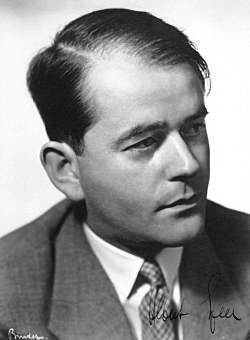
Much of the scorn directed at Bomber Command stems from the conclusions of the post-war US Strategic Bombing Survey which concluded that the campaign had been a failure. Those claims were based most of all on information supplied by Albert Speer, Germany’s armaments minister, an untrustworthy source who was trying to defend his own reputation. On close examination, the survey was deeply flawed. As Noble Frankland, co-author of the official history of the strategic bombing campaign (The Strategic Air Offensive Against Nazi Germany 1939-45, 4 vols.) pointed out, the results relied on thousands of questionnaires being sent to factories, many of them locations which had long been destroyed. Its inspectors were also forbidden to enter the one third of Germany now run by the Soviets.
Speer claimed to have created a manufacturing ‘miracle’ during the height of the bombing. Long believed uncritically by many historians, this is an absurdity. The thousands of aircraft he told Hitler had been built never appeared at Luftwaffe airfields. The few that did were often barely flyable.
As the Canadian historian David L. Bashow summed it up: “By 1945, Allied bombing had destroyed virtually all of Germany’s coke, ferroalloy and synthetic rubber industries, 95 per cent of its fuel, hard coal and rubber capacity, 90 per cent of its steel capacity, 75 per cent of its truck producing capacity, and 70 per cent of its tyre production.”
Although the USAAF’s attacks on oil installations in late 1944 have long been hailed as the foremost of crippling blows, strong evidence suggests that it was the RAF’s so-called Second Battle of the Ruhr, a largely anti-transport blitz against canals and railways which finally strangled coal supplies and brought Germany to a halt in a matter of weeks.
It did not matter what Germany could or could not manufacture – if they could not move it to frontlines the materiel was irrelevant. The same point was made by Norman Stone to account for the Russian defeat on the Eastern front in the First World War: there had been a Russian failure of distribution rather than of production in 1916-17.
In any case, by mid-1944 Germany’s need for oil had diminished rapidly as it moved from offensive operations to one of dogged defence using weapons such as panzerfausts, land mines and mortar shells that required little in the way of gasoline.
If the general history of Bomber Command requires total revision so too does the conventional interpretation of the infamous raid on Dresden in February 1945. Dresden’s Zeiss Ikon factories were the last to be manufacturing vital gunsights and rangefinders for tanks and artillery. Far from being a ‘war crime’, the raid was justified on these grounds alone.
In Sir Antony Beevor’s book ‘Berlin: The Downfall 1945’, published in 2007, he writes that ‘Dresden’s population was swollen by up to 300,000 refugees from the east’. But there were very few refugees in the city: the Russians were only 60 miles away and, as a result, no one disembarked from the few trains passing through, en route to the south of Germany.
Consequently, the death toll was around 10,500, far fewer than the 65,000 killed in Hamburg or the 250,000 in Warsaw, and far fewer than almost all current estimates of casualties in Dresden. Interestingly, it is probable that the raid saved more lives than it took. Why? Because some 12,000 slave workers fled the city after the raids and, in the chaos, survived the war.
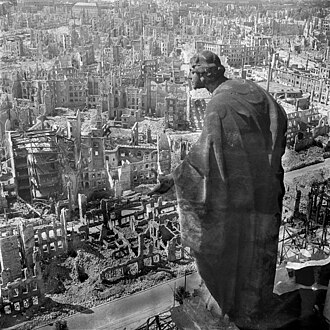
Dresden in 1945
Tragically, RAF Bomber Command air crew losses throughout the war were grievous: 44 per cent of the 125,000 did not survive. So great were the fatalities in the early years that one airman, Tom Jefferson DSO AFC of 18 Sqn. went from Sergeant to Squadron Leader in only 10 weeks.
There should be little doubt that the bombing campaigns by the RAF over five long years – and the USAAF for the last 15 months of the war – were, for all their setbacks, the principal reason for Germany’s military defeat. No Allied military commander, including those from the Red Army, inflicted more direct damage on Germany than did Air Chief Marshal Harris. I forecast that a future generation in Britain will come to realise the significance of this tragic but necessary campaign. I also hope that when Harris’s reputation is discussed again at an RAF history conference it will be with a greater appreciation of his achievements and of the scale of the problems he faced.
Marcus Gibson is a former news reporter and columnist with The Financial Times. Earlier, he worked at The European newspaper and on BBC Radio News in London. He is the author of The Greatest Force. How RAF Bomber Command Became the No. 1 Factor in Defeating Nazi Germany (2025) www.rafbook.co.uk


