

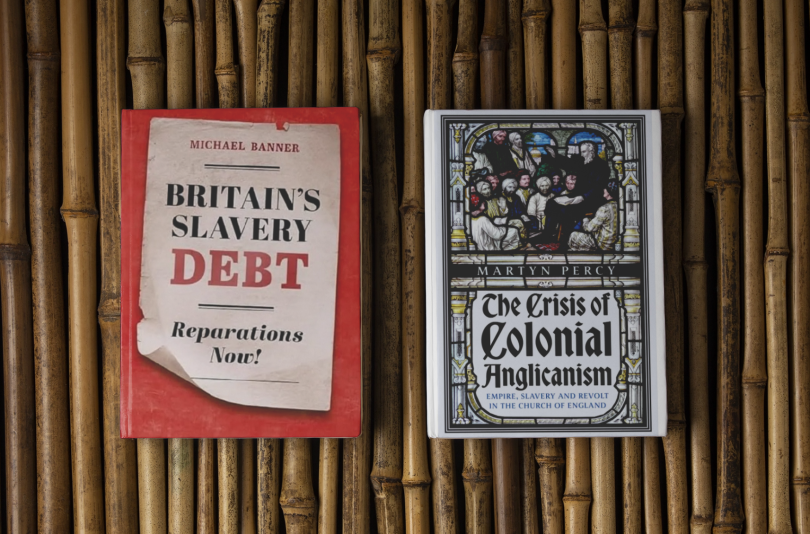

Here are two books by academic Anglican clergy, both drawing from history to make grand demands of the present: in the case of Michael Banner, a call for a national apology and for Britain to pay at least £250 billion to the Caribbean in reparations for slavery (“an underestimate of what may be considered due” he says); in the case of Martyn Percy, in addition to similar calls for reparations, a demand for a fundamental change in the character of the Church of England on account of a number of abiding sins – collusion with colonialism, imperialism, its “anti-democratic” tendencies towards “monarchical authoritarianism”, classism, racism, and sexism.
In Percy’s view, reminding us of the biblical tale of Belshazzar’s Feast, the “writing is on the wall” for the Church of England. Yet, it is the idea in the very writing on the wall – “thou art weighed in the balances” – which indicates how both books are found wanting. In neither book has the historical evidence been properly weighed in the balance. The positive has been omitted or played down, whilst the finger of the writers have pressed down the negative pan on the scales.
Banner generates an impression of the British being most responsible for the evils of the slave trade by minimising the role played by others. He initially hides the culpability of the African slavers who supplied the Transatlantic traders behind the use of a passive – “the enslaved people they bought from local suppliers had been gathered sometimes from considerable distances. They had been captured in war or simply kidnapped” (p. 15). Yet, when he finally admits that there was, as he gingerly describes it, “what one might term indigenous slavery” (p. 71) in Africa that had existed long before even the Portuguese presence, he attempts to brush away the moral responsibility of the African slavers by drawing a peculiar simile with the idea that “managers in a car factory [who] cooperated in industrial scale theft of cars would not be thought to count heavily for the defence of those from outside the factory who operated the scheme” (p. 72). The suggestion that slavery would not have developed in the African continent to the extent that it did with British demand is belied by the abiding existence of the trade both within the continent and beyond both before and after the age of the British slave trade. Huge numbers of slaves were captured in the heart of the continent and traded in appalling conditions over long distances, not only to serve elites within Africa, but also to be sold on to the Islamic world and the Indian subcontinent.[1]
Similarly, Banner minimises the courage and efforts displayed within British society, particularly by Wilberforce and his circle, in campaigning to pass the laws abolishing the transatlantic trade in 1807, and later slavery itself within the British Empire in 1833. He complains that in some aspects the suppression of slavery was not achieved any sooner, whilst taking no account of the practical problems posed in rooting out an institution which had been a fundamental part of human life since the dawn of recorded history, and not acknowledging that when it was open to the British to bring an end to slavery quickly they did so, as, for example, Sir Stamford Raffles did in Penang, Java, and Bencoolen (1807-19).[2] He makes a large play of the work of Eric Williams in suggesting that economic factors loomed large in British abolition (p. 79), whilst scarcely taking into account the more recent and more credible scholarship which shows that abolition made no economic sense for Britian itself, causing as it did a loss of business particularly to those who traded with the West Indies, as well as higher costs to British consumers of sugar. Banner also completely omits to discuss the costs both in blood and treasure to the British in their active policy of suppressing slavery by way of naval, military and diplomatic action. These, over the course of the 19th century, taken together with the economic harm caused to Britain by abolition, exceeded any financial benefits accrued from slavery in the 18th century.[3]
Banner writes in a clear and concise fashion, and the clarity of his style is perhaps calculated to echo his claim that there is a clear case for reparations to be made. However, this clarity of style rather covers up a number of weaknesses in Banner’s case. He does not deal with the fact that there is no real clarity on how much the profits of slavery actually contributed to the British economy, nor to what extent such benefits still persist – something that would be necessary in any fair attempt to calculate reparations. Likewise, he neglects to discuss other factors in the underdevelopment of the former colonies. He omits to quantify the substantial aid given by the UK to the Caribbean nations[4], and refuses to take this into account in any of his calculations by making the dubious claim that reparations are not morally equivalent to aid as the criterion of aid is need (p. 95), despite the fact that the giving of aid to the needy is just as much driven by a moral imperative. He also skates over the moral problem posed by the passage of time since the events.[5] This is most obvious in his offhand attempt to dismiss any equivalent claim for reparations by the victims of the Barbary Corsairs to be taken seriously, despite the fact that they enslaved over a million Europeans and extorted considerable protection money[6], were active well into the 19th century, and have connections with successor states such as Morocco and Algeria. Why Britain should be on the hook for reparations for historical crimes after two centuries whilst others should not is not satisfactorily explained.
Whilst Banner’s work at least has the merit of clarity, this is unfortunately not something that can be said for the rather repetitive and rambling book by Percy. In many places it covers similar ground to Banner on matters of slavery, such that the same criticisms expressed above also apply. In this respect, however, Percy’s disapproval is particularly focused on the Church of England. He repeats the claim that the Church Commissioners, as the successors of Queen Anne’s Bounty, profited from slavery thanks to its investments in the South Sea Company (p. 81), whereas recent research suggests that no profits were in fact made from such investments.[7] He twice mentions the 1710 bequest of slaves by Christopher Codrington to the Society for the Propagation of the Gospel (pp. 50, 168-9) which were then used to finance missionary expeditions, but is completely silent on the extraordinary courage and self-sacrifice displayed by Anglican and other missionaries in the generation of David Livingstone and afterwards – for example Bishop William Mackenzie of the Universities’ Mission to Central Africa – many of whom gave their lives to combat slavery and help those whom they freed from the Arab and African slavers, and this generally without even the assistance of the British armed forces.[8]
Percy accuses the missionaries of “epistemicide” (p. 82) – the denigration and destruction of local knowledge, rituals and artefacts, but this is belied by his description of John Colenso, the first Anglican Bishop of Natal (appointed in 1853), who learned Zulu and wrote the first English Zulu dictionaries and grammar. Percy does not mention that Colenso even trained his local apprentices to use printing presses, and facilitated the first publication of Zulu people’s written accounts of their own lives in their own languages.[9] Indeed, Colenso was far from the only missionary to make great efforts to understand, record and propagate the languages and cultures that they found. Another example from the Universities’ Mission was William Percival Johnson who was based in Nyasaland (later Malawi) in the latter part of the 19th century, and who mastered six local languages and made translations of the Bible and Book of Common Prayer into Chinyanja. In the region he is revered as a saint. A further example is Thomas Valpy French, the first Anglican Bishop of Lahore, whose picture appears on the cover of Percy’s own work. Valpy French dedicated several hours every day to learning local languages, becoming fluent in seven, including Hindi and Pashto. He also read widely in Islamic texts and Indian poetry. “Is the wealth of India’s literary treasures less available, less capable of consecration to the highest and holiest purposes than the merchant spoil of Tyre?” he once asked.[10]
It is frequently the case in this book that Percy attempts to advance a case by relying on unevidenced assertions, inaccurate statements or only giving half the picture. For example, he claims that missionaries in China were prone to perpetrating sexual exploitation, but only brings forward evidence to show that one British civil servant, rather than any of the missionaries, had actually committed such misdemeanours (p. 54). He frequently lambasts the Church of England for homophobia, whilst neglecting to mention the role that the Church played in the legalisation of homosexuality in England, particularly with its support for the Wolfenden Committee from 1954 onwards.[11] He asserts that “Bishop-barons are only [in the House of Lords] by virtue of residual ties to the vast swathes of land and incomes that they enjoyed under the Norman and Tudor monarchs” (p. 101) whereas their place in the Lords in fact came not only from their temporal holdings but also independently from their status as “sapientes” (wise men) who had the capacity to advise on matters of the realm independently from their temporal holdings.[12] Their presence today is predicated on their capacity to offer independent perspectives on legislation with a sense of obligation to represent the perspectives of all faith groups.[13]
He incorrectly states that the annual festival of Nine Lessons and Carols was “an innovation that largely postdates the end of the Great War, being inaugurated at King’s College Cambridge, and was an attempt to address the religious illiteracy of the working class and returning war veterans”. He thus argues that the service had its origins in “apologetics and social class”. (p. 174) In fact, the service had originally been developed by Edward White Benson when Bishop of Truro in 1880, largely in response to the increasing popularity over the whole course of the 19th century of hymnody and carol-singing (although some present-day writers claim that he was also interested in using the service as an incentive to keep his Cornish flock away from excessive drinking in the pubs on Christmas Eve, a universal and necessary humanitarian objective of Victorian evangelicals).[14]
He also observes that the sword carried by Penny Mordaunt, as Lord President of the Council, at the coronation of Charles III “only dates back to King George IV’s coronation in 1821” in order to imply that as a piece of ceremonial this was a recent concoction. He omits to mention that the 1821 Sword of Offering was only one of two swords carried by Mordaunt during the ceremonial, and the other, the Sword of State, dates back to the 17th century. In fact the carrying of swords in front of the monarch at the coronation can be attested by the 13th century.[15] “Unlike that of 1953, the 2023 coronation essentially failed as a public ritual” (p. 100), he argues, because the dense liturgical ritual had to be explained by commentators to the public, whereas the 1953 official souvenir programme for the coronation of Elizabeth II was full of such explanation and commentary. “The coronation presented Britain’s head of state as serving God rather than the British people” says Percy (p. 101), omitting to mention that some the King’s first words in the ceremony were “I come not to be served, but to serve,” echoing the Gospel idea of Christ being the servant of all people as expressed in Mark 10:45.
One could draw out at wearying length further examples of such misstatements of historical and other evidence from this book, but one should also consider the peculiar conclusions drawn from such misstatements. The book, says Percy, is a story of “two worlds slowly drifting apart following the split between the world of monarchy and the emerging world of democracy” (p. 23) particularly in the New World of America where the episcopal church does not bear allegiance to the British Crown. The monarchical culture of England in particular is incompatible with democratic life. “Monarchy silences us before the ruler: democracy requires us to speak,” he says (p. 113). The historic monarchical culture of England is responsible for what he claims is an anti-democratic character in the Church of England, compounded by a colonial desire not to lose a sense of primacy in the worldwide Anglican communion (despite the call of the previous Archbishop of Canterbury, Justin Welby, for his office to relinquish such primacy[16]). From this anti-democratic character, argues Percy, comes much of the oppressive managerial governance of the contemporary church (p. 114).
To suggest that constitutional monarchy is incompatible with democracy is to ignore the actual experience of Britain and the other modern European constitutional monarchies. To argue that the current undoubted problems of church governance and its “managerialist” tendencies spring from the presence of monarchy is bizarre, particularly given that the centralising and managerialist reforms are largely the result of Archbishop Welby’s tenure, and that local parishes were previously much more independent. There is certainly a critique to be made of the way that the Church of England is being run[17], but to suggest that such problems spring from the presence of the monarchy is to miss the mark in the most futile way.
Indeed, Percy’s critique smacks more of someone who does not fundamentally like the Church of England, and whose interest is less in constructively remedying its problems, but rather destructively dismantling the fundamental character of church and state. If this is so, it might well be expected from someone in Percy’s position. Perhaps the most important omission in Percy’s work is that he neglects to inform the reader of his own history – his acrimonious disputes, following a number of disciplinary complaints, with the Diocese of Oxford and Christ Church, Oxford, where he was Dean (head of the college), after which he decided to leave the Church of England in 2022.[18] Whatever the truth of these matters, it would have been more open of Percy to state his own dispute with the Church of England in his own work to allow readers unacquainted with it to better understand his own perspective, and take that into account when weighing up his arguments. Furthermore, given his strident defence of democracy and abhorrence of colonial behaviour, epistemicide and the like, it is puzzling that Percy has chosen to make this attack on English society and the Church of England from academic positions he now holds in Hong Kong and Macao, where these matters, not to put too fine a point on it, are very current problems rather than distant echoes of history.
Bijan Omrani, FSA, is the author of various books, chapters and articles on cultural history on areas ranging from Afghanistan and the Silk Road to Rome and Ancient Greece. He holds a doctorate in Greek tragedy and philosophy from the University of Exeter where he is an honorary associate research fellow. His latest book is God is an Englishman: Christianity and the Creation of England (Forum Press, 2025).
[1] For the history of the trade in Africa see particularly Faulkner, Neil, Empire and Jihad: The Anglo-Arab Wars of 1870-1920, Yale University Press, 2021, 9–55; see also https://historyreclaimed.co.uk/capitalism-not-slavery-made-britain-rich-its-time-we-stopped-apologising-for-our-past/
[2] See Biggar, Nigel, Colonialism: A Moral Reckoning, William Collins, 2023, 61.
[3] See Eltis, David, Economic Growth and the Ending of the Transatlantic Slave Trade, Oxford University Press, 1987, 96-7, and Kaufmann, C.D. & Pape, R.A., ‘Explaining Costly International Moral Action: Britain’s Sixty-Year Campaign against the Atlantic Slave Trade’, in International Organization, 53/4 (Autumn 1999), 634-7, quoted in Biggar, 2023, 62.
[4] For the aid being given at the time of decolonisation, see Cox-Alomar, R. ‘Britain’s withdrawal from the Eastern Caribbean 1965–67: A reappraisal’. The Journal of Imperial and Commonwealth History, 31(3), 2003, 74–106. Recent UK government aid comes close to £1 billion, see https://www.gov.uk/government/publications/uk-caribbean-region-development-partnership-summary/a8ac4844-d44c-48c5-ad40-ec308ef5d54f (accessed 28 February 2025).
[5] See discussion in Biggar, 2023, 277ff.
[6] In 1795, for example, 20 percent of the US annual federal government expenditure was paid to the Regency of Algiers as protection money against attack by the Corsairs. Defence against the Corsairs was the original cause of the foundation of the US Navy. See Davis, D.B. and Mintz, S, The Boisterous Sea of Liberty: A Documentary History of America from Discovery through the Civil War. Oxford University Press, 2000, 222.
[7] See ‘Slavery did not benefit Bounty’, Professor Richard Dale, Church Times, 22 March 2024, available online at https://www.churchtimes.co.uk/articles/2024/22-march/comment/opinion/slavery-did-not-benefit-bounty (accessed 28 February 2025).
[8] For an account see Chula, A, Goodbye Dr Banda: Lessons for the West from a Small African Country, Polygon, 2023, chapter 19. Chula observes that 200 University undergraduates forsook lucrative careers to volunteer for this service; of them, 57 died, a higher rate of attrition than the Somme (p. 118-9).
[9] See, for example, the account of Magema Fuze in Akyeampong, E. K., Gates, P. H. L. (2012). Dictionary of African Biography, Oxford University Press, 2012, 403-5.
[10] Stacey V, ‘The Legacy of Thomas Valpy French’, International Bulletin of Missionary Research 1989 13:1, 22-27, 25.
[11] See Grimley, M, ‘Law, Morality and Secularisation: The Church of England and the Wolfenden Report, 1954–1967’, The Journal of Ecclesiastical History, 60 (2009), 725–41.
[12] See M Hatcher, ‘Bishops in the House of Lords: fit for the future?’ (2024) 26 Ecclesiastical Law Journal, 147–180, 152
[13] Hatcher, 2024, passim
[14] Benson, A. C. (1899). The Life of Edward White Benson: Sometime Archbishop of Canterbury. Macmillan, London, 484; see also https://www.theguardian.com/music/musicblog/2013/nov/29/truro-nine-lessons-carols-christmas-history. It Is curious that Percy does describe Benson’s role in the development of the Festival of Nine Lessons and Carols in a chapter he contributed to another book (which he cites at this point) but does not mention Benson or the earlier history of the service at all. See Percy, Martyn, ‘Anglicanism’, in Timothy Larsen (ed.), The Oxford Handbook of Christmas (2020; online edn, Oxford Academic, 8 Oct. 2020), https://doi-org.uoelibrary.idm.oclc.org/10.1093/oxfordhb/9780198831464.013.13, accessed 3 Mar. 2025.
[15] Jones, W. (1883). Crowns & Coronations: A History of Regalia. Chatto and Windus, London, 74-5.
[16] See discussion by Walker, M, in The Critic, February 2025, available online at https://thecritic.co.uk/issues/february-2025/more-than-just-a-figurehead/
[17] See, for example, Milbank, A. (2023). The Once and Future Parish, SCM Press.
[18] For the position of the Diocese of Oxford, see https://www.oxford.anglican.org/news/former-oxford-college-dean-and-senior-cleric-to-leave-church-of-england.php


