



British colonial rule in India was punctuated by a series of disastrous famines. While the causes and consequences of these disasters remain a most controversial issue in the history of the subcontinent, recent research has underscored the remarkable adaptability of the colonial state in terms of learning from past experiences and applying the lessons to future contexts.
The famine of 1770 – one of the most dreadful calamities in the history of Bengal – left deep scars in the minds of early British officials, and out of the experience began a new project of transforming the tropics through the aid and assistance of botanical gardens.
Botanical gardens have often been associated with colonial knowledge-production and the resource exploitation of newly-conquered areas. Thereby, it has been argued, they bolstered Europe’s ‘plant imperialism’. Scholars like Lucile Brockway (1979) and David Mackay (1985) have underscored the role of botanical gardens in the colonial expansion of the West and in the creation of an ‘integrated world system’ whereby an ‘industrialized core’ extracted raw materials from the colonial peripheries.[i] This utilitarian and/or exploitative rationale behind the early development and growth of botanical gardens is reiterated in Richard Drayton’s classic work Nature’s Government (2000). Drayton argues that botanical gardens, much like the infrastructure of railways or irrigation, were driven by an imperial ideology of ‘improvement’ that legitimated colonisation as necessary and even beneficial. Botanic gardens in this sense were agents and appendages of empire even as they sought to regulate nature for cosmopolitan benefit.[ii]
I would argue, however, that the history of imperial botany cannot be encapsulated within a hegemonic framework of appropriation alone. The genesis of most colonial era botanical establishments can in fact be traced to the pervasive fear of famine, and of environmental anomalies that exacerbated famine-like conditions.
In Bengal, Robert Kyd, a British Army officer of the East India Company (EIC), proposed establishing a botanical garden to cultivate cash crops like tea, coffee, tobacco, teak and cochineal. However, the decision to establish the garden came in the aftermath of the 1770 famine mentioned above. Kyd believed that the introduction of foreign food plants such as the Sago palm, and the Persian date palm, would eradicate famine from India. In support of the practicality of his scheme Kyd suggested the example of La Bourdounais (Bertrand-François Mahé, comte de La Bourdonnais, 1699–1753) who, as governor, saved the inhabitants of the islands of Bourbon (Réunion) and Mauritius from the scourge of famine by the introduction of the Manioc root.[iii]

Robert Kyd 1746-93
Additionally, Kyd was able to enlist the support of Sir Joseph Banks in London who shared his optimism regarding the role of the garden in banishing famine. In 1787 Banks had emphatically asserted that the motive behind the setting-up of botanical gardens was not ‘filching from another country its commercial advantages’ but rather ‘to exchange between the East and West the productions of nature useful for the support of mankind that are at present confined to one or the other of them.’[iv]
Besides combating famines, the introduction of commercial crops was also expected to facilitate trade and raise rural incomes. This was the vision of James Anderson, the Physician General at Madras, who is chiefly remembered for his efforts to introduce the cochineal (an insect producing a red dye) into India. Anderson argued that as a cochineal colony India would not only prove profitable to the EIC – given its interests in the cloth industry – but the introduction of the cochineal would also diversify India’s rain-fed agriculture by providing employment and subsistence to the ‘industrious poor’ through ‘the culture of such articles as require little water [and] with the produce of which grain may be purchased from other countries.’[v]
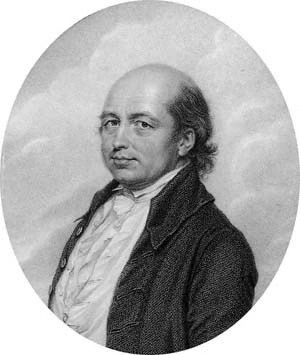
James Anderson, 1738-1809
While Kyd or Anderson’s faith in the inter-continental movement of plants may have been misplaced (most of the grand schemes of plant resettlement having failed), the desire to mitigate the effects of famines in the tropics nonetheless led to a growing interest in the science of meteorology. In 1788, Kyd suggested the necessity of instructing the British Collectors of the several provinces of Bengal to maintain a meteorological register.[vi] Kyd, however, was not alone in his growing interest in climate and meteorology. Anderson, too, discovered a dry zone between latitudes 16 and 18 degrees at the coast where there had been so little rain during the three years 1764-66 that the country was desolated by famine.
Like Kyd, William Roxburgh, who succeeded him as Superintendent to the Calcutta botanical establishment in 1793, was interested in the humane side of the botanical endeavour. Roxburgh had spent most of his early service years at the garrison station at Samulcotta, some 200 miles north of Madras, where he witnessed the appalling effects of famine and starvation in the years 1791-93. Roxburgh argued that the province depended exclusively on the cultivation of paddy and was thus prone to famine should the rice crop fail. He therefore advocated the cultivation of the sago, date, and Palmyra palms, all of which possessed a food value.
While at Madras Roxburgh also kept a meteorological diary in which he meticulously noted the temperature three times a day, along with information on rainfall and the direction of the wind. As historian Richard Grove has argued, his meticulous documentation was vital to the identification of the 1780s and 1790s as a period of extraordinary climatic anomaly caused by a series of El Niño events that were partially responsible for the drought-induced disaster in Bengal in 1769-70 and in Madras from 1791-93.[vii]
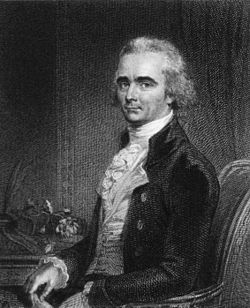
William Roxburgh 1751-1815
As superintendent to the Calcutta Botanical Garden Roxburgh conducted experiments in economic botany and remained attentive to the potential of botanical science to prevent famines. In 1797, he received from Dr. Charles Campbell at Bencoolen a small cask of highland paddy from Sumatra. Roxburgh believed that since the highland paddy did not require to be flooded, it might be cultivated with advantage in Bengal, especially during a failure of the usual rains.[viii]
In 1799, while still the Superintendent of the Calcutta Garden, Roxburgh proposed an ambitious scheme of reclaiming wastelands in Bengal and planting these with teak and other timber trees as well plants that would yield sustenance during famines. He was also consulted by the Bengal Government about the best means of preserving grain in the huge public granaries that were erected by the East India Company in the late 1780s. Contrary to the Smithian policy of laissez-faire, Roxburgh envisaged active intervention on the part of the state to mitigate famines. In this respect he may have been influenced by Sir Joseph Banks who, in 1799, penned an explicit critique of Smithian policies and complained bitterly of the latter’s increasing influence in government circles.

William Roxburgh’s memorial at the Acharya Jagadish Chandra Bose Indian Botanic Garden, Calcutta [ix]
The EIC established many botanical gardens in strategic locations across the company’s territories: at Madras (1783), Bangalore (1800) Saharanpur (1817), Dapuri (1828), and Ootacamund (1848), as well as the Lloyd Botanic Garden at Darjeeling (1850), and the Empress Botanical Gardens at Pune (1838). These gardens were instrumental to the introduction of famine crops and the relocation of plants that were not successful from one garden to another. Contrary to the perception that colonialism exacerbated famines, the establishment of a whole network of botanic gardens testifies, if anything, to the reverse – to the desire to mitigate such disasters.
Dr. Baijayanti Chatterjee
Ph.D, Jawaharlal Nehru University, New Delhi.
Assistant Professor of History,
Seth Anandram Jaipuria College, Calcutta University.
[[viii]] West Bengal State Archives, Kolkata, Board of Revenue Proceedings, 13th October 1797.
[ix] Readers may be interested in a monument with a Latin inscription to a British colonial servant in a botanical garden now named after an infamous Indian nationalist, evidence all in itself of the complexity and subtlety of Indian cultural history and memory.


