

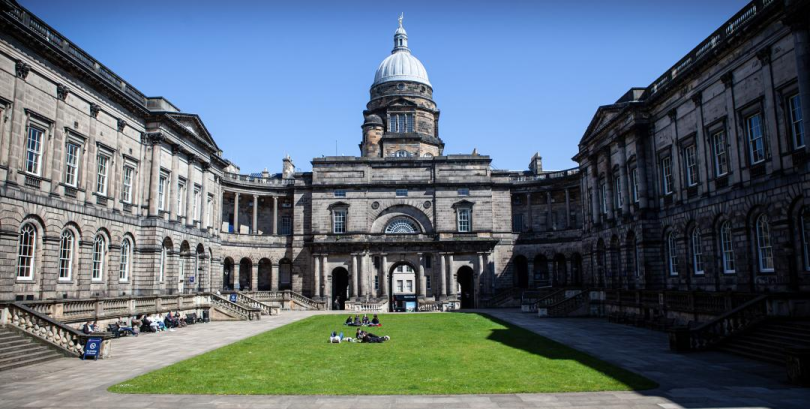

If you were asked what you know about Edinburgh University and its history, what might you come up with? One of the world’s great seats of liberal enquiry, the university of David Hume, Adam Smith and the philosophers of the Scottish Enlightenment? A prestigious medical school, the oldest in the English-speaking world, the home of Lister and Simpson, whose pioneering work on antiseptics and anaesthesia transformed surgery from a death sentence to a life-saver? The university of the Higgs Boson and Dolly the Sheep, celebrated for groundbreaking research in fields like theoretical physics, genetics and biotechnology?
The University’s own Committee of Public Safety (aka its ‘Research and Engagement Working Group’) sees something quite different. In a recent ‘Review of Race and History’ it finds that over ‘more than 400 years of colonial history…, the University of Edinburgh and its staff and students were implicated in the practices and systems of enslavement and colonialism and the apartheid and genocide of colonised peoples across the world in Australasia, Asia, Africa, the Middle East and the Americas.’ The Review asserts, moreover, that the legacy of these offences is still evident in the ‘statistical under-representation’ of ethnic minorities among the University’s staff and students, and in ‘the persistence of institutional and structural racism’.
Opaquely entitled ‘Decolonised Transformations’, with the sub-title ‘Confronting the University of Edinburgh’s history and legacies of enslavement and colonialism’, the main Review document is an uneasy mixture of political polemic, scholarly paper, and corporate PowerPoint presentation. As its authors are at pains to point out, it is only one of a host of similar displays of self-flagellation produced by universities throughout the English-speaking world. It is not significant for the reasons its authors think, or for those of the short-sighted university management who commissioned it and endorse its findings, but because it is a telling example of the tactics used by the enemies of academic values in their campaign to shut down free intellectual enquiry and replace it with conformity to a body of dogma. In particular, the Review is a worrying demonstration of the way empirically-based scholarly disciplines and activities like economic history and archival research can be used against themselves to advance the cause of subversion.
The Review comes with an endorsement by the Principal, Sir Peter Mathieson, who describes it as ‘a landmark review’, ‘academically led’, and ‘the result of more than four years of dedicated research’. This is surprising, because it does not come across as a carefully finished professional production. Parts of it read like a draft. The main Review and its appendices cry out for the organising hand of an experienced editor, with material confusingly distributed between the two. The forty pages of graphs and pie and bar charts on staff and student ethnicity statistics in the main Review surely belong with the similar material in Appendix 4. Likewise, discussion of the University’s supposedly close involvement in affairs to do with Palestine is split between the main review and Appendix 3. These are only some of the more obviously amateurish aspects of the whole enterprise.
In the discursive part of the main Review, the sustained tone of overheated polemic, combined with clumsy expression, does not make for easy reading. The oddest section is the excursus on Palestine, which argues that the University itself is somehow implicated in events there because Sir Arthur Balfour was Chancellor at the time of the Balfour Declaration. This is desperate stuff. The authors know perfectly well that university chancellors are figureheads whose only active role is ceremonial. Nevertheless, they work hard at creating the impression that Balfour was closely involved in University affairs, even slipping his name into a list of University ‘scholars’, and another of men engaged in ‘teaching and research’.
Appendix 3 (of a total of eight) includes a list of documents and other materials presented as the ‘underpinning archival research’ on Balfour and the Palestinian question. Ostensibly a body of substantiating sources, the list of documents seems oddly undiscriminating. A bit of random digging reveals that some of them have nothing to do with race, colonialism or Palestine: it is hard to see the evidential relevance of a note about the return of a borrowed book, or a letter from Balfour to the musicologist Donald Tovey about Mozart’s Jupiter Symphony. Other items in this appendix are equally puzzling. What evidence about anything is provided by the account of a ‘performance lecture’ in 2023 by a lecturer in ‘Global Majority Performance’, ‘utilizing elements of Speculative Choreography and Afrofuturism’?
The substantive historical content is confined to the first two appendices. The first, by Simon Buck, explores the various kinds of philanthropic support from which the University benefited in the late eighteenth and early nineteenth centuries, identifying benefactors and ferreting out any connections they might have had with slavery or colonial enterprises. In Appendix 2, Ian Stewart explores the role of the University in promoting theories of racial hierarchy and civilisational development from the middle of the eighteenth century to the middle of the nineteenth.
Though the names, facts and figures in Dr Buck’s account add up to a piece of respectable economic history, he is distractingly anxious to demonstrate his moral credentials. He begins with a trigger warning, apologising for the use of historical sources which ‘include racist and genocidal language and ideas, or references to acts of violence and other modes of domination’. He is given to flights of moralising rhetoric, apologising for using the language and methods of economic history because it focuses on the finances of Europeans ‘rather than the lives of enslaved Africans and colonised and racially minoritised people they ruled over, and whose unrecognised labour benefited Edinburgh’. Further research is required, he piously declares, ‘to better understand what enslavement, colonialism and racial subjugation entailed for the enslaved, colonised, and racially minoritised people whose labour helped to finance and sustain the UoE over its long history’.
Ian Stewart’s Appendix 2 is mercifully free from Uriah Heepish displays like this, but his thumb too is firmly on the scales. At the very outset, Enlightenment theories of civilisational development, and those that argued for a biologically-determined hierarchy of races, are described as ‘some of the most damaging ideas in human history’. Though these two bodies of thinking are based on different principles, and apply to different things, Dr Stewart repeatedly conflates them, damning them collectively as ‘racial theories’.
He is even-handed in his discussion of Dugald Stewart, Professor of Moral Philosophy in the late eighteenth century. He acknowledges Stewart’s view of slavery as a moral abomination, and his condemnation of Hume’s ‘inhuman opinion that the negroes being inferior to the Whites ought to be Slaves’; he emphasises that Stewart thought any inferiority on the part of the Negro was a matter of cultural development, and could be improved by European civilisation. But he is not always so scrupulous. You wouldn’t know from this account that the influential civilisational theorist John Cowles Prichard, far from attributing any innate superiority to Europeans, rejected the whole idea of immutable racial characteristics, asserting that ‘the same inward and mental nature can be recognised in all the races of men’, and that all European societies had at one time gone through their own primitive stages of development.
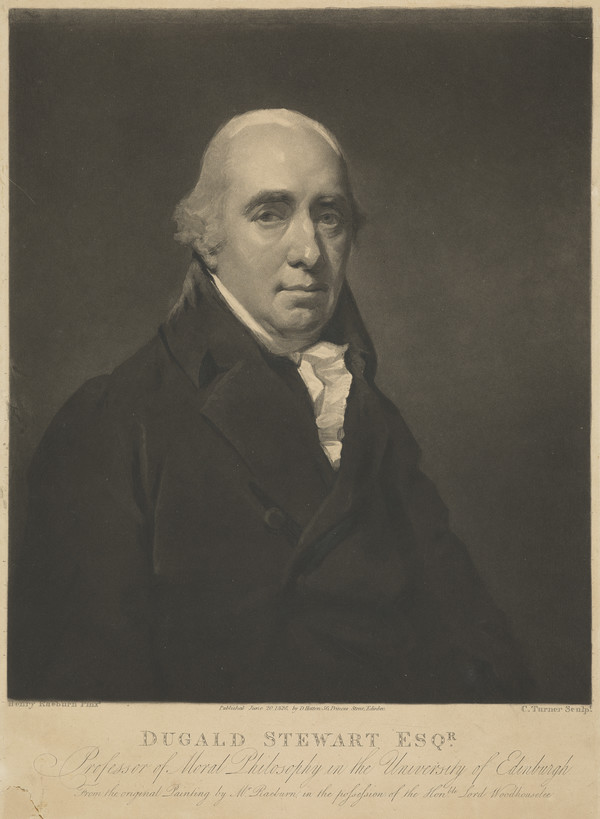
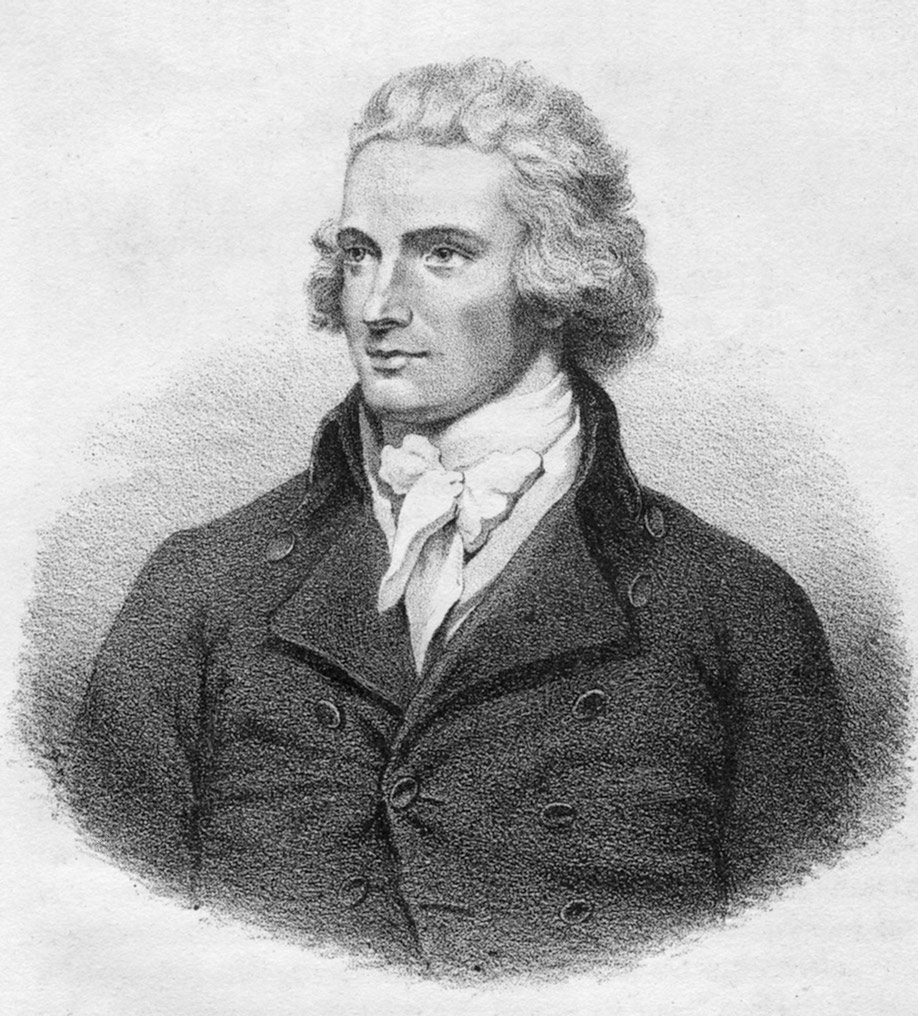
Dugald Stewart, 1753-1828
The seductive certainties of Critical Race Theory lead him into one howler. In a passage about the late eighteenth century he refers to ‘systems of inequality that already existed, notably the transoceanic trafficking and enslavement of African and other colonised peoples’. Writing about this topic, he really ought to know that at that time there were no African colonies, or any colonised African peoples, only coastal settlements to which slaves for the Atlantic traffic were brought from the interior by indigenous and Muslim traders. Created from an existing settlement that had become a refuge for freed slaves, the British Crown colony of Sierra Leone was founded in 1808, the year after Abolition. Applied to Africa, the phrase ‘colonised peoples’ does not begin to make sense until at least half a century later. Apart from the Caribbean (where it ended in 1838), there was no slavery in the British Empire, and one of the main moral justifications advanced for African colonisation was the abolition of the slavery practised all across the continent by Africans themselves.
Open-minded historical enquiry shrinks back before the blunt-instrument dogmas of Critical Race Theory, and the verdict of this People’s Court has been reached before proceedings even begin. Any reference to degrees of civilisation is pounced on as evidence of racism. James Mackintosh’s ambitious project for mapping the languages of India in terms of a basic vocabulary list, and determining their relationship or otherwise to Sanskrit, is condemned because Mackintosh urges his helpers to seek out ‘tribes of men uncivilized, or in other respects different from the Hindoo race’, whose speech is likely to be different from that of the Hindu mainstream. Mackintosh’s impressively designed survey helped to lay the historical foundations for G A Grierson’s monumental Linguistic Survey of India (1898-1928) and its successors. Far from conducting ‘a racial classification project’, he was following the practice of any good researcher, and making provision to test his theories by looking for evidence that might require him to discard or modify them.
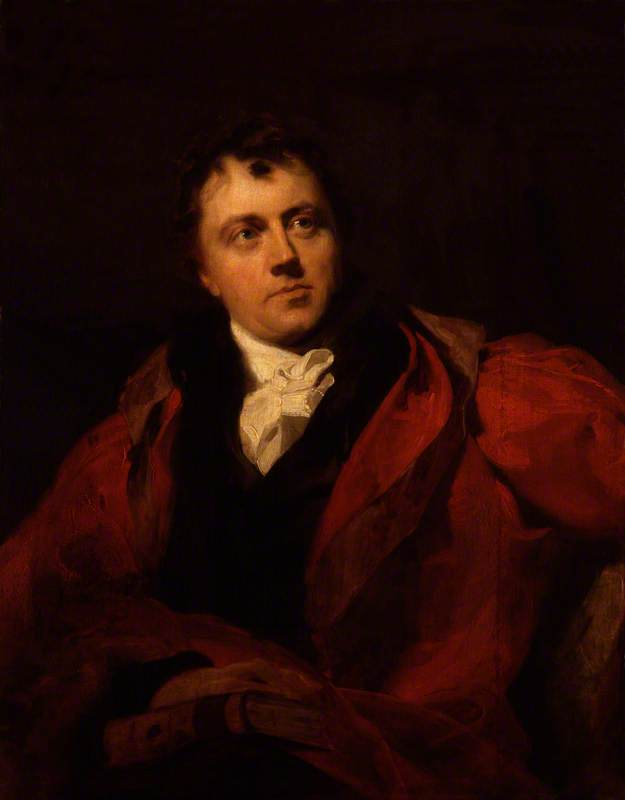
Sir James Mackintosh (1769-1830) by Thomas Lawrence,
Mungo Park’s classic Travels in the Interior Districts of Africa gets equally short shrift. The Edinburgh anti-racism people seem to have it in for Park. In ‘The Policy Group of the University of Edinburgh’s Race Review, Final Report, May 2025’, appended to the Review, he is condemned as racist for describing the Moors as ‘savage and merciless’. What is not revealed is Park’s explanation that the Moors were the slave traders of the region, Muslim invaders from the north who had colonised the kingdoms south of the Sahara and continued to terrorise West African villages, stealing cattle and abducting people as slaves. The societies Park encountered were built on slavery. He remarks that wheeled transport and the use of draught animals for transport and agriculture were unknown, because all such work was done by slaves. Slavery was so fundamental to the economy of the region that the ‘slave’ was a universally accepted unit of exchange: Park’s pages are peppered with phrases like ‘goods to the value of one and a half slaves’.
Given facts like these, it is perverse to condemn as a racist calumny the idea that some modes of social organisation are preferable to others. And it is an odd kind of racist who describes an affecting scene when an old blind woman is reunited with her long-lost son, and reflects, ‘From this interview I was fully convinced, that whatever difference there is between the Negro and European in the conformation of the nose and the colour of the skin, there is none in the genuine sympathies and characteristic feelings of our common nature.’
Mungo Park (1771-1806)
The Policy Group Report mentioned above provides a scarcely believable demonstration of the madness that has overtaken parts of the University, and before which any notion of scholarly standards is scattered to the winds. It includes a ‘case study’, involving a day-long workshop, about a plaque in the Geography building commemorating Mungo Park at which someone had taken offence. The authors describe in lengthy detail, and with evident pride, the methodology employed. Specialist knowledge was explicitly ruled out, the facilitators instead inviting participants to engage in ‘a collaborative knowledge production process…, building a shared understanding of Mungo Park from the group’s crowd-sourced findings’. This shared understanding was created by an exercise in which participants spent ten minutes on their phones gathering information about Park, which they then summarised on post-it-notes, these being stuck on a board by the facilitators. When I described all this to my wife, a former teacher, she said ‘It’s the kind of thing you might do with a class of twelve-year-olds.’ Those taking part in the Edinburgh exercise were ‘20 PhD researchers, professional services, research and teaching staff’.
The charges levelled against the University in the main Review are boundless in their scope, extending over four centuries and the entire non-European world. They range from ‘extracting knowledge from enslaved Africans and indigenous peoples’ (an allegation repeated several times, but never explained) to crimes against humanity (‘enslavement and colonialism’, ‘apartheid and genocide’), in all of which ‘the University of Edinburgh and its staff and students were implicated’. The historical appendices are presented in such a way as to suggest that they supply the evidence for these damning indictments, whereas all they actually do is demonstrate how the funding for some bursaries and endowments was connected in some way with slavery or colonial enterprises, and that some professors two hundred years ago discussed theories of racial hierarchy and civilisational development.
The discussion of racial and civilisational theories is designed to preclude any case for the defence. An uninformed reader might be forgiven for accepting the implication that the Edinburgh Medical School was chiefly distinguished for the spread of pernicious racist theories throughout the Empire. There is no room in this account for people like John Shoolbred, who campaigned for smallpox vaccination in India, and became Superintendent General for Vaccine Inoculation, or William Brooke O’Shaughnessy, who laid the ground for fluid and electrolyte replacement therapy for cholera, and found time to establish the Indian telegraph service, or indeed the many unremembered Edinburgh MBChBs who devoted their lives, and often lost them, to caring for their fellow human beings in India and the colonies.
The hit-list of Edinburgh lecturers and alumni ends with the anatomist Robert Knox, of Burke and Hare fame. As a died-in-the-wool racist, Knox is an outlier in Victorian thinking, and his views were reviled at the time. A researcher whose remit was to investigate the subject in an open-minded way rather than build a case for the prosecution might have devoted some time to showing how the work of John Cowles Prichard led to the more systematic body of theory proposed by E B Tylor, Oxford’s first professor of anthropology. Tylor argued that all societies, including those of western Europe, moved through the same stages of social, intellectual and technological development, from ‘savagery’ to ‘barbarism’ to ‘civilisation’. All human beings possessed the same fundamental abilities, and major cultural differences were not due to any intrinsic inequality, but to societies being at different stages of development.
Tylor’s theories became mainstream late Victorian thinking about primitive societies and civilisational development. They are reflected in the establishment of African schools and universities, colleges of agriculture and technology and clinics and hospitals, and the imposition of European forms of government and administration. Some such efforts may have been misdirected, and nobody nowadays would deny that not every colonial administrator held the same benign opinions, or that wrongs were committed in the name of improvement. But these ideas, and their general outcomes, are a world away from notions of intrinsic white supremacy, and it is wrong to conflate them, as the Review persists in doing. A gulf as wide as the Atlantic separates the conviction of common humanity expressed by a Mungo Park, a Prichard or a David Livingstone (‘the African is a man, with all the attributes of humankind’) from the vicious racism endemic in the United States in the late nineteenth and earlier twentieth century, where views like those of James K Vardaman, Governor of Mississippi from 1904 to 1908, were commonplace. Vardaman declared that ‘if it is necessary every Negro in the state will be lynched; it will be done to maintain white supremacy.’
A belief in white supremacy never took root in Britain, where proponents of innate African inferiority had to tread carefully after Abolition in order to avoid the scandal of supporting slavery. Even James Hunt, who in 1863 founded the London Anthropological Society, a body condemned in the Review as overtly racist, went out of his way to dissociate himself and his colleagues from their American counterparts and ‘their interest in keeping up slavery’.
The Edinburgh Race Review is predicated on the American conceptions of race to which the modern British left and bien pensant opinion now pay slavish homage. These are so pervasive, in universities, in schools and in the media, that it is not widely appreciated how alien and ahistorical they are. The period of the Caribbean slave plantations apart, British engagement with non-European peoples was utterly different from that of the US, in which the presence of large numbers of black slaves and later their descendants has been a source of repeated friction and a fertile ground for racial prejudice. White America encountered non-Europeans only as the descendants of slaves, or as immigrants, whereas significant numbers of British people (not just as a consequence of empire, but because they belonged to a great seafaring nation) had the experience of relating to them in India and Africa and territories all round the globe. The Empire, run largely under a system of indirect rule requiring local co-operation and a knowledge of local customs and languages, would never have grown to the size it did, or survived as long, if many of its officers had behaved with the kind of brutal racism attributed to them in the Review.
The whole exercise has a claustrophobic feel. There is a striking absence of any historical context or sense of period. The Britain of the nineteenth century was a Britain which had inherited the convictions of the abolitionists. The Scotland within it was a Scotland outraged by the idea of importing cotton from American slave states. Edinburgh was the city of the influential periodical The Edinburgh Review, three of whose founders were Edinburgh alumni, and which campaigned tirelessly for the ending of slavery in the Caribbean colonies; the city which greeted the black American anti-slavery campaigner Frederick Douglass in 1846 in ‘a blaze of anti-slavery excitement’. Are we really to suppose that the University remained aloof from all this, an isolated bastion of reactionary racial prejudice – a haven, in the words of the Review, ‘for professors and alumni who developed theories of racial inferiority and white supremacism’?
The Review inhabits a world that has no place for uncertainty, doubt and debate, where issues have to be ‘confronted’ and evidence ‘interrogated’, where the messy, real-life complexities of history, and even demonstrable matters of fact, are shouldered aside by what Geoffrey Harpman calls ‘the spirit of unshakeable certitude’, the slogans, dogmas and idées reçues of American Critical Race Theory. The Review has all the appearance of scholarship, with batteries of appendices, lists of archives consulted, footnotes and bibliographies. But their main function is totemic, their mere existence intended to serve as sufficient guarantee of authority. Ostensibly a reasoned case based on demonstrable evidence, the Review is no more than a polemical exercise in denunciation.
The Edinburgh Race Review is a misconceived and badly executed piece of work. Under the flimsy guise of a scholarly investigation, it is a poorly argued, ideologically driven attempt to undermine a great Scottish institution and the values upon which it is built. It is encouraging that so many of the staff have protested against it, but disturbing that the University’s senior management, led by someone who has a distinguished record of research in a field where subordinating rational, evidence-based enquiry to the demands of dogma would be unethical and might cost lives, should have judged it politic to endorse this lamentable production.
Retired from university teaching, Alan MacColl has published articles in History Today and academic journals on medieval and early modern historiography and conceptions of Britain. He is currently interested in the literature of African colonisation.


