

Periods of national gloom are nothing new. In the 1780s, William Pitt, Chancellor of the Exchequer, bluntly told the Commons that “the era of England’s glory is past”. In the very heyday of Victorian splendour, the great Conservative politician Lord Salisbury was convinced that Britain was no longer capable of a great power role. The masses were disaffected, immigration (Irish) was disrupting unity, and people, he was convinced, would never again fight for their country.
There were striking parallels with our own day. A diverse coalition of the disaffected had brought together political radicals, activist ethnic minorities, religious sectarians and a mish-mash of social progressives. Today we might call it the omnicause, and it was all held together by a highly emotional reaction to conflict in a far-away country – the Bulgarian Horrors of the late 1870s, just like the Palestinian issue today.
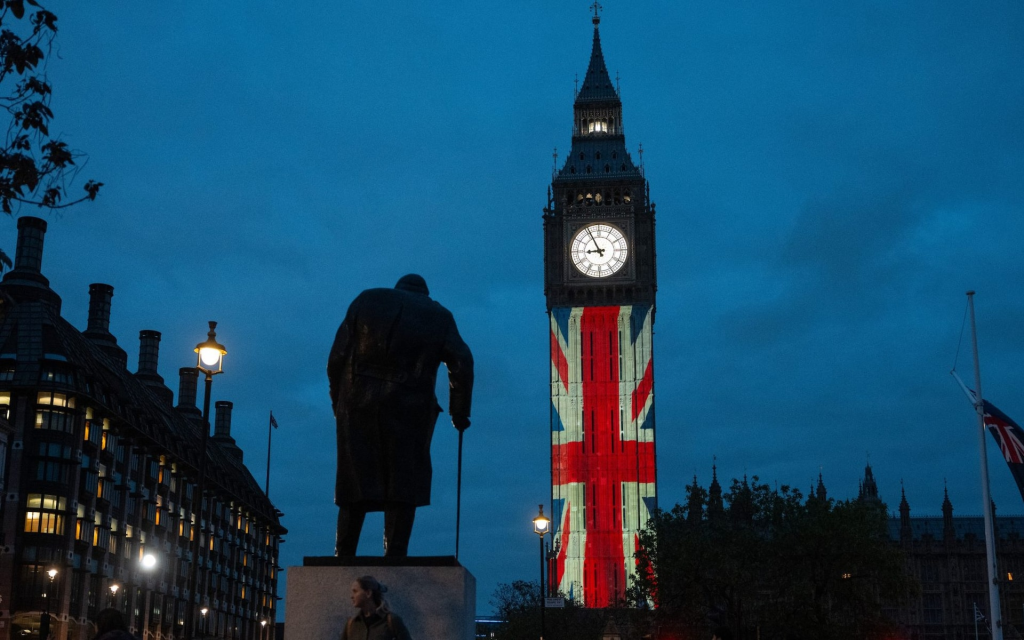
In short, there has never been a time of unquestioned national unity and pride – except, perhaps, in a few moments of great danger. But could today’s disaffection be something new, not just another passing phase but the onset of a post-national age?
Globalisation, unprecedented population change and technology are sweeping away once unquestioned solidarities. We cannot avoid technological and cultural shocks of unpredictable scope. Even Caxton’s printing press and an English translation of the Bible undermined age-old authority and precipitated two centuries of mayhem. It didn’t need the internet: marathon public readings of the Bible were enough.
But if today’s changes do spell the end of the nation-state, then it will take a lot down with it. Democracy and social solidarity rely on national identity, and the consequent willingness to be part of a larger society. This means taking some pride in it, for with pride comes responsibility.
The think tank Demos has published a survey of how British people think of themselves and their institutions. It shows, most notably, a steep and sudden fall in what one might call political pride: pride in being a British citizen, in British history, in Britain’s role in the world. There is a very sharp decline in pride in Parliament, the legal system and above all the BBC, all until recently quintessential British symbols. A poll of 21 European countries suggested that the British were the least “emotionally attached” to their country.
All this is alarming, though not surprising. The disenchantment is common to Right and Left, and it comes from a sense that nothing is working at a time of prolonged economic stagnation. The same gloom is widely shared across Western Europe. Germans complain about rotting infrastructure and trains being late. The French complain that they can’t get a medical appointment. Everyone complains about mass immigration, blatant criminality and useless politicians. I doubt that many readers of these lines, however patriotic, would proclaim their pride in today’s BBC, Parliament or legal system.
Yet there is a difference between impatience with institutional failings and deep-seated indifference to or even rejection of national identity. Today’s anti-patriotic vanguard seems to be the fairly young and educated. Many in higher social classes aged from 25 to 49 reject the symbols and substance of national belonging: flag, Armed Forces, history.
There are attractions in laid-back cosmopolitanism for the young, as I remember as a student in Paris and indeed for the prosperous middle-aged too, “working from home” in the nicer parts of Europe. Not the least attraction is irresponsibility. As the economist Sir Paul Collier puts it “well-educated metropolitans… have gradually peeled off from shared national identity” enabling them to “withdraw from obligations to their provincial fellow citizens”.
Significantly, those most un-proud of both culture and history seem to be those most exposed to the influences of secondary and higher education and our cultural institutions – museums, galleries, the National Trust, the BBC, even the Church of England, stubbornly pursuing its historically fraudulent reparations project. Many of these institutions share and propagate an overwhelmingly negative view of Britain and its history. They see this as bold and virtuous – a facing up to our past. But in reality they present a distorted, partial, often false yet always depressing vision.
History is not, of course, the be all and end all of national existence. Economic growth and border security may be today’s priorities. Nevertheless, there is a strong case for regarding a shared sense of history as a fundamental pillar of identity and hence a foundation for political and economic success. Yes, face up to our history, but that includes much that should inspire gratitude for what we have inherited. It should cause us to realise how much is precious and which needs to be protected, repaired and handed on.
We need a future government that will take this duty seriously. It must stop public money being used in harmful ways by quangos, politicised charities and cultural institutions. It should foster greater diversity of opinion in universities, which depend on taxpayer funding. It must get a grip on major national institutions by a consistent policy of appointment of trustees, for which ministers are responsible. It will, I hope, restore a more rigorous inspection system for schools and revise the national curriculum for history – a project on which I am presently working with the aid of a number of colleagues.
This will require steely political determination. But we are facing a range of genuine dangers, from Vladimir Putin’s sabre rattling to the unpredictable consequences of artificial intelligence. At least we have the right to require national institutions to refrain from undermining our sense of common belonging, self-confidence and justified pride.
A nation, said a French philosopher many years ago, is more than just a huge marketplace. It needs to inspire loyalty and affection, as more than just where you happen to live and work. A more recent philosopher Roger Scruton put it simply: it is our home – a sentiment that Kemi Badenoch has strongly and repeatedly endorsed. We need a national home for security, protection, solidarity and trust between strangers. To be homeless is always tragic. In today’s world, it could be fatal.