


The African Union is preparing a case, to be heard by the International Court of Justice, in which they will seek reparations for slavery from some of the nations that engaged in the slave trade. This will be a political manipulation of international law and institutions which will only add to widespread and growing distrust of both.
(A version of this essay was published in the Daily Telegraph on 12 March 2026)
Slavery is defined as a crime against humanity today but it was not seen as that, or defined as such, when it existed in the Atlantic world
African nations are concocting a legal case to be heard by the International Court of Justice, the principal judicial institution of the United Nations, in furtherance of their claim for reparations for slavery.
Britain will be in the dock, joined by other European imperial nations whose governments and subjects traded and enslaved Africans from the 15th to the 19th centuries, among them Spain, Portugal and France, with perhaps the Dutch, the Danes and even the notably self-righteous Norwegians added to the list, for they also traded in slaves.
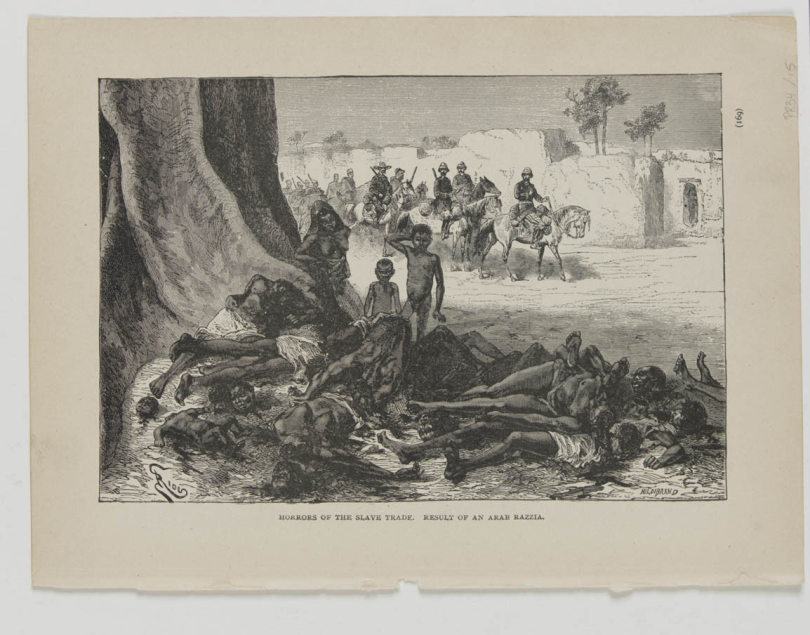
Surprisingly, there is no mention of the Arab slave trade that took even more Africans – 17 million as opposed to the 12 million transported across the Atlantic – to Arab and Ottoman lands in North Africa and the Middle East. The omission tells us all we need to know about this affair: it is a crude assault on the West using compliant international bodies only too pleased to assist.
An image showing ‘Horrors of the Slave Trade. Result of an Arab Razzia.’
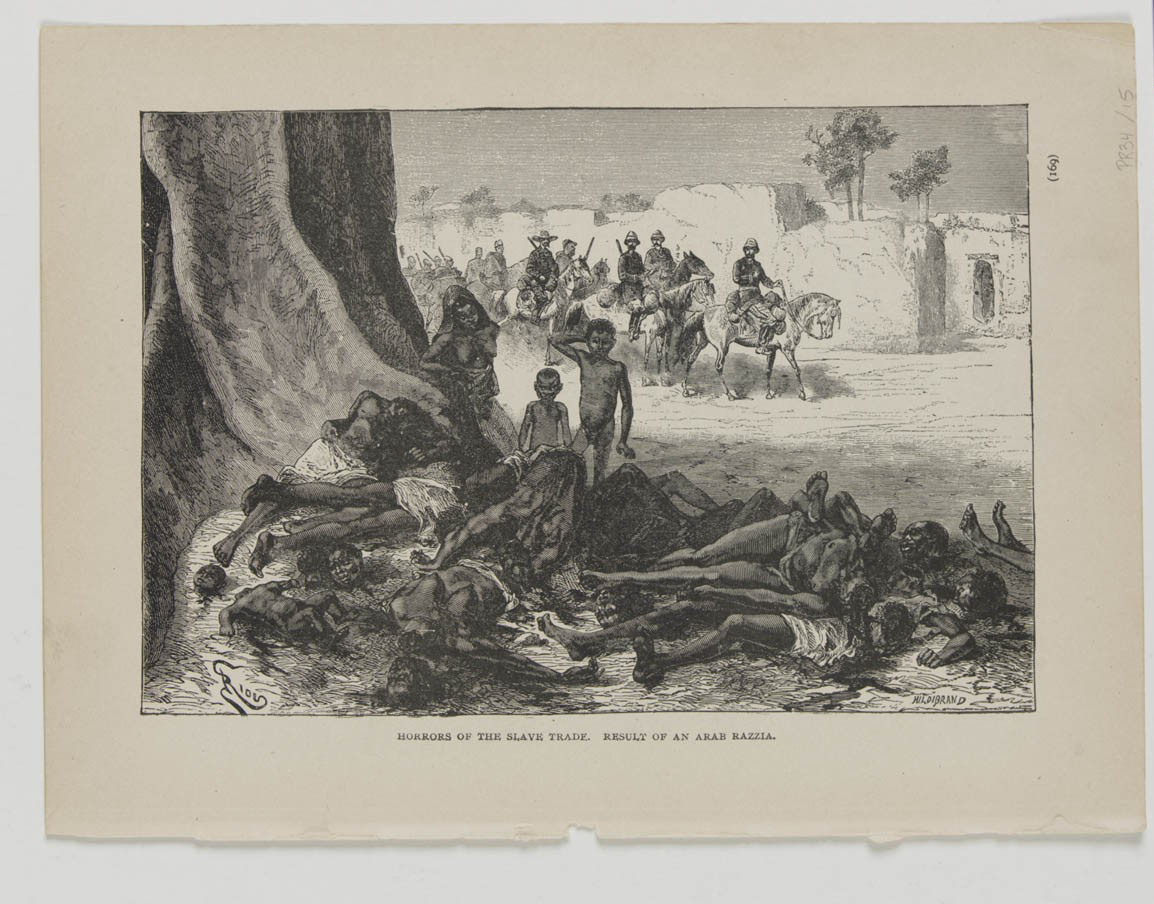
‘Horrors of the Slave Trade: Result of an Arab Razzia’, from J. W. Buel, Heroes of the Dark Continent (1889).
(A razzia was a hostile raid for purposes of plunder and the capture of slaves, especially as carried out in Africa)
As a legal case there will be many problems to overcome. There were no laws banning the slave trade and slavery until the British and the newly independent Americans began to pass them from the late eighteenth century. Slavery is abhorred today and defined as a crime against humanity, but it was not seen as that, or defined as such, when slavery existed in the Atlantic world.
Though monarchs and state-backed trading companies across western Europe were responsible for some of the slave trade, many slaves were traded, and the vast majority were owned, by individuals. Should West European taxpayers be on the hook for the crimes, defined as such retrospectively, of these people? Or should the bill be paid by their direct descendants only?
Yet no legal system worthy of the name holds people responsible for the crimes and debts of their distant ancestors: on what grounds (other than spurious ones) can anyone today, individual or taxpayer, be held responsible for acts committed three centuries ago?
And what of the Africans who captured other Africans? The first stage of enslavement always involved Africans enslaving other blacks, usually after tribal conflicts, and marching them to the West African ports for sale to traders there. Should not African nations be suing themselves for reparations?
These aggrieved nations will argue that the loss of population and the general disruption hampered their development, an unprovable argument. Oddly, they are not making a case on behalf of the descendants of slaves living today in the United States and Latin America where slavery was legal. Surely these people are more deserving of reparations than Africans living today in Africa?
Of course, this isn’t about history or even about law, but about politics. This claim, and others like it, are driven by resentment. Instead of focusing on the building of stable and prosperous societies in Africa, the nations of the African Union prefer to blame the West for their problems and use the courts to get what they can.
They should instead remember who gave the world a model for international law and mediation. The International Court of Justice (ICJ) which they intend to use traces its history back to two events: first, the Jay Treaty of 1794 between the new United States and Britain, which established an ongoing procedure for arbitrating outstanding issues left unresolved by American independence; and second, after the American Civil War, to the agreement in 1872 between Britain and the US to settle outstanding maritime claims. The West taught the world how to resolve international disputes, in short.
The US withdrew from the compulsory jurisdiction of the ICJ in 1986, however, concerned that it would be used against America and its citizens in political actions just like the one being planned against Britain. Now the Trump administration is withholding financial contributions to the United Nations which it doesn’t trust and wants to see reformed. As the US provides a quarter of total recurrent funding, the UN is crisis.
Weak African nations might think they will make a quick buck and simultaneously shame the West. But what they are actually doing is undermining respect for international institutions and law which were designed to protect states like theirs. At a time when the liberal international order is being challenged by Putin, Xi and the Ayatollahs, father and son, they will themselves be the great losers.
Whatever the ICJ decides, the voters and taxpayers of Western Europe will refuse to pay reparations for something they didn’t do, and the model of international order which Britain and America gave the world, and on which Africa ultimately depends, will be damaged.
Those who would manipulate international law for ulterior ends, whether they’re activist judges in this country or unscrupulous leaders of the African Union, beware: you will destroy the thing you love.


