

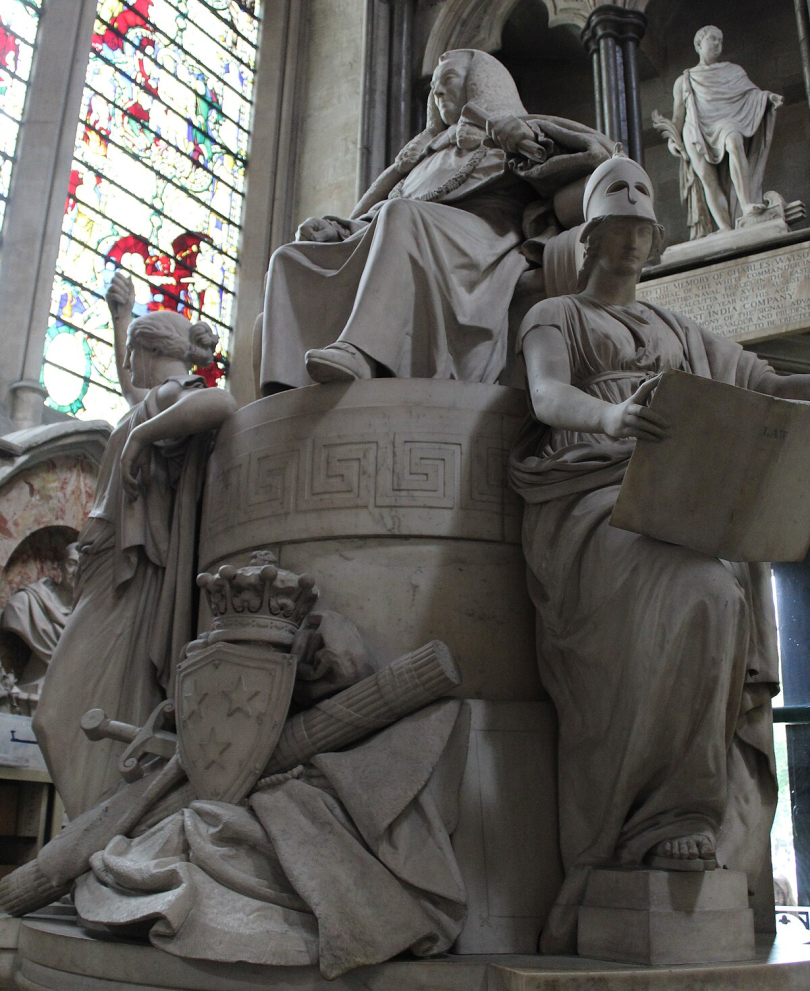

Jamaica’s National Commission on Reparations recently called on the King to refer the issue of historic slavery reparations to the Privy Counsel[2]. Putting to one side the more legalistic arguments about who might be entitled to claim, for what, and against whom, and ignoring the challenge of bringing a claim centuries after the expiration of relevant limitation periods, it is an interesting idea that might have some merit if it were to put an end to the controversy.
Sadly this seems unlikely, since campaigners are already in denial as to the weakness of their legal case and would surely never agree to be bound by any decision which did not affirm their position. Their claim for reparations is limited to the dreadful Atlantic slave trade as it was carried out before abolition in 1833 and to stand any chance of success, they would need to prove that it was always unlawful. It is accepted that if it had been lawful, then however abhorrent the practice, legal remedies of reparations and compensation would not be available.[3]
It is therefore a matter of considerable importance to understand the state of the law in England prior to abolition and to do that we have to look at case law because statute law did not govern the practice one way or another. Despite what campaigners would argue, the case law is very far from clear cut which is unsurprising, since it was in a state of development. If as they say, slavery was already unlawful, Parliament need not have wasted any time abolishing it, but no doubt because historic case law is inadequately reported, inconsistent, and tricky to interpret, it is being wilfully misrepresented to keep the claims alive in the public conscience.
The first thing to understand about the development of English Law is that it is not based on a specific code (as for instance in France) and starts from the proposition that everything is lawful unless it has been proscribed.[4] The next important thing to understand is that many practices and usages developed and were therefore accepted as lawful, before any attempt was made to define them in a legalistic way. People were, for example, trading goods and carrying out services long before there was any systematic judicial analysis of the relationships between the various counterparties.
That was undoubtedly the case with slavery – people were captured and enslaved for centuries before anybody asked themselves what philosophical justification there was for the practice beyond simple “victor’s justice”. Gradually certain theories emerged – for example, it was said that if a man was defeated in battle but survived, his life was forfeited to his vanquisher who was entitled to treat the man as his slave. The medieval concept of “villeinage” which was introduced into England after the Norman conquest is an example of a custom that became accepted through usage, and although it eventually died out in the Tudor period, it was as close to the institution of slavery as made no practical difference.
It is time to meet a young slave named James Somerset.
When he was about eight years old James was captured by slavers in West Africa and traded locally before being transported to Virginia, USA. There, in August 1749, he was bought by the English merchant and customs officer, Charles Stewart. After twenty years spent trading in the colony, Stewart returned to England with James as his personal servant.
When they arrived in England, James met two abolitionists who were prepared to help him gain his freedom, not by buying it, but by attacking the very institution of slavery itself. They arranged for him to be baptised in St Andrew’s Church in Holborn because one argument against slavery was drawn from Islamic teaching which explicitly forbade the enslavement of co-religionists. If the same applied in Christianity, it followed that since James was now baptised, he could not be forced to be a slave in England. It was a controversial argument that cut no ice with Stewart, and James ran away from his service a few months later.
Stewart was furious to be deprived of his property and in a vindictive reaction, arranged for James to be kidnapped and held aboard a ship captained by John Knowles with instructions that he was to be transported to Jamaica and sold.[5] The two abolitionists who had acted as godparents at his baptism applied for a writ of Habeas Corpus[6] which required Knowles to show cause for James’s seizure and detention. The case was argued in the High Court presided over by Lord Mansfield, then the most eminent jurist of his day.
For lawyers in the 18th century, the issues around slavery were not so far removed from another developing area of the law relating to employment, known at the time as “master and servant”, and cases usually involved one of two legal remedies used in connection with the enforcement of the rights of a master against his subordinate. “Trover” was the remedy available where somebody was deprived of his right of ownership of his property (and wanted it back), and “trespass to goods”, when he was deprived of the use of his property (and wanted compensation).
The legal distinction between employment and slavery depended on the existence of a contract: a servant served because he had agreed to do so, but a slave served because he had no choice in the matter. In practice there was little difference between being a servant or a slave, since the law allowed a master near limitless authority over his servants and imposed severe punishments on any who disobeyed him[7].
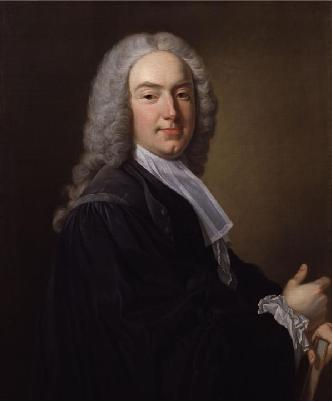
William Murray, First earl of Mansfield (1705-93), Lord Chief Justice of the King’s Bench,
by Jean-Baptiste van Loo
Lord Mansfield was a highly intelligent lawyer who would transform English commercial law in the 18th century. He placed great emphasis on the value of mutual contractual obligations and applied them to all types of working relationships to be found in society, so it is necessary to analyse his judgements with this mind. Another strong line of argument advanced by the lawyers in the case was less of an influence on his thinking, but was what we would call the floodgates argument – “think of the consequences for society…(if we give servants/slaves greater rights)”.[8]
On 14 May 1772 Westminster Hall was packed to hear argument in what everybody realised was an important case. The lawyers took the opportunity to review the practice of slavery over centuries but were less troubled by the moral issues raised than by the practical consequences that could flow from a decision. Lord Mansfield, who had already persuaded litigants to settle five or six similar cases, strongly urged the parties to put their relationship on a proper contractual footing which would have effectively turned a master/slave relationship into one of master/servant. His heavy hints fell on deaf ears and despite giving the parties time to sort the matter out to their mutual satisfaction, he had no option but to give judgment and he did so on 22 June 1772.
In words that have echoed down through the history of abolition, he declared that:
The state of slavery is of such a nature that it is incapable of being introduced on any reasons, moral or political; but only positive law, which preserves its force long after the reasons, occasion, and time itself from whence it was created, is erased from memory; it is so odious, that nothing can be suffered to support it, but positive law. Whatever inconveniences, therefore, may follow from a decision, I cannot say this case is allowed or approved by the law of England; and therefore the black must be discharged.[9]
Reparations campaigners argue that by these words Lord Mansfield declared slavery to have been unlawful in England, but in fact he confined himself to the narrow question of whether a slave could be forced to leave England against his will. He made his position plain enough:
Contract for the sale of a slave is good here; the sale is a matter to which the law properly and readily attaches…but here the person of the slave is immediately the object of enquiry; which makes a very material difference.
Put another way, he was not saying that the status of ‘slave’ was unlawful in England. On the contrary, he was affirming the right for parties to a contract for the sale of a slave to use the courts to enforce it. The difference in Somerset’s case was that Mansfield was not being called upon to determine the rights as between buyer and seller, but as between master and slave. As far as Mansfield was concerned, slavery was so abhorrent that it would require Parliament to change the law before a court would come to the aid of a master who wanted to send his slave out of the country against his will.
If there remains any doubt as to the importance Lord Mansfield attached to the existence of a contract in defining the relationship between master and servant/slave, he would put the matter beyond dispute some 13 years later in a case in which he effectively found against the slave despite the severe consequences of his decision[10]. In that case, he took the opportunity to explain the limited scope of his earlier decision: “The determinations (in Somerset’s case) go no further than a master cannot by force compel (his slave) to go out of the Kingdom”.
Lord Mansfield never engaged with the question of whether compensation or reparations might be awarded, although curiously the issue was touched upon, albeit not in the way a modern audience might expect. One of the lawyers had ascertained there were about 14,000 slaves in service in England, and, rather more precisely, some 166,914 slaves in Jamaica. A master was entitled to be compensated for the loss of his servant’s services (if for example, somebody had tried to lure a maid away from service) so if slave owners were forced to free their slaves, they were entitled to compensation and the total loss was calculated at about £700,000 using a base value of around £50 per slave[11]. Lord Mansfield, considered this “consequences” argument and mused “The setting of 14,000 or 15,000 free at once loose by a solemn opinion, is much disagreeable by the effects it threatens… How would the law stand with respect to their settlement; their wages? How many actions for any slight coercion by the master?”. In the event, he put these questions aside and declared that he was ruled by the law, whatever the consequences.
We do not know what became of Somerset after he was set free, and the case is his only memorial. It does not support the claim that slavery was unlawful in England before the 19th century, but it is still an important milestone along the path to abolition, not least because both the argument and the judgment were reported in a way which enables us to draw conclusions about the developing state of the law. By the end of the 18th century most fair-minded members of English society thought that slavery was morally repugnant, but it was not unlawful, and the status of a slave was recognised as being legally distinct from that of a servant who had the “benefit” of a contract of service.[12]
The claim for historic reparations will not get off the ground unless Parliament changes the law to allow for them. In the meantime, perhaps we should be celebrating the remarkable success of the abolitionist movement at the turn of the 19th century, rather than assert modern moral arguments to criticise abolitionism for not going far enough or fast enough.
Marcus Rutherford was born in East Africa and is a former International Disputes lawyer working in the City of London (now retired). He is currently writing an account of the Emin Pasha Relief Expedition (1887- 1890) sourced from the original diaries, notebooks and letters of the people involved.
[1] Somerset v. Stewart, 1 Lofft, 98 Eng. Rep. 499, 499 (K.B. 1772)
[2] See for example https://www.theguardian.com/world/2025/jul/03/caribbean-slavery-reparations-westminster-brussels. Reparation Orders were introduced for slavery-related offences under the Modern Slavery Act 2015 but very few have been made and (obviously) the Act does not apply to pre-1800 slavery.
[3] Explained in my article https://www.historyreclaimed.co.uk/a-case-for-slavery-reparations-perhaps-not/
[4] This ought to be too obvious to need explanation but for anybody in search of an example, consider foxhunting which was perfectly legal for centuries until banned by the Hunting Act 2004.
[5] None of the lawyers criticised Stewart’s conduct – it was accepted by everybody in court that slavery per se was not unlawful and how he treated James (short of killing him) was broadly his business.
[6] Habeas corpus is a well-established legal remedy requiring a person holding another in captivity to be brought before a court so that a judge can decide whether his detention is lawful.
[7] Few contracts of service were ever in writing and it was not even necessary for them to involve the payment of a wage, so ex post facto interpretation of what the parties had in mind when they entered into them proved to be a rich source of litigation.
[8] “Tis said, let slaves know they are all free as soon as they arrive there, (and) they will flock here in vast numbers, over-run this country, and desolate the plantations.” Mr Dunning for Captain Knowles.
[9] English common law developed by following the precedents of earlier cases and lawyers in the 18th century relied on privately published reports which were of variable quality. Because this case was of such public interest, a number of lawyers and journalists recorded both the legal arguments and the decision with a high degree of consistency. The report of the case most often cited, including the quote above, was prepared by Capel Lofft, a barrister of Lincoln’s Inn, but there are other versions.
[10] R -v- The Inhabitants of Thames Ditton (1785) 99 ER 891. Captain Howe, who had been living in America, retired to Thames Ditton with his wife and their slave Charlotte. When he died, his widow went to live in Chelsea and although Charlotte stayed with her for about 5 or 6 months, she then moved back to Thames Ditton where she struggled to survive. The question was whether the parish of Thames Ditton had an obligation to support her under the Poor Laws. Lord Mansfield’s decision was that as a slave, she was not bound under a contract of service and did not fall within the scope of relevant statues despite this having very harsh consequences for her. During submissions, he also disclosed that where slaves had come before him seeking wages for their service, he had always non-suited them.
[11] Not counting those elsewhere in the Caribbean. The case is an authoritative source for slave numbers in England in the late 18th century. The fact that a master was by law entitled to damages if he was deprived of the services of his servant explains why, when slavery was finally abolished by Act of Parliament, compensation was paid to owners rather than slaves.
[12] The Somerset case only concerned the application of English Law and recognised that different rules applied elsewhere in the world, as is still the case. It was (for example) unremarkable when the African explorer Samuel Baker boasted of buying his wife in the slave market in Hungary long after slavery had been abolished in British territories.


