

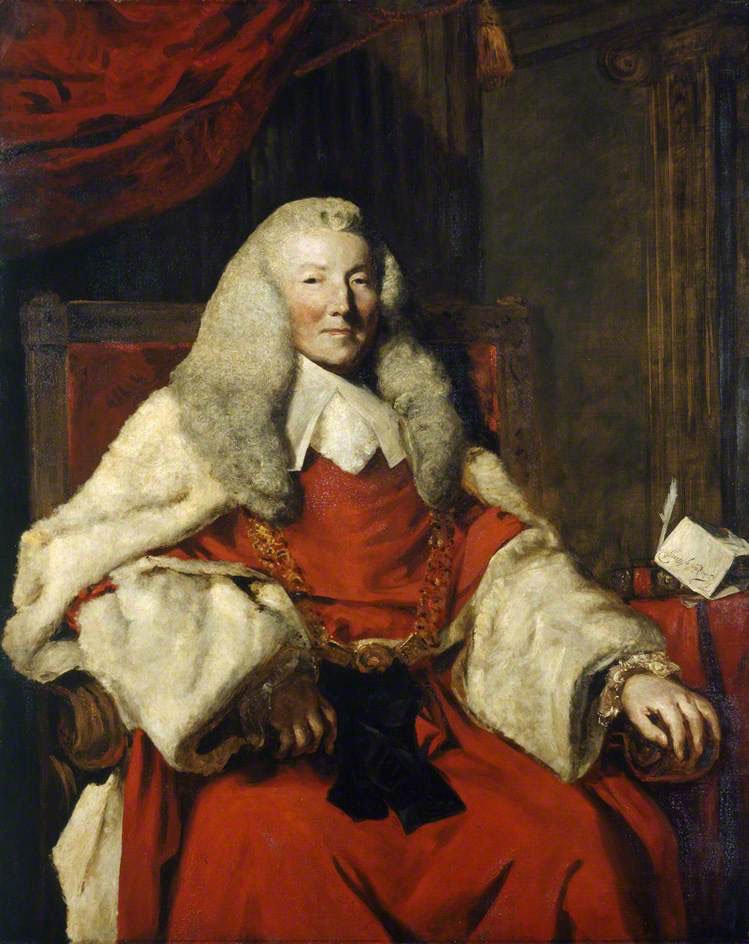

Marcus Rutherford’s article Slavery and Reparations. The Relevance of James Somerset’s case in 1772 [19/07/2025] led to an exchange of letters in a subsequent issue: Was the famous Somerset Judgment of 1772 recognized immediately as a legal landmark in the cause of anti-slavery, or did it only achieve this significance retrospectively? [Bilal Haider Junejo and Marcus Rutherford 12/09/2025] .
Slavery and Reparations. The Relevance of James Somerset’s case in 1772
Discussion: Was the Somerset Judgment (1772) only important in retrospect?
This question has relevance to the modern reception of Jane Austen’s Mansfield Park. In 1983, Margaret Kirkham (116) suggested that Austen intended an allusion to Lord Mansfield and the Somerset case in the title of her 1814 novel. Her premise undergirds her argument that Austen held abolitionist sentiments and that Mansfield Park compares the subjugation of Englishwomen in a patriarchal society with slavery. (The question of whether there are any valid grounds for asserting that Mansfield Park is an anti-slavery novel is one which I will pass over in this article.)
Kirkham’s speculation has since been asserted as a fact—for example, by Peter Knox-Shaw (2004,179) and Margaret Doody (2015, 336). The fact is confidently affirmed in book clubs wherever Janeites meet to discuss Mansfield Park. Standing athwart this modern consensus is John Wiltshire, who argues that Austen chose the name “Mansfield” simply “for its generic Englishness” (219). However, no literary scholar, so far as I am aware, has actually questioned the notoriety of the Somerset case after Mansfield’s death, as Bilal Haider Junejo has done.
The question is, would a reader in Austen’s time look at the title of her book and say to themselves, “Hmmm, this must be an allusion to Lord Mansfield and the Somerset case”? I’ve found no evidence that any readers or scholars made this connection before Kirkham—or, if they did, they never mentioned it in a letter, a diary, or an article. “How clever of Miss Austen to invoke Lord Mansfield’s name in her title,” said nobody prior to 1983.
I found no other authors of the period who used Mansfield’s name in reference to slavery, although the lack of a corroborating example does not negate the possibility that Austen is the lone mistress of subtlety who critiqued slavery in this allusive fashion.
I found characters named “Mansfield” in stories containing no reference to chattel slavery, such as The Shepherdess (1789), The Parson’s Wife (1789), The Heir of Montague (1796), A Visit to a Farm House (1804), Celia in Search of a Husband (1809), Amelia Mansfield (1809), The Prison of Montauban (1810), and The Ward of Delamere (1815). In the children’s book An Excursion from London to Dover (1809), kindly Uncle Mansfield bestows his East Indian fortunes on his niece. This suggests that the name was, as Wiltshire contends, a solid English name with no inferred connection to Lord Mansfield, let alone to the abolition movement.
Some novelists mentioned Lord Mansfield in passing as a distinguished jurist, such as in The History and Adventures of Godfrey Ranger (1813) and Simple Tales (1815), as well as in a few novels published in the 1830s. Modern Literature (1804), Self-deception (1816), and The History of George Godfrey (1828) reference his rulings on libel. Strategems Defeated (1811) mentions his preference for investing in mortgages rather than government funds. I found no mention of his ruling in the Somerset case.
As Junejo noted, Mansfield’s obituary did not mention Somerset. Nor, in fact, did the first full-length biography which came out five years after his death.The Life of William late Earl of Mansfield runs to more than 500 pages, and it does not mention “slave,” “slavery,” or “Somerset” in the text or the index, although many other rulings are discussed.
Lord Mansfield’s contribution to the emancipation of enslaved persons appears to have come to the forefront of the public mind—that is, outside of legal texts—no earlier than the mid-19th century after slavery was ended in the British Empire. An 1865 speech describes Somerset as “perhaps [Mansfield’s] most celebrated decision” (Goodeve, 11). According to the historical record, that simply wasn’t the case 50 years earlier.
Paula Byrne recently asserted: “Anyone reading Mansfield Park is going to think of Lord Mansfield and his role in the abolition of the slave trade” (22:20). This is true for an undergraduate English literature class today, but only because students are taught about the connection. I have found no evidence for the assertion in the digital databases of literature and newspapers of the past.
Byrne, Paula, interview. “Thomas Hardy’s Women, Jane Austen’s Humor, and Evelyn Waugh’s Warmth,” The Mercatus Center. https://www.youtube.com/watch?v=Nrhs3FmD9n4
Doody, Margaret. Jane Austen’s Names: Riddles, Persons, Places. UCP, 2015.
Goodeve, Louis Arthur. Lord Mansfield, C. J. A Founder’s Day Speech at Christ Church, Oxford, June 17th, 1865. London: Stevens and Haynes, 1865.
Kirkham Margaret. Jane Austen: Feminism and Fiction. 1983. 2nd ed. Athlone Press; 1997.
Knox-Shaw, Peter. Jane Austen and the Enlightenment. CUP, 2004.
Wiltshire J. “Some Names in Mansfield Park: A Critique of Margaret Anne Doody’s Jane Austen’s Names: Riddles, Persons, Places.” Persuasions: the Jane Austen journal (print version). 2020:42 pp. 218–26.
Lona Manning (MA Res U of York) is an independent researcher and writer. She lives in Canada. Her research in this article was first published on her blog, “Clutching My Pearls.” She studies the forgotten sentimental novels of the long eighteenth century, which are a rich trove of information about the social attitudes of the time. www.lonamanning.ca


