


Dear History Reclaimed,
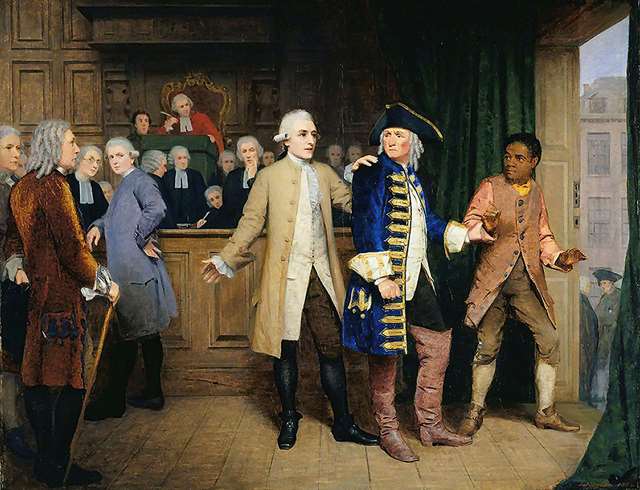
“[Hercule] Poirot does not like things that he cannot explain.” This was what the memorable character played (by Sir David Suchet) observed in the episode One, Two, Buckle My Shoe — and what I, in the wake of reading Mr Marcus Rutherford’s fascinating piece upon the most remembered judgement of Lord Mansfield’s career, have cause to reiterate upon this occasion. This is because Mr Rutherford’s essay prompted me to look for something which I thought I would find — but, most intriguingly, did not. (See https://historyreclaimed.co.uk/slavery-and-reparations-the-elevance-of-james-somersets-case-in-1772/ )
To come straight to the point, I decided it might be worth everyone’s while to know what was made by contemporaries of Somerset v Stewart (1772) by having a look at the obituary of His Lordship in The Times — which appears in the issue of 19 March 1793 (in the first column on the third page).
Do you recall the confusion of Colonel Ross when Sherlock Holmes alluded to “the curious incident of the dog in the night time” in The Adventure of the Silver Blaze — that “the dog did nothing in the night time” (to which Holmes replied: “that is the curious incident”)? Well, that is exactly what has happened on this occasion as well — for there is, in the obituary, no mention of Lord Mansfield’s most celebrated judgement. No mention of the only reason that he is remembered by virtually anyone who still remembers him. Is that not singularly curious?
It is true, of course, that none of His Lordship’s judgements have been mentioned in his obituary; but then, how many of his judgements have ever been as famous as the one he gave in the case of Somerset v Stewart? Given all that agitated excitement to which His Lordship’s words in that particular judgement are regrettably able to give rise to even today — in a world which one would like to hope has improved vastly, and in almost every way, since that of the eighteenth century — so striking an omission in the obituary overshadows almost everything that has not been omitted.
But why, I am obliged to wonder, was it made in the first place? Was it because The Times (of whose political sympathies in the 1790s I cannot, unfortunately, claim to be absolutely sure), with the rising influence of men like William Wilberforce (who had been an MP since 1780) and Thomas Clarkson, had no desire to draw (unnecessary) attention to a case that had been decided over twenty years ago? Or was it because the judgement in Somerset v Stewart had been of no particular interest to people in the eighteenth century (meaning there had been nothing revolutionary or extraordinary about it, however remarkable that might sound), and the writer of the obituary (assuming he remembered the case) had seen no reason to single it out for mention? So far as I am aware, neither the 14,000 ‘slaves’ in England rose in jubilant revolt against their masters after the judgment — nor did those masters ever decide they had to seek compensation for the loss of their ‘property’. Had England, therefore, forgotten about Somerset v Stewart by the time of Lord Mansfield’s death? Was the judgement’s greatness only thrust upon it in after years? I can, unfortunately, only ask the questions to which I hope persons more informed than your humble servant will not fail to return satisfactory and unforgettable answers.
It is also ironic to find that even though The Times saw fit to make no mention of Somerset v Stewart in the obituary of its judge, the newspaper’s correspondent in Freetown (which is, of course, the capital and chief port of Sierra Leone) more than a century later had no hesitation in observing, in the issue of 30 October 1928 (page 54, column 1) that
It is impossible to treat, in a short article, of the vicissitudes through which Sierra Leone passed, or to deal with the scenes of bloodshed and rapine that she shared with other West Coast anchorages by reason of the highly lucrative slave trade carried on by the adventurers of every sea-going European nation throughout the 17th and 18th centuries. It is enough to record that public opinion was aroused in England in the seventies of the 18th century by the plight of a large number of African slaves brought to England from the West Indies and there left destitute. From the judgment of Lord Mansfield in 1772, that a slave obtained his freedom as soon as he set foot in England (my emphasis), there began a movement rapidly increasing in force, that not only stamped out the slave trade but also provided in Sierra Leone a home for destitute Africans in England, in the West Indies, and in Nova Scotia, as well as for Africans rescued on the high seas after enslavement on the West African coast.
To think that the observation in italics should have been made in 1928, but not in 1793! Could anything be more bizarre? Can you imagine finding no mention of the Emancipation Proclamation in the obituary of President Abraham Lincoln in America’s leading newspaper of 1865 (but a glowing tribute to it in an issue of the same newspaper from the year 2000)?
I would like to think I can already guess your answer, Sir — for I am, with lots of thanks and every good wish,
Yours very sincerely,
Bilal Haider Junejo, LLB LLM (Lond) CertHE (Oxon) AdvDip (Cantab).
Marcus Rutherford responds:
I understand Mr Junejo to be asking: “Why, if the Somerset case was such an important step along the path towards abolition, does it not appear to have been recognized as such before the 20th century?”
There may be other reasons, but the one he is probably hinting at is that the abolition movement during the period 1772-1833 relied on moral rather than legal arguments to change the law, so there was never the need to rely on any aspect of the argument or judgement in Somerset’s case. It was not, for instance (at least to the best of my knowledge), cited in any subsequent court cases as authority for the proposition that slavery has always been unlawful in Britain.
Throughout the 19th century, Britain was leading the field in the global eradication of slavery – indeed there is a very strong case that it was the driving force behind colonial expansion in tropical Africa – but pride in the achievement was focused entirely on the achievement of moral change rather than the impact lawyers had in the argument.
It is really only academics who subsequently highlighted the case as an important marker on the road to abolition, for the reason that it usefully summarised the state of the law as at that date.
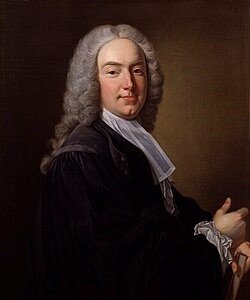
William Murray, 1st earl of Mansfield (1705-93)


