


A recurring trope in educational and curricular controversies is the conflict between progressives (the progs) and traditionalists (the trads). This counterposition extends beyond the persons involved to reach our ideas about knowledge itself. What kind of knowledge is best for humanity’s self-knowledge and for society’s progress, and who are the best people to provide it? In this sense, public controversies about knowledge and the school curriculum always involve contestations about who has the greater epistemic authority to decide what kind of knowledge a society should provide for the next generation.
The decades-long trend among those responsible for education has been to favour new knowledge: that which is original and speaks to contemporary rather than past realities. From this point of view, traditional knowledge is, like yellow label items at the supermarket, out of date. Any truth value that may have once inhered in traditional knowledge has evaporated and the only reason anyone could have for advocating for it is because they themselves gain status or material advantage by doing so. In questions of knowledge, ‘trads’ are therefore judged to be self-interested, and an irrelevance or hindrance to those seeking to advance original knowledge. In this framework the humanities fare poorly. Scientific developments since the Enlightenment have contributed to technical and social progress which have resulted in the people of Western Europe living longer, healthier lives than our predecessors, or contemporaries living in less technically and socially-developed countries.

Mosaic of Plato’s Academy in the villa of T. Siminius Stephanus in Pompeii, around 100 BC to 100 CE
Little wonder then, that over the twentieth century, scientific knowledge has become the dominant model of knowledge itself, despite warnings from philosophers of science such as Ernst Cassirer and Michael Polanyi that this was neither true nor desirable for society at large. So we have two related premises that have dominated the outlook of our political and cultural elite: that knowledge needs to be constantly original; and, from this, that the forms of knowledge best able to provide progress thus defined, are the natural sciences. The structure of thinking can be found in different historiographical approaches too: do we see the moments of revolutionary rupture as most important in history, or the periods of relative social and political stability?
What follows is a sketch of a history of ideas of key thinkers that illustrates how each new contribution that significantly advanced the state of our collective knowledge in Western Europe was predicated on open-minded engagement with established knowledge and prevailing cultural beliefs. Rather than isolated moments of significant intellectual breakthrough, waiting to be made obsolete by the next breakthrough, originality is often unintended, and made possible through a deep engagement with, rather than rejection of, past knowledge. Original insights are superseded, but the best of them are incorporated in new knowledge (just as eggs disappear as they are incorporated in a cake, yet they remain a constitutive part of it). In the field of the sociology of education, Rob Moore has criticized a reductive historiographical approach to the development of ideas as a “tombstone” version of progress which speaks to a broader antipathy towards the past more generally.[2] Working backwards chronologically, I select key ideas from Kant, Vico, Augustine of Hippo, and Plato in order to identify affinities and differences in their thought.
Kant
The following quotation illustrates the nature of Kant’s originality and shows why he is considered to be a revolutionary thinker:
It has hitherto been assumed that cognition must conform to the object […] Let us then make the experiment whether we may not be more successful in metaphysics if we assume that the objects must conform to our cognition.[3]
Here, Kant is effectively challenging the postulates of existing philosophical thought concerning knowledge and belief. Instead of a God-given world of natural objects existing prior to our knowledge of them, and the truth of our knowledge of such objects being guaranteed by a divine source, Kant places human reason as the locus for intelligibility as knowledge, and as the source of legitimacy of knowledge claims as truth.
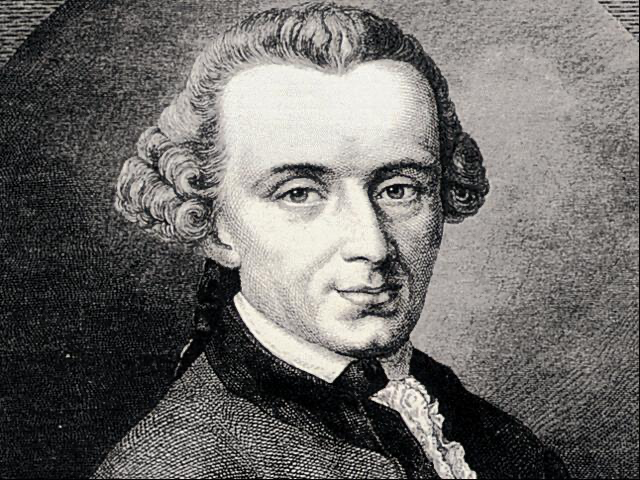
Immanuel Kant (1724-1804),
Kant’s originality is grounded in his prior engagement with the key intellectual problems then arising from increasingly apparent tensions between metaphysics, knowledge in the natural sciences, and religious belief. One important problem for him was that traditional philosophical postulates for the possibility of knowledge of a divine realm and of nature itself, left human reason constantly trying to catch up. His Critique of Pure Reason wrested meaning from religion into “the world of human thought, intention and control”.[4] Kant’s thought experiments about the role of human reason and his method of immanent critique have come to be regarded as intellectual hallmarks of modernity.[5]
Kant developed ideas from Alexander Pope’s Essay on Man and posited the existence of an all-sufficient Being as the grounds for “all inner possibility of things and also of the necessary and contingent laws of nature”.[6] Later, he became more concerned with the existence of “a common sense religious standpoint that is not dependent upon the proof of metaphysical doctrines, but is equivalent or perhaps even stronger in its practical import.”[7] Eventually, he developed this insight, explicated in Critique of Practical Reason, and religious thought came to be located within his moral theology. Contrary to the view of some scholars, it can be claimed that Kant’s work presents a complex relationship with Christian thought and belief rather than standing in opposition to it.
Nor was Kant indifferent to the importance of virtue, especially courage, the first virtue according to Aristotle’s Nicomachean Ethics. In What is Enlightenment? (1784), Kant wrote:
Enlightenment is man’s emergence from his self-imposed immaturity. Nonage is the inability to use one’s own understanding without the guidance of another. Immaturity is the inability to use one’s own understanding without direction from another. Self-incurred is this tutelage when its cause lies not in lack of understanding but in lack of resolve and courage to use it without the guidance of another. Dare to know! Have the courage to use your own mind.[8]
This more polemical essay is directed primarily against the power and influence of church institutions of his time. Courage is needed to think independently (note, not critically) because such thinking is needed to pursue new lines of thought that have the potential to challenge orthodoxies and our most deeply held beliefs, whether at an individual or a socio-cultural level.
Kant’s solution to the tension between religious belief and human reason was to create a distinction between noumena and phenomena. His first Critique presents an act of severance in cognition necessary to free human reason and ensure its survival under the pressure of expanding knowledge in the sciences, on the one hand, and a confused paralysis in metaphysics, on the other. If, subsequently, his work has been interpreted as justifying one-sided secularism or rationalism, a counterargument might be found in reposing his epistemological approach within a religious paradigm which, historically, informed his critical thinking. It does not require a huge leap of imagination to see Kant as expressing something like the words in Matthew 22:15–22 when Jesus says to the Pharisees, “Render therefore to Caesar the things which are Caesar’s, and to God the things that are God’s.”[9]
For Kant, making human reason central was not the same as conquering religious belief. If human reason is given by God, in making it central to authorizing the knowledge that is accessible to human cognition (phenomena), the influence of God’s authority remains intact, but is confined to belief and morality rather than epistemology. However, once accepted, human reason provides a necessarily more open, potentially less stable, source for the legitimization of epistemological authority than belief. Once established and supported socially through, for example, Wilhelm von Humboldt’s establishment of the university in Berlin, the sphere of intellectual freedom articulated by Kant facilitated the growth of knowledge at a faster rate than hitherto possible.
Kant’s originality arose not from passively accepting past knowledge and repeating its insights. Nor did his originality lie in abandoning past knowledge and throwing himself into the increasingly fashionable realm of empirical science. It arose from him directing his will and energies into bringing truths from both realms of knowledge (the subjective and objective elements) into dialogue. This was a conversation with a long gestation within the intellectual traditions of classical, medieval, and Renaissance thinkers, which focused on recurring problems such as: How can there be a reconciliation between immanent consciousness or thought and the objective world, which exists independent of human consciousness? And can the status of knowledge be reconciled with the prevailing systems of socio-cultural belief? These questions are integral to what makes us human.
Vico
During the Renaissance, the classics came to be seen more as (respected) material for improving knowledge about contemporary society rather than solely texts to be subjected to narrow monastic reading and theological interpretation.[10] Some argue this marked a cultural shift, as new knowledge in the natural sciences and history began to emerge, and theology, philosophy, and the classics began to be treated less as a source of epistemological authority and wisdom per se.
A renewed interest in the classics was a feature of the Renaissance world. Ancient texts, some translated by Arab scholars as well as those that continued to be studied in Christian monasteries, were more widely available as a consequence of the increasing trade in goods and ideas from the fourteenth century onwards. Aristotle’s idea, contra Plato, that the physical growth of living forms expressed a teleological maturation rather than a process of decay meant that the world of nature was beginning to be regarded as an object of study as well as the work of God. New discoveries and knowledge posed important problems for theology, such as how to reconcile the increasingly evident fact of human diversity with the belief that God’s world was eternal and universal. And if humans were meant to be made in God’s image, that is, eternal and universal, then how to explain findings from hitherto unknown lands where human customs and culture were very different?
Thirty-five years before Kant’s first Critique, Giambattista Vico’s The New Science, written in 1752, also addressed the problem of how to reconcile religious belief with questions arising from access to a greater range of objects from distant and unfamiliar lands.[11] Vico’s intellectual creativity led him to an original conceptualization of verum factum: that is, truth arrives through our construction of knowledge rather than through empirical knowledge alone. We can see an earlier manifestation of the concern to maintain the status of reason and human knowledge in a historical context where, increasingly, intellectual efforts were being directed towards furthering empirical knowledge of the contemporary and natural world.
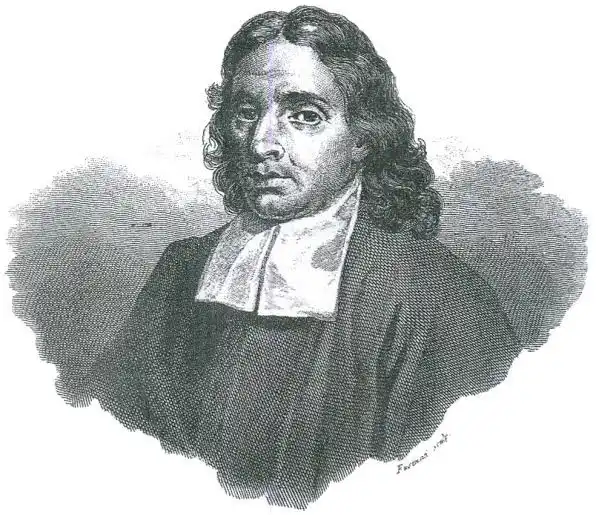
Giambattista Vico (1688-1744)
Vico’s explication of verum factum prefigures Kant’s subsequent introduction of the concepts of noumena and phenomena. Vico postulates a different relationship between epistemology and ontology according to whether the knowledge was of the natural world or of historical (human) institutions. Each, he argued, stood at a varying distance from God-given ideal forms. As a Catholic, Vico embraced religious belief, which had to remain mysterious and inaccessible to human cognition, while he also sought justifications for growing empirical knowledge. He developed the idea of history as a distinct form of knowledge about society and its institutions. He reasoned that although the natural world was closer to God’s original creation than the human-made world, its objects remained inferior to their ideal counterparts. Consequently, any direct knowledge (by revelation) of natural objects was not possible without demystifying God. Indirect, sense-based knowledge of natural forms was possible, but it would be flawed because its objects of study were flawed.
Vico believed that because society and institutions were even further away from God’s ideal forms than natural objects, knowledge of them did not depend on the senses. Instead, he reasoned that knowledge in the humanities arose from human thought based on logical and mathematical rules and imagination. The humanities, and history in particular, provided knowledge about the human world, constructed via human intellectual and imaginative power, not given by God (which would be blasphemous) nor by sense perception alone. Verum factum loosened the ties of religious belief that had constrained the scope of human reason and provided an embryonic justification for its legitimising status.
Augustine and Plato
In the fourth and fifth centuries, a period which spanned the transition from the Classical to the Christian world, Augustine tussled with the introduction of doubt within Christian doctrine that was absent in Greek classical thought. In the latter, there was no fundamental conflict between human use of reason, knowledge, and divine power. But, in Christian theology, Adam and Eve’s curiosity to know brought them into conflict with God’s will. Consequently, within a Christian cosmology, human reason and knowledge could no longer be the absolute, unqualified good postulated in classical thought. In Platonic cosmology, belief and knowledge had yet to be fully conceptualized as distinctive entities.
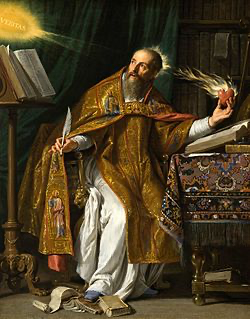
‘Saint Augustin’ as visualised by Philippe de Champaigne, circa 1645
Eventually, through his engagement with Christian thought, Augustine came to uphold the necessity of belief as a prerequisite for knowledge.[12] The claims of each could be taught through different methods: exterior and interior teaching. The former was concerned with knowledge and reason; it required teaching through signs that referred to external reality. However, the guarantor of the truth behind these knowledge claims required interior assent. This was achievable only by divine illumination within, and was the outcome of God’s direct, interior teaching. Consequently, Augustine concluded, “The man who can reason should know what he, along with others, must first believe.”[13] Reason was acknowledged but held firmly in second place to belief.
Augustine straddled a Platonic cosmology of ideal forms with an unknowable and perfect God and with a Christian cosmology in which God made himself incarnate in Jesus and, in so doing, became associated with frailty and sin. Augustine accepted Plato’s idealist human hierarchy according to virtues distributed by an unknowable divine power. He also accepted the belief in Platonic ideal forms, and from this, he created a division between awareness of the body that can be approached through a lower, unreflective “mode of perception” or sensibilia, and vita, or life, which requires a higher perception or intellegibilia. The latter requires the mind to “catch itself in the act of loving beauty and notice the idea (species) that transcends the thing, the material bearer.”[14] From Christianity, Augustine was inspired by Paul’s writings about love for Jesus and belief. It was the latter, and not the kind of internal introspection proposed by Plato, predicated on the superiority of the episteme over doxa, that he came to regard as being the way for the soul to progress from darkness to light.
Plato’s knowledge distinction between doxa and episteme is sometimes read as a justification for his anti-democratic political model. But in the Republic, he introduces something of an internal, epistemological distinction. Socrates holds up his hand and asks his interlocutor how many fingers he can see. The interlocutor answers correctly. Socrates then asks him whether the fingers are hard or soft, and the interlocutor has difficulty in answering.
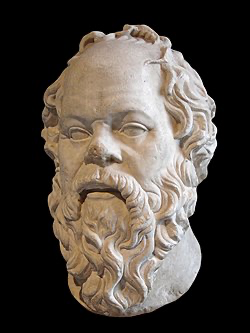
A marble head of Socrates in the Louvre (copy of a lost bronze head by Lysippus)
Plato’s example refers us to a distinction between knowledge statements which are based on physical perception, and can be expressed in systematic concepts of number, and those which depend on experience and judgment and are better expressed through every day and literary metaphorical language (e.g. ‘hard as nails’ or ‘soft as a feather’). He does not elaborate further, but the distinction between concept, propositional knowledge, and imaginative, interpretative knowledge was, over centuries, developed (and questioned) by epistemologists and aestheticians.
Later, Socrates responds to an interlocutor who praises the usefulness of astronomy for the purposes of agriculture:
I am amused at your fear of the world which makes you guard against the appearance of insisting upon useless studies…in every man there is an eye of the soul which, when by other pursuits is lost and dimmed, is by these purified and re-illumined.[15]
Here, in Plato, we have an early introduction to ideas and themes about knowledge, belief, and truth, and how these constitute the limits and freedoms of our humanity. Implied in this excerpt is the idea that those who can only value ‘useful’ knowledge are motivated by ‘fear of the world’, and we could extend this to fear of ourselves. If allowed to prevail, our knowledge of the world itself will be diminished because in focusing on the ‘useful’ so much, we forget to cultivate knowledge which replenishes the ‘eyes of the soul’ which we could understand to include the internal aspects that distinguish us a uniquely human, including reason and imagination.
That these ideas continued to provide inspiration, as well as generate questions and studies through which our knowledge of ourselves has increased in complexity and nuance, is itself a testament to the power and value of the classics and humanities. Far from irrelevant to the prevailing pursuits of a given society, “useless studies” are essential to broaden and deepen our collective understanding and to subject our understanding to tests of reason through which we move closer to truth.
Conclusion
From our brief walk through a selected history of ideas, we can see a pattern of progress where intellectual threads are not periodically broken and superseded. Instead, there are existential questions that recur and are engaged with by thinkers who, in attempting to address the intellectual problems of their time, also succeeded in arriving at solutions that presented something original.
This is ‘critique’ in the Kantian sense. It is very different from the more superficial and arbitrary contemporary concept of critical thinking. The product of their thinking has been knowledge that has been codified in the disciplines of the humanities, in which the study of classical books has a legitimate and central place. The un-codifiable product of humanities and classics, thus understood, has been the affirmation of wisdom and judgment, cardinal virtues whose genealogy can be traced to Plato and Aristotle. The fundamental revisability of disciplinary knowledge, the understanding that we are the source of truth judgments, and that these judgments are rendered stronger through engaging as fully as possible with knowledge in all the disciplines (the classic liberal curriculum) are important aspects of intellectual and imaginative freedom. They are just as important as freedom from material deprivation, to which science has greatly contributed.
However, Ernst Cassirer reminded us that science and its modes of thought, of great importance and practical applicability as they are, neither obviate belief, or expressive or aesthetic symbols, nor our need for them. They are as much a part of our humanity as conceptual abstraction. Before science can be put to use, human will, belief and imagination are required. These are the objects of knowledge of the arts and humanities. Cassirer argues that the expressive and subjective features of mythical thinking that characterize primitive, pre-modern societies do not disappear with the march of rationalism and science but reappear in higher form in the arts and humanities. Man, he argues, is above all, homo symbolicus. He proposes this to counter the, by then, growing cultural view that man was first and foremost homo rationalis: that human and societal progress were to be achieved, measured and valued by what could be empirically assessed. This view favoured the sciences over the humanities because of the formers’ applicability to practical problems facing society – generally, to great positive effect for the living standards of so many people.
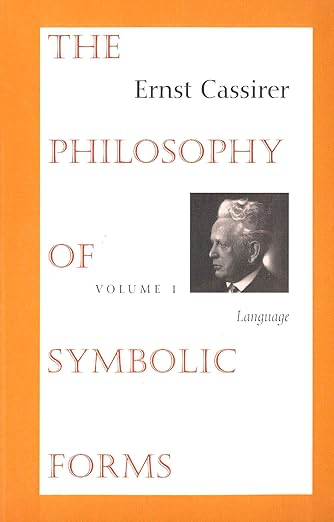
The Philosophy of Symbolic Forms, Volume 1 – Book link here
Cassirer fully acknowledged society’s progress made possible through the application of science, but insisted that to make science the dominant epistemological paradigm for understanding the world and humanity would be reductive: for every knowledge insight, there is a knower whose subjectivity remains unknowable, or severely limited at least, through the methods of scientific knowledge. His is a more capacious understanding of humans; we do not have to choose which is the most important form of knowledge because all forms are needed in the effort to make the world and ourselves meaningful and our knowledge more reliable and truthful.
To end on a historical note, one of the achievements of liberal democratic politics in Britain has been the introduction of the possibility of providing an education based on a curriculum rooted in both the humanities and sciences—a broad and balanced liberal curriculum— for everyone. The fact that the classics and humanities are in such a parlous state today reflects problems in our cultural valuation of them, not the subjects themselves. Only sixty years ago, British politicians could write in the Newsom Report (1963) of children not deemed suitable for academic study:
Their future role politically, socially and economically is vital to our national life but, even more important, each is an individual whose spirit needs education as much as his body needs nourishment. Without adequate education human life is impoverished. […] But there is no time to waste. Half our future is in their hands. We must make sure it is in good hands.[16]
MINISTRY OF EDUCATION
Half Our Future
A Report of the Central Advisory Council
for Education (England)
LONDON
HER MAJESTY’S STATIONERY OFFICE
1963
Education can have other extrinsic functions in modern, complex societies, but if we lose the core in which individual flourishing encompasses more than just food, money, or politics, then we cut ourselves adrift from the tradition of knowledge, leaving us less able to make ourselves and our contemporary world meaningful. We are accustomed to thinking about knowledge making us free or unfree, but we forget that this very possibility rests on the prior work undertaken over centuries to separate knowledge itself from belief and opinion, and to identify and understand these distinctions in human cognition so that each may be rendered its due.
Alka Sehgal-Cuthbert is the founder of Don’t Divide Us (https://dontdivideus.com/) and a Director of History Reclaimed.


