The King was made to endure a strange performance at the opening of the new session of the Scottish Parliament. Young actors performed excerpts from Through the Shortbread Tin, a play wokishly satirising Scottish identity. Was it intended as an ironical reminder that Scotland was fully part of British history, not a virginal bystander? Or was it just another swipe at colonialism? Either way, it recalls the huge part Scots played in running the British Empire. One globe-trotting Victorian MP, Sir Charles Dilke, even expressed surprise that the common name for the United Kingdom abroad was “England”, when given the omnipresence of Scots it should really have been “Scotland”.
Scots were perhaps most famous as soldiers. The Black Watch served all-round the empire from beginning to end – fittingly, they were on duty at the final handover of Hong Kong. A century after the Black Watch first won renown, the original “thin red line” of infantry keeping the empire safe was the 93rd Foot (Sutherland Highlanders) under Sir Colin Campbell.
A century after that, Lord Lovat (successor to the last peer publicly beheaded in England after the ’45 rebellion) and his piper Bill Millan stepped ashore on D-Day. During two centuries of empire, soldiers in kilts became a hallmark of Scottish patriotism, and so they remain, if sadly reduced in number and with the glorious old names amalgamated.

Advance of the Highlanders at the Battle of Prestonpans, Scotland, the first significant engagement of the Jacobite rising of 1745 Credit: duncan1890/Digital Vision Vectors
An extraordinary number of Scottish officers ran the Army from the 18th century onwards. Many were successful, including Archibald Wavell, who came from a Black Watch family, and as the last effective Viceroy of India sorted out the appalling Bengal Famine. Some were less so, such as Lord Elphinstone who presided over the catastrophic retreat from Kabul in 1842. On Douglas Haig, who led the Army to a bloody victory in 1918, opinions differ.
Scottish lairds were vastly over-represented as governors and viceroys, and legions of middle-class Scots served as colonial administrators, engineers and doctors. Among them were two of Australia’s founders, Lachlan Macquarie and Thomas Brisbane. One of the most dutiful of proconsuls, the 8th Earl of Elgin, went from governing Canada (where he was pelted by a Tory mob) to China and then to India as Viceroy, where he died on tour after a heart attack crossing a rickety wooden bridge. His son also became Viceroy.
Elgin had loathed greedy Hong Kong merchants, but felt obliged to defend them by bombarding Canton and later he burnt the Imperial Summer Palace as a punishment for torturing British and Indian prisoners. Among the merchants he despised were the opium-dealers William Jardine (a doctor from Dumfriesshire) and James Matheson (from Sutherland). They became the greatest of traders in China, and forerunners of today’s vast Hong Kong-based conglomerate, which fittingly has a thistle as its logo.
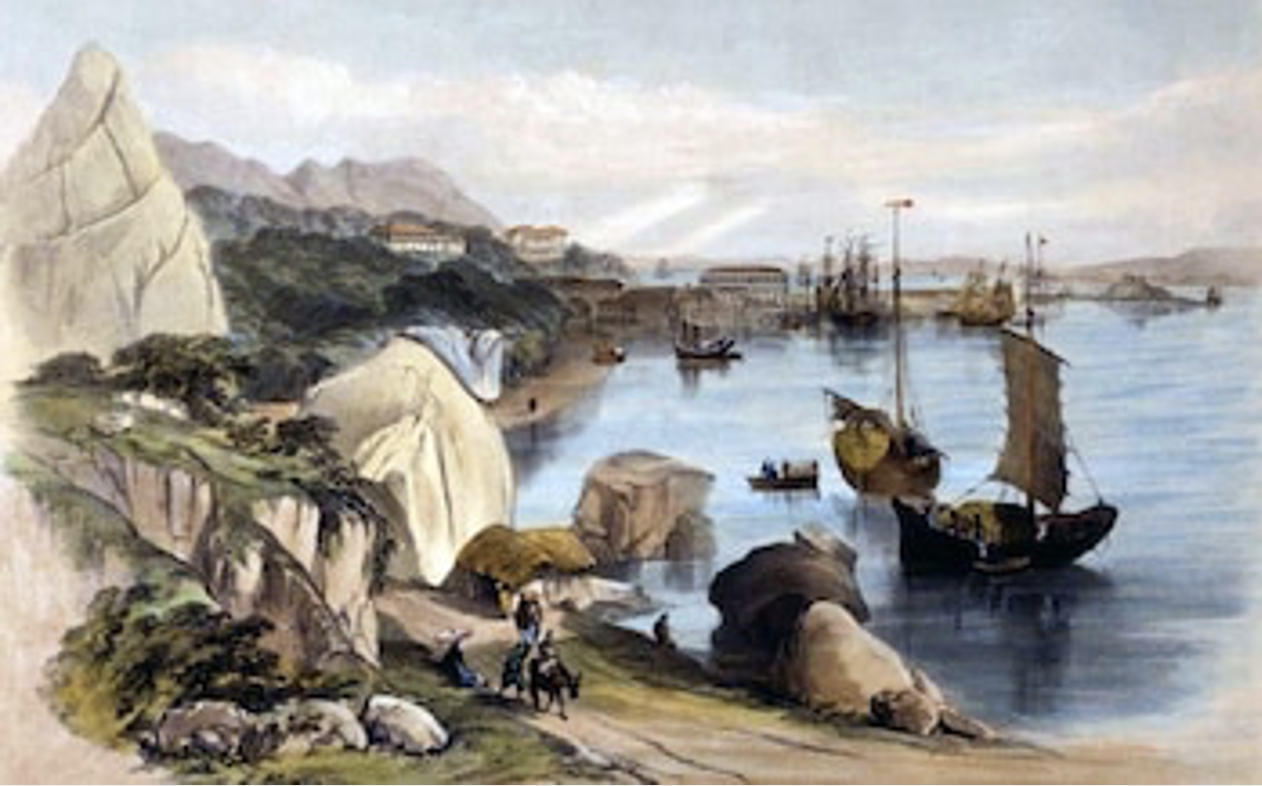
Jardine Matheson & Co. was a Far Eastern trading company founded in 1832 with Scotsmen William Jardine and James Matheson as senior partners Credit: History/Universal Images Group via Getty Images
Scarcely less successful was William Mackinnon, who began as a grocer and founded a global shipping and territorial empire around the Indian Ocean. He held it together by employing relatives and men from his home town.
For the Scots – forgive the cliché – were nothing if not clannish, and indeed jobs in the Empire helped to hold clan identities together. The Hudson Bay Company was run by men from the Orkneys. There were Campbells everywhere, from Jamaica (which for a time they ran) to New South Wales (where another Campbell grabbed 60,000 acres).
Scots left a durable mark. Celebrating Burns Night became an empire-wide custom. In Canada today, piping and highland dancing flourish, though many practitioners have no Scottish genes. Seven post-independence African leaders – including Nelson Mandela – were educated in Scottish missionary schools.
Scots were not, however, reputed for meekness. Some argue that rigorous Presbyterianism was part of the explanation for both their business success and their – shall we say – severity. They had a bad reputation as slave drivers (a job Robbie Burns applied for) and the worst single massacre of indigenous Australians was committed by a self-styled Highland Brigade led by a kirk elder.
But as with the Empire as a whole, the record is also positive. Another Presbyterian, Mary Slessor, from the Dundee slums, campaigned tirelessly against infanticide and human sacrifice in West Africa. The two great mid-Victorian heroes of anti-slavery in Africa were the missionary David Livingstone, a former child textile worker from Lanarkshire, and Charles Gordon, of a Scottish military family.
Livingstone strove to protect Africans against the appalling ravages of Arab slave raiding. Different in his methods, though equal in religious fervour, Gordon was determined to convert or fight the Sudan slavers, and willing to embrace a martyr’s death in the process.
In short, the Scots, more than the English, were enthusiastic imperialists, as migrants, soldiers, rulers, businessmen and missionaries. They saw empire as progress and prosperity. If that upsets today’s decolonising Scottish nationalists, they might reflect that even more enthusiastic imperialists were the Irish.