

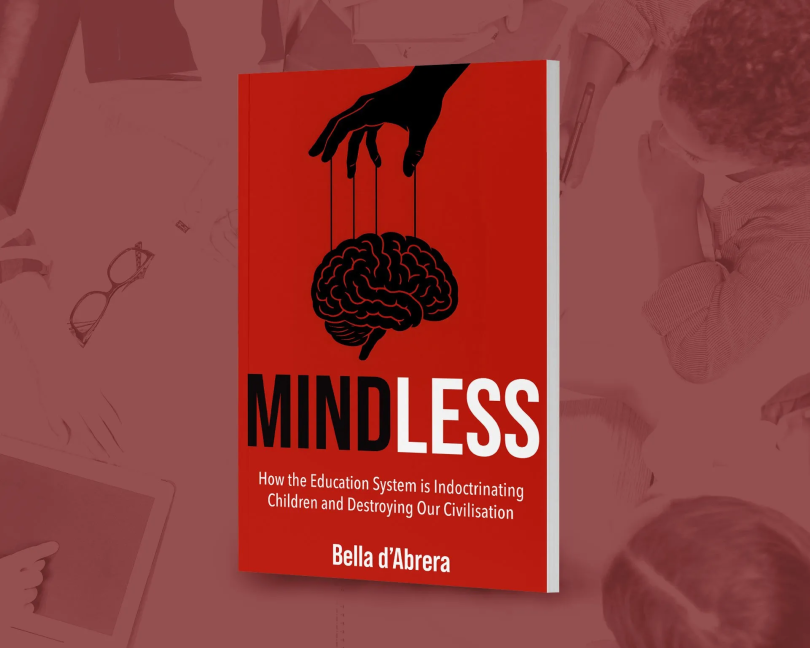

There are a great many dispiriting developments taking place in Western classrooms in 2026. Among them are the reckless de-prioritisation of literacy and numeracy; the teaching of identity politics, gender theory and race politics; the denuding of knowledge in the name of diversity, equity and inclusion; the replacement of reason with magical thinking; and lessons on climate change which are sending small children into paroxysms of despair.
Yet for readers of History Reclaimed, the most striking, and most alarming is the transformation of history itself in schools. It will come as no surprise that the subject has been repurposed in recent years under the banner of ‘inclusivity’ and ‘social justice’. History is no longer taught as an attempt to understand the past on its own terms, but as a vehicle for present-day moral instruction, which results not in a broadening of perspective, but a narrowing of it.
Across the Anglosphere, a common pattern is emerging across our nations. History has been whacked over the head with the decolonisation stick and dragged into the world of presentism, identity politics, Critical Race Theory, post-colonialism, social justice, diversity, and equity and inclusion. This is the history that children are now being taught.
When it comes to the British Empire and its legacy, one would be hard-pressed to find classroom materials which dare to even suggest that despite its many flaws, perhaps colonialism was not all bad. As Nigel Biggar has argued forcefully in Colonialism: A Moral Reckoning, the empire was a morally mixed phenomenon, responsible for both exploitation and emancipation.
The teaching of the slave trade is a case in point. Among progressive educators, there is a marked reluctance to acknowledge that it was the British Empire and its much maligned ‘white saviours’ like William Wilberforce, that ultimately abolished this appalling practice. This is nowhere more clearly illustrated than in the free classroom resource produced by Liverpool’s International Slavery Museum which leaves children with the distinct impression that Britain not only invented slavery, but that its eventual abolition came not from moral conviction or political courage, but from national shame.
We also find that since the death of George Floyd and rise of Black Lives Matter, schools have been falling over themselves to ‘diversify’ and ‘decolonise’ their history curricula. By 2021, 83 per cent had already ‘diversified’ their Key Stage 3 history programs, typically by adding Black and Asian British history, migration, women’s history, and LGBTQ+ themes. The top three motivations cited by teachers were: (1) a sense of social justice; (2) better representation in history; and (3) a direct response to the death of George Floyd.
At present, the loudest and most persistent voices calling for a de-Europeanised curriculum are leading us into the realms of fantasy and nonsense. We are witnessing in schools wholesale rewriting of the past in which white children are being denied the truth of their own story, while also being denied a unique cultural or ancestral claim to Britain. They are recast as simply another migrant group among many.
This message is now being introduced at the earliest stages of education. In Brilliant Black British History, a book by Nigerian-born author Atinuke, that has won many awards including Children’s Non-Fiction Book of the Year 2024, primary school children are told: ‘The first migrants to Britain had black skin. Yes, that’s right! – the very first Britons were Black!’ The book goes on to assert that: ‘Britain was a Black country for more than 7,000 years before the white people came – and during that time the most famous British monument was built: Stonehenge. Britain has been a mostly white country for a lot less time than it was a Black country – only about 4,000 years.’ And the final blow for any white child reading: ‘Every single British person comes from a migrant.’
Ultimately, the message being conveyed to white children is that they don’t belong. But the message to black children is that they don’t belong either. Both messages are false, and both are cruel. From Anglo-Saxon settlements to the Windrush generation, everything is filtered through the question: ‘Who gets to belong?’ The answer, it seems, is nobody. Is anyone really benefitting from their British history lessons? Not as they currently stand.
Nor is this problem confined to Britain. In Australia, no one is benefitting from Australian history lessons either. The country’s deeply progressive education establishment long ago abandoned the idea that history should illuminate young minds. Among academics, bureaucrats, and policymakers, there is now near-unanimous agreement: the story of modern Australia, though relatively short, is primarily a story of violence and genocide. They present the nation’s past not as a complex history, but as a crime scene, and in this version, there’s no mystery about the culprits. They lay the blame for the problems plaguing remote Aboriginal communities fairly and squarely on the arrival of the British in 1788.
A key feature of an Australian child’s education is that he or she must apologise for the sin of colonisation; this is called ‘reconciliation’, and it starts in kindergarten. On government orders, teachers are expected to recruit their young charges into a battalion of nappy-wearing ‘active citizens’ embarking on what is promised to be a lifelong ‘journey of reconciliation’. They are instructed to decolonise early childhood education by ‘reconsidering education spaces, acknowledging colonisation and its continued impacts, while seeking to disrupt and reconceptualise colonial understandings.’ This is extraordinary language to use in a kindergarten setting, but it reflects a teacher training system in Australia which is steeped in social justice ideology and the full apparatus of postmodern theory.
In primary and secondary schools, guilt runs through the National Curriculum like cracks in a facade, as Australian history is recast as a single, unbroken narrative of ‘frontier warfare, massacres, removal from land, and relocation to protectorates, reserves and missions.’ It is unrelenting and consistently negative. Everything is taught except the concept of nation-building.
The question at this juncture is a simple but profound one: what does the decolonisation narrative do to young minds? Increasingly, Western children are taught to see being British, American, or Australian as something shameful rather than complex, heroic, or worthy of admiration. They are being led to believe that their countries are morally compromised, and this in turn breeds anger and resentment. Polling data suggests that nearly half of Generation Z in Britain now regard their country as racist and backward, while surveys in multiple Western nations reveal a declining willingness among young people to defend their country in times of crisis. The implications are profound, not just for the individual and for society.
The curriculum that was once about understanding the past has become about dismantling it, and those who have absorbed the decolonisation story are taking their new understanding and moral code to the streets. Filled with righteous indignation, they believe that tossing a statue of a Bristol merchant, Edward Colston, who died 300 years ago, into a river will put an end to ‘systemic racism’, or that it is perfectly reasonable to saw through the ankles of a bronze likeness of Captain Cook as punishment for being a ‘racist coloniser.’
None of this is happening by accident. Among the architects of this ideological shift are activist historians, post-colonial theorists, and critical race educators whose goal is, and always has been, to sever loyalty to country. This is because they are postmodernists who believe that national myths are lies, that patriotism is a mask for oppression, and that emotional attachment to country reinforces injustice.
Children are to be denied the possibility of patriotism, as they are taught to view positive narratives not as a shared civic inheritance, but as tools of exclusion and control. Belonging to a nation gives people a framework of identity: a common history, culture, and set of values that root them in time and place. When these things are strong, they provide anchors in a fast-changing and uncertain world. Strip them away, and children are left unmoored, adrift in ideology, and vulnerable to whatever replaces it.


