


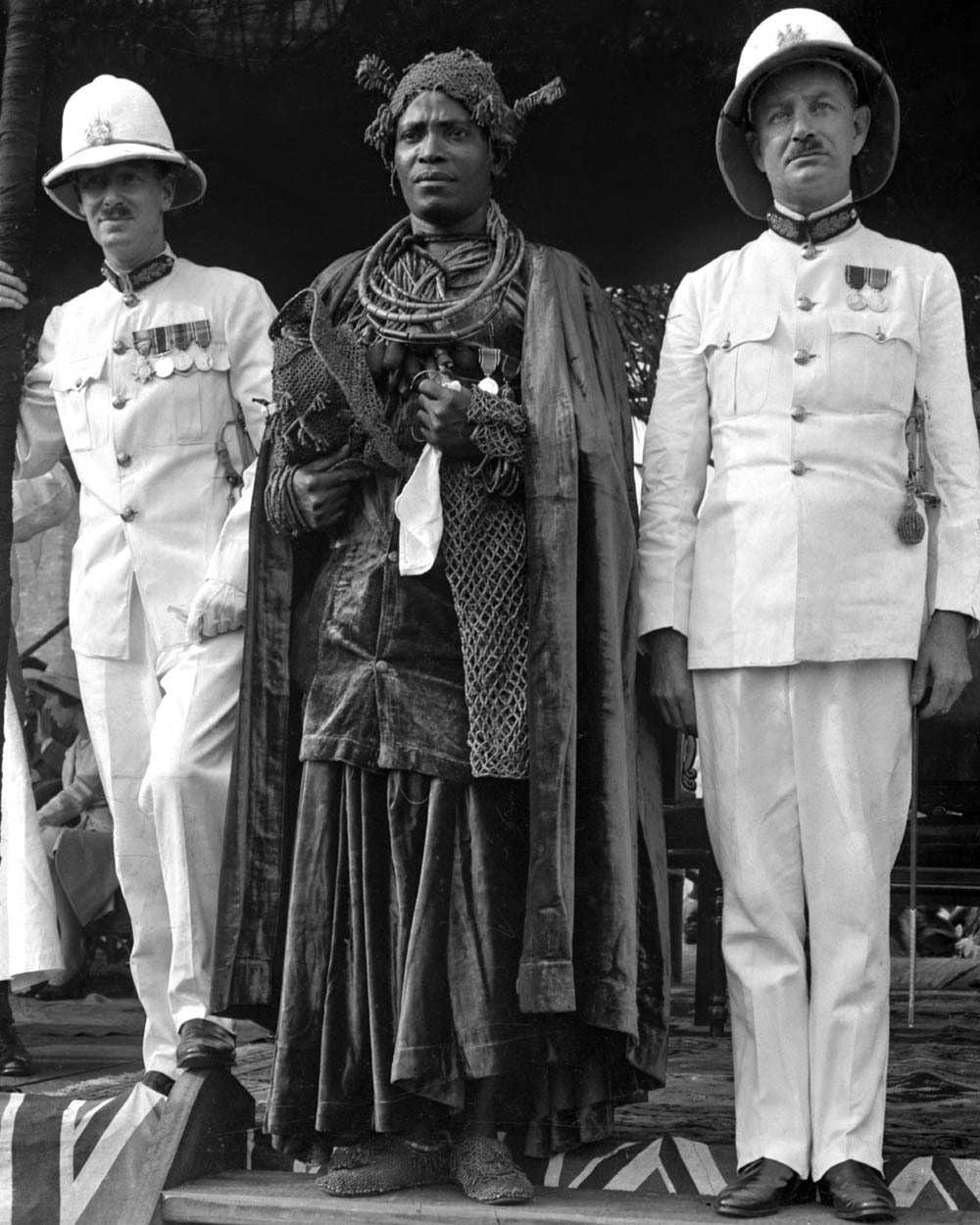
Akenzua II, Oba of Benin, was in high spirits and humming a little tune: “The poisoned arrow has killed the elephant.” He had just been presented with three coral-crafted items that had once belonged to his grandfather — two headdresses and a tunic. A photograph was taken, showing two Englishmen in colonial uniforms standing on either side of the Oba. Four decades later, upon the Oba’s death in 1978,
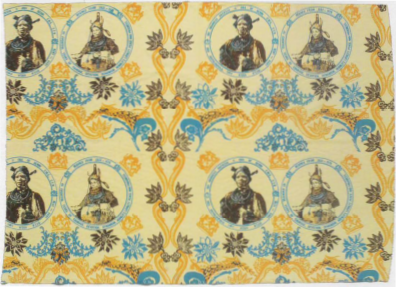
a cropped version of the photo, without the colonial officers, was woven into a commemorative cloth printed in large quantities — a cloth that remained a popular accessory among the Edo people for many years.
This textile could be seen in the traveling exhibition, ‘Benin — Kings and Rituals’, which opened in Vienna in 2007 and later went to Paris, Berlin and Chicago. The Oba’s joy is recounted in the exhibition catalogue by his granddaughter, Peju Layiwola, Professor of Art History at the University of Lagos. She explained that the song about the elephant suggested that even a mighty creature — symbolizing the British Empire — can ultimately be overcome.
The full version of the photograph was later displayed, in 2014, at the National Museum of African Art in Washington DC. That exhibition focused not on the Oba, but on the presumed photographer, Solomon Alonge. Since 1933, he had served as the official court photographer for the Benin monarchy and had met the exhibition’s curator, Flora S. Kaplan, in Nigeria in 1979. The photo caption read as follows:
The Earl of Plymouth (right) visiting the oba of Benin, Oba Akenzua II, Benin City, Nigeria, c. 1938. Oba Akenzua II holds the coral regalia of Oba Ovonramwen, which the British took in 1897 and returned in the mid-to-late 1930s. Sir John Macpherson, governor-general of Nigeria, stands on the left.
This brief text has since been harvested for several scholarly publications, as it serves the postcolonial narrative quite conveniently. It creates the impression that the British wrongfully appropriated the regalia, only to later regret it and return them to the grandson of the original victim, in the presence of high-ranking colonial officials. After all, the Earl of Plymouth, Ivor Windsor-Clive, was at the time the Under-Secretary of State for the Colonies, the second-highest official in the British Colonial Office.
Unfortunately, the information provided by the curator Kaplan, who passed away in 2021, is largely inaccurate.
To start with, the two Britons in the photo are not Plymouth and Macpherson. A closer look at the medals they wear on their chests, and at the periods they served in Nigeria, would have been enough to raise doubts. Macpherson was not authorized to wear the “Star of 1914” — the medal next to the button line. Moreover, he did not become Governor of Nigeria until 1948. Plymouth visited Nigeria only once, and that was in 1935. Three years later, he was serving in a completely different position — not in the Colonial Office but in the Foreign Office. Furthermore, he never wore a moustache, a detail confirmed by the current earl’s family.
In reality, the Britons in the photo were much lower-ranking colonial officials. Standing to the Oba’s right is Sir Geoffrey Shute, who held the subordinate rank of Senior Resident. His presence in 1939 — not 1938, as Kaplan claims — is confirmed by businessman and Benin royal chief Usman M. Lawal Osula. In a brief booklet about his 1965 trip to England, Osula recalls how Shute handed over the grandfather’s coral insignia to the Oba during a “colourful ceremony”. To the left of Akenzua II stands not Macpherson but Captain Norman Croft Denton. Another photo from the 1930s in the British Museum make it easy to identify him. Unlike Macpherson, Denton was entitled to wear the prestigious “Star of 1914.”
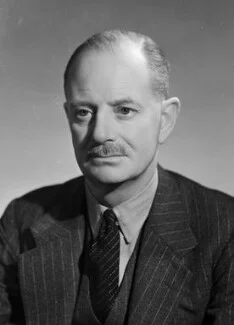
Sir Geoffrey Shute
Thanks to the account of the Nigerian chief, who died in 1972, we also learn more about how the three items went missing. In his memoirs, Osula names a certain “Miller”. The Glasgow hat maker Alexander Miller had long-standing business ties in West Africa and was involved in several trading ventures, one of which later became the United Africa Company (UAC). When he died in 1922, he left his family a sizable fortune of £1.2 million. His son, George Munro Miller, was working at UAC in 1935 — by then part of the Unilever conglomerate — which had amassed a significant collection of West African artefacts, housed at their recently constructed London headquarters. The company planned to donate the collection to the British Museum, whose German-born curator, Hermann Justus Braunholtz, expressed great interest. Braunholtz was especially keen on the three coral objects, but they did not belong to UAC — they were privately owned by Miller junior. The wealthy heir agreed to lend them to the museum on a long-term basis, where, as Braunholtz noted, they would be safely preserved for posterity.
In the Kingdom of Benin, coral attire and accessories were widespread, especially among the elite. Yet these Mediterranean imports were also used in human sacrifices, as anthropologist Henry Ling Roth reported in 1903: once a year, the Oba himself would kill a slave, whose blood would drip onto a pile of coral items belonging to the ruler.
The British punitive expedition of 1897 — ordered after an English delegation and their local carriers had been ambushed and murdered — also documented human sacrifices in detail. However, the coral items were not among the spoils of war taken back to London — now known as the “Benin Bronzes”. Miller senior most likely acquired them through purchase. Dr. Felix Norman Roth, Henry’s brother and a military doctor during the campaign, noted in his diary that the deposed Oba Ovonramwen had accused his own “boys” of stealing his coral regalia.
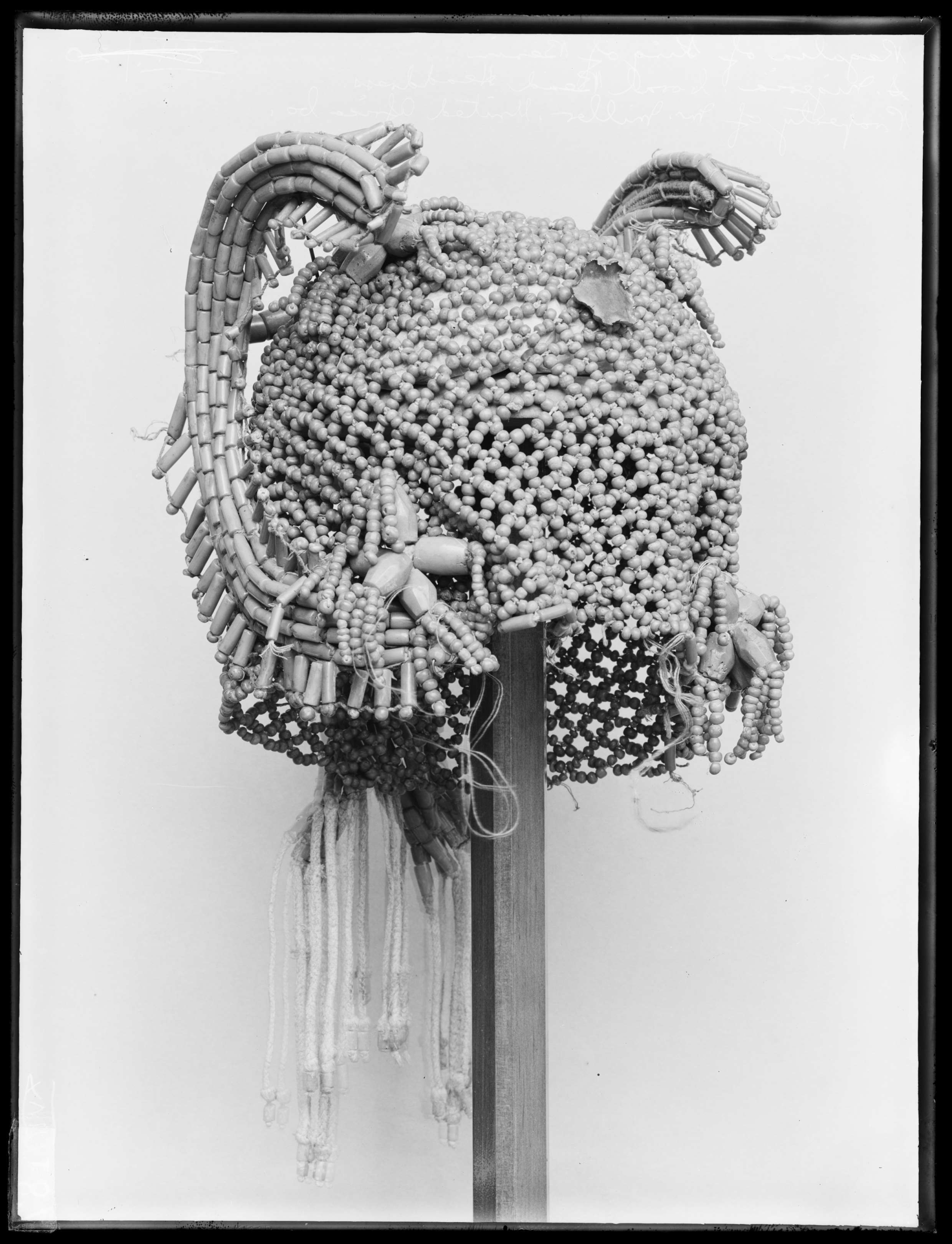
The Oba’s coral regalia
It is highly unlikely that Ovonramwen’s grandson, Akenzua II, demanded the return of Miller’s coral pieces in the 1930s as an act of “restitution”. Dr. Audrey Peraldi, curator at the Weltkulturen Museum in Frankfurt, wrote in a 2017 scholarly article about Akenzua’s 1935 appeal to Lord Plymouth for help in reacquiring two royal stools. The Oba was even willing to pay for the pieces. There was no talk at all of a “demand” for restitution. The British tried their best, but the effort failed due to the refusal of the Berlin Ethnological Museum, which then housed the stools, to part with them.
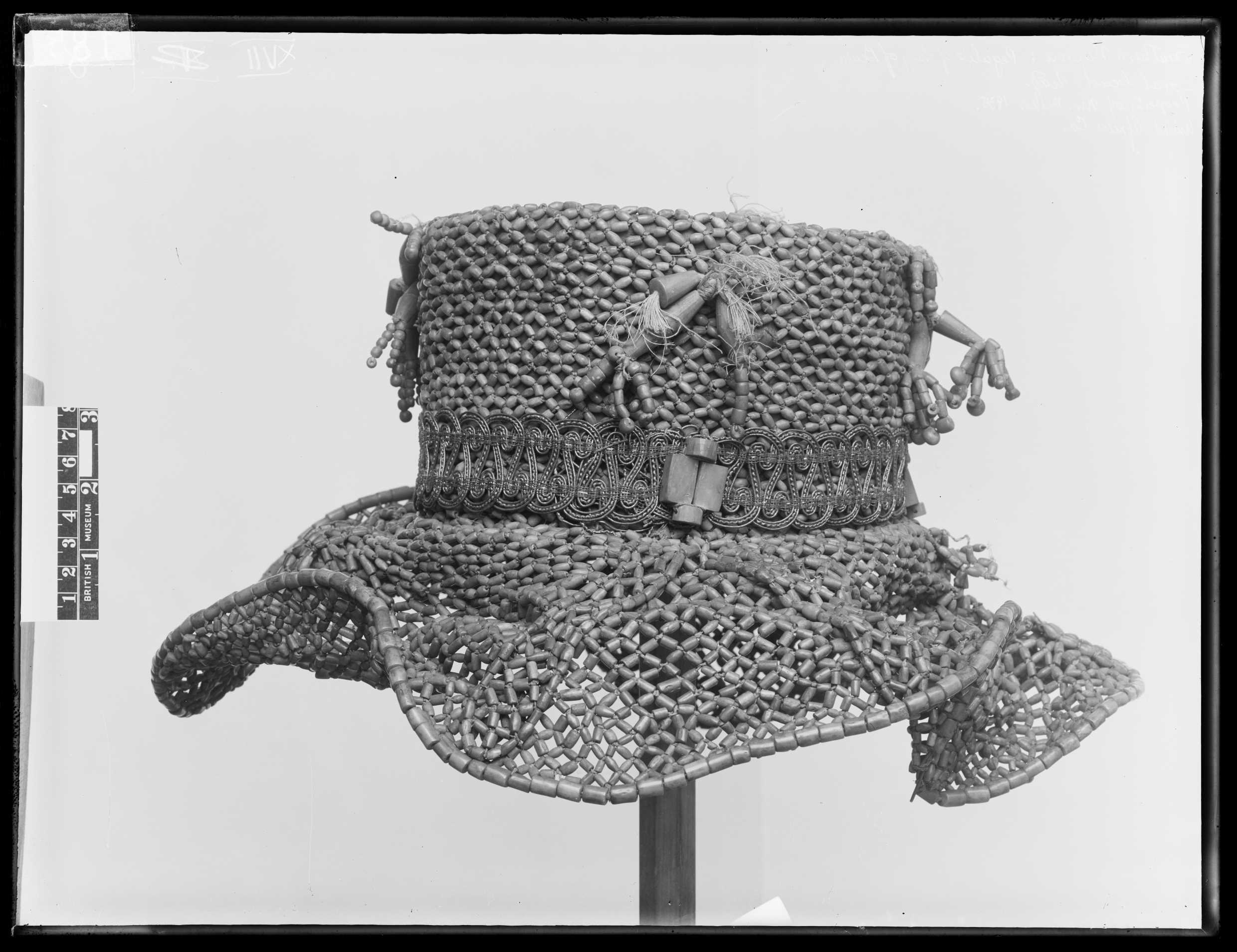
The Oba’s coral regalia
So when Miller junior decided in 1937 to retrieve the coral items from the British Museum, it was not out of guilt. Perhaps he or his employers saw a financial opportunity. Perhaps, as in the case of the stools, the Oba had offered him a handsome sum. In any case, the items were returned to Benin City, where their trail goes cold. The last person to see them was curator Braunholtz, who noted sadly during a 1946 visit to Benin City that the three items were still lying neglected in the same box in which they had been shipped to Nigeria.
Earlier this year, 2025, Julie Hudson, curator in the Africa, Oceania and the Americas Department at the British Museum, rediscovered the original negatives of the photos Braunholtz had taken of the Miller coral objects in 1935. “Very exciting!!” she wrote to the author of this article. However, it is doubtful whether the 1939 photo was actually taken by Alonge. British photographer and Nigeria expert Mike Wells, who worked in Benin in 1978 and won the World Press Photo of the Year award in 1981, examined the negative with technical expertise and concluded: “This photo is excellent, but there’s nothing to suggest that Alonge took it.”
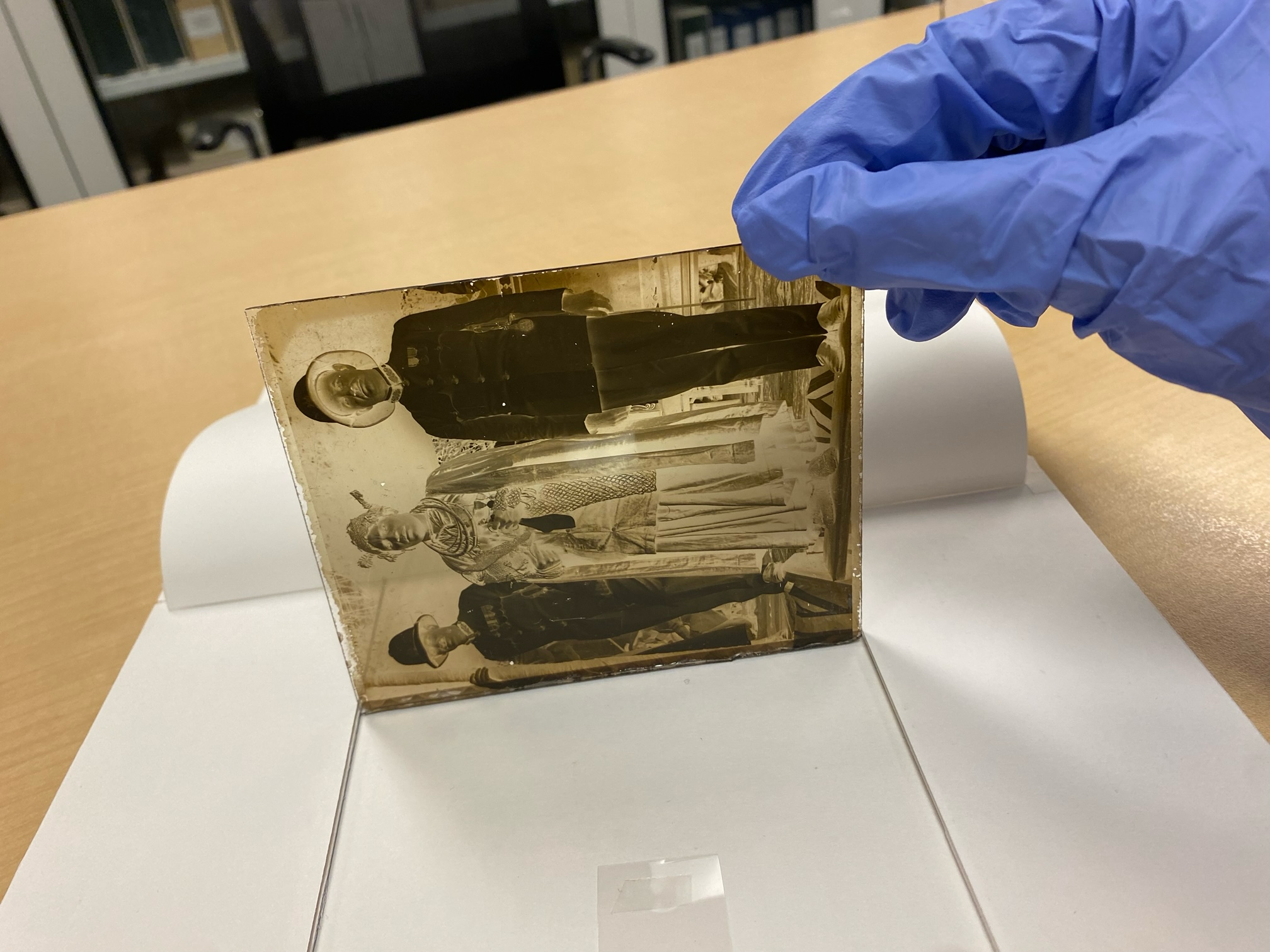
Examining the negatives in 2025
Even though the photo likely wasn’t taken by Alonge; even though the colonial officers in it weren’t high-ranking; even though the Oba’s coral pieces weren’t restitution objects; and even though Miller wasn’t a remorseful descendant of a military man, the story apparently captured in the photo — with its supposed tale of good and evil — is still widely repeated.
Dan Hicks, curator at the Pitt Rivers Museum in Oxford and author of the 2020 book The Brutish Museums, perpetuates it without citing sources. He claims that the Oba submitted an official restitution request and implies that Miller junior was the descendant of a participant in the punitive expedition. Hicks’s scholarship — he is one of the main advocates for returning all so-called “Benin Bronzes” to Nigeria — has not gone unnoticed. Swedish archaeologist Dr. Staffan Lundén of the University of Gothenburg wrote a long academic review of Hicks’s book, criticizing the latter’s postcolonial stance in harsh terms. Lundén describes the book as “emblematic of the post-factual era, where emotion, oversimplified messaging, and personal opinion take precedence over evidence.” Perhaps that judgment should be woven into a new edition of the Benin commemorative cloth.
Andreas Roth teaches Latin, History and English at a gymnasium in Siegen, Germany. He has published widely on modern European History, including several articles on Ireland in the First and Second World Wars.


