


In 2019 many Cambridge colleges, of which Girton was one, responded to the University’s investigation into funds deriving from the early modern Atlantic slave trade entitled Legacies of Enslavement. Like many others, I thought this was a misdirection of effort (for the reasons given below) and a diversion of focus from dealing with modern-day racism. Therefore when Girton’s own ‘Legacies of Enslavement’ panel reported to college members in November 2022 I wrote to the chair of the working group to make the following points, all no doubt familiar to HR readers, which I then raised in online discussion.
(1) I am puzzled about Britain’s eagerness to accept blame and even consider reparations when any debt has almost certainly been paid. Britain’s involvement in the slave trade and slavery in its Caribbean colonies ended some 200 years ago. It then spent most of the 19th and 20th centuries campaigning against slavery, in the Atlantic and throughout the world, spending what would be millions in today’s money, and sacrificing the lives of hundreds of sailors and marines in enforcing this, not to mention aid to its former colonies during and since the demise of the empire.
(2) Why are we concerned about this one of countless appalling injustices that were common 200 years ago? In the early 19th century British (and other European) felons were flogged, hanged in public, pilloried, put in the stocks and subjected to other gross punishments. Hanging, drawing and quartering for treason remained on the statute books until 1870 and the barbaric punishments carried out in the Royal Navy were notorious. No surprise, then, that the unfortunate slaves were treated appallingly, even by 18th-century standards. British revulsion against the Atlantic trade in fact went hand-in-hand with more general mid-18th-century attitudinal changes and reforms, in Britain and elsewhere in Europe, which mitigated the harsh treatment of criminals, minorities and social inferiors. The contrast surely is not between wicked Britons and innocent peaceful Africans, but between the brutal pre- and early modern ages, and the much gentler time we live in now.
(3) What is so surprising about Europeans practising slavery 200 years ago? The whole world practised or condoned slavery until at least the late 18th century. For millennia slavery was the normal fate of prisoners of war and conquered peoples throughout the world. Criminals and debt peons joined the ranks of the unfree, and slaves were exchanged, given and sold in markets as far back as we have records. Africans were hardly innocent, much to some people’s apparent surprise. East Africa did a lively trade for centuries with the Arabs to the north, and rulers in India bought African slaves to run their armies as well as their households. The Stuart kings bought the freedom of some of the thousands of British slaves captured in North Africa, but never campaigned to abolish slavery as such, and on the contrary, profited from the Atlantic trade. Mozart, indeed, wrote an opera (Die Entführung aus dem Serail) about the fate of Europeans captured by the Ottomans. West Africa too had its indigenous practices of slavery, and warfare between kingdoms produced slaves for its domestic economy and for trade with the Arabs. When Europeans arrived seeking gold and ivory there were slave markets already in place, where malaria-resistant captives could be bought and shipped off to work in the Americas. Although Europeans made use of an available commodity for economic reasons and expanded the existing African slave trade, the people who enslaved the unfortunate captives in the first place were not Europeans but fellow Africans. West Africa, like the United States, lives with the legacy of an ex-slave underclass to this day.
(4) Medieval/modern Europe was alone in the world in anathematising slavery. Opposition to slavery was not invented by the Africans who captured and sold slaves to the Europeans, but by the Europeans themselves. Among Europeans, as opposed to Arabs, South Asians, Chinese etc., there was an ethical objection to the Atlantic trade, which makes Europe unique in the world. Slavery has not been part of the British domestic economy since William the Conqueror (d.1087). By the 12th century Church councils and their attendant nobility throughout Europe began to forbid the practice as an insult to the concept of men and women made in the image of God. The ban was initially honoured more in the breach than in the observance, and slavery was replaced by unpleasant arrangements such as serfdom and villeinage, but these were not actual ownership of people as commodities. It was Europe which imposed its horror of slavery, first on itself and its colonies abroad, then on the world. Britain in particular, from 1815 on, led the international anti-slavery campaign, committing hundreds of thousands (now millions) of pounds and the lives of hundreds of sailors running its West Africa Squadron to intercept the slave ships, persuading other nations to sign anti-slavery treaties, and buying off the Spanish and Portuguese. Not to mention insisting that new trading partners – such as Benin – gave up their indigenous slavery and slave-trading practices.
(5) As for Girton’s money, surely most legacies are tainted by the unpleasant practices of earlier centuries? They presumably also include dirty money stolen, as we’d now say, from earlier generations of women before the Married Women’s Property Acts of 1870 and 1882, from Roman Catholic monasteries during the Dissolution, from villagers and crofters whose livelihoods were destroyed during the Enclosures and Clearances, not to mention the Protestant Ascendancy in Ireland which provided the money for Girton’s magnificent Stanley Library. The past was a different country. So why are we browbeating ourselves because of this single one of many activities, all long-expired, which we now unanimously see as injustices?
Despite the horror of my fellow audience members, to whom these observations were clearly news, the Girton panel took them perfectly constructively and offered further information on the Scottish Clearances, the role of the medieval Church in anathematising slavery, and other points. It was later proposed to extend the remit of the investigative panel to other sources of income beyond the slave trade, acknowledging that this was not the uniquely appalling feature of early modern society that it is regularly presented as being. The working group became a committee and initiated a fascinating online series of observations posted one by one, as the research was done, detailing the background and activities of College members with respect to the Atlantic trade.[i]
Girton had however discovered that a major bequest of its foundation years, the Gamble legacy of 1886, derived almost entirely from the proceeds of American plantation slavery, and so felt it had an “unacknowledged debt” to acknowledge the people who produced it. Acknowledgement is one thing, but some details of the Committee’s intentions, as detailed in the Chair’s article in the Girton review of 2023-4,[ii] concerned me. These appeared to pander to, or at least not to dispute, two popular misconceptions: first that contemporary racism would not have occurred without the slave trade, and secondly that the latter was a uniquely wicked episode in world history which requires atonement. So I wrote again, as summarised below.
(6) Does racism derive from the slave trade?
The article implies, in its first two paragraphs, that present-day racism derives from the long-dead slave trade. This would surely raise a hollow laugh from the many Chinese, Indian, Filipino and other British residents, not to mention fellow Europeans, who have also suffered racist attacks and prejudice since their arrival. Racism is surely just one version of the antipathy towards out-groups, however defined, that is a persistent feature of all human history. In Britain it is a particular expression of hostility to foreigners. Whereas Americans, a settler nation 14% of whom identify as black, report a continuing social tension between some white Americans and blacks who they see as servants, in my experience indigenous British racists see their black neighbours (only 4% in the latest census) more as alien interlopers who should go back to their own homelands. Blacks in Britain are surely not seen as ex-slaves by racists, but as ‘foreigners’.
However both British and American racists may also view their black fellow-citizens as biologically inferior human beings. As noted in the Girton article, modern racism has certainly been bolstered by one of the rationalisations for the slave trade, the misapplication of evolutionary theory which theorised a “progression” of more or less “advanced” types of human and was then used by post-slavery imperialists to justify their rulership of “inferior” races. Yet all imperialists have despised subject races for their own manufactured reasons – look at the Roman historian Tacitus sneering at the “little Britons” who imitated the togas and bath houses of their imperial masters; or indeed see China’s current behaviour towards the Uighurs of East Turkestan, conquered by China in 1949. With or without the Atlantic trade, the theory of “inferior” races would surely have been invented to justify later colonisation and would equally have persisted in post-colonial times. It would be far better to put academic effort now into disabusing the general public of this pernicious misunderstanding (which was only definitively overturned in the 1950s through advances in genetics) than to waste resources agonising about one long-dead cause of it.
As for chattel slavery being a denial of personhood, as mentioned in the article, this seems obvious to us all nowadays. But at the time of Atlantic slavery many other people were denied full personhood: in the 18th century, after all, women too were thought to lack the rational capacity of full human beings. Native Americans were specifically outside the purview of the American Constitution of 1787 (‘excluding Indians not taxed’), though not slaves, interestingly: they are referred to as ‘other persons’. This is abhorrent to us nowadays, but earlier world-views, including those of the Church, were radically different.
(7) A bursary for black and minority ethnic students?
All institutions are nowadays under pressure from public opinion to offer compensation for their role in the Atlantic trade. As Jane Catherine Gamble never disowned the slave-economy origin of the wealth she donated to Girton, should she, or Girton on her behalf, have used some of this wealth to compensate the descendants of those slaves? Since at the time Girton was an all-women’s college, founded specifically to give women access to higher education, and Gamble was already a feminist, should she also have become an abolitionist? But if, as argued on the website, anti-slavery and pro-feminist campaigns were seen in the 19th century, together with the campaign for working men’s votes, as arms of the same emancipationist project (though this is certainly debatable), it is not clear why Gamble should have chosen any one of these over another. If her money had come from death and exploitation in the coal mines of England, should she have donated it to working men’s friendly societies rather than to a women’s college or to black civil rights? In practice she chose the cause nearest to her, that of women’s freedom in Britain rather than British male suffrage or civil rights in America. In addition her will was drawn up (in 1882) fifteen years after the Second Reform Act in the UK which gave many male householders the vote, sixteen years after the end of the American Civil War which ended slavery there, and at a time when the Jim Crow backlash against black emancipation had barely taken form. She, and Girton if either of them had considered it, might well have concluded that those two fights had already been won. The feminist cause, by contrast, still needed funds.
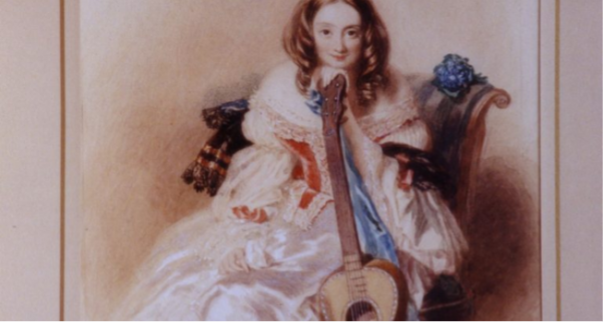
Jane Catherine Gamble (1810-1885)
Since Gamble’s estates were in the USA, which had separated from Britain a century earlier and is responsible for its own very different legacy of slavery (Britain surely cannot be held accountable for anything there after 1776!), where might Girton feel its responsibility lay? Britain’s only slave-worked territories in Gamble’s lifetime were in the Caribbean. Separated from their roots in Africa, badly treated after emancipation, and never entirely relating to their colonial centre in Britain, Afro-Caribbeans fare worse than any other ethnic minority (including black Africans, who outnumber Afro-Caribbeans in Britain by 5:2) in both educational attainment and employment. A bursary for impoverished students from the British Caribbean community might make sense.
However the committee proposed a bursary for all BAME students, regardless of origin. But what has the slave trade to do with most of these? Would it be open to the children of Nigerian millionaires, descendants of the slave-trading princes who had sold their fellow Africans to Arabs across the Sahara and to Indians and Chinese across the Indian Ocean for centuries before they added Europeans to their customer base? Similarly for the Indians, Chinese and Japanese. East African slavers shipped at least as many people out of Africa as were sold across the Atlantic. Arab and Asian nations had their own slave economies (for which they are not offering reparations to the victims) and they had nothing to do with the Atlantic trade. Why should any blood money from plantation slavery go to them?
To offer a bursary for people disadvantaged by racism is one thing, but this should not be confused with atonement for the slave trade. To do so in the Gamble context would perpetuate precisely this confusion, as well as being open to all sorts of quibbling and legal disputes about what counts as racism (Jews? Irish? …). So it may well be that thoughtful recognition is enough, that Girton’s current web pages, with their careful and detailed unpicking of the origins of the College’s endowments, are enough acknowledgement of the coerced contribution of enslaved people in the Southern states to the College’s wealth. Nothing can be done about it now or could have been done at the time of the endowment, but publishing its detailed history on the website, with perhaps the naming of other memorials as suggested by the committee, might be a respectful and adequate mark of recognition.
The inscription commemorating Jane Gamble’s bequest to Girton College in 1885 over the fireplace in the Porters’ Lodge.
(8) The outcome.
The discussion went back and forth, with the Committee engaging constructively with my concerns, acknowledging them as legitimate and mostly not disputing them. Girton remained firmly committed to commemorating the unacknowledged contribution of enslaved people to the College’s wealth in addition to detailing the efforts of some of its founders to end slavery. The website history, Girton Reflects, continued to be added to, and there I left the matter.
Then, in early autumn 2024, I ran into a member of the committee and discovered that the discussion really had paid off. How was the project shaping up? To my surprise, changes had occurred.
· The committee’s remit had been extended beyond consideration of slavery.
· Physical labels briefly mentioning the origin of objects in the college (such as the Jane Gamble fireplace), which often seem incomplete and judgemental, were no longer to be attached but were to go on the website, so as to allow fuller explanation and contextualisation.
· The bursary for BAME students was now firmly on the back burner as it was “too complex to decide who should get it.”
The Girton Reflects webpages are now complete, and the concluding instalment, Past and Future, also defers the formerly burning question of restorative justice. It ends: “Through the expenditure of money in the light of new knowledge about the funds from which it has profited, Girton has already taken a reparative step . . . In the meanwhile, perhaps this ongoing restoration of our history may also be welcomed by others as in turn a restorative contribution to their own histories and to the stories of families that they might in the future wish to tell.”
So vigorous but reasoned argument has brought results. The best contribution that academic institutions can make to the current furore about the slave trade, and one which they are uniquely placed to offer, is surely to add to our knowledge about it, in all its complexity. Making expensive financial gestures to buy off pressure from ill-informed though (perhaps) well-meaning campaign groups does not seem to many of us the best use of college funds. But broadening the public discussion by making the detailed background available to non-specialists in a respectful and accessible way seems a perfect use of resources and an example of the “impact” that academe is nowadays encouraged to demonstrate.


