


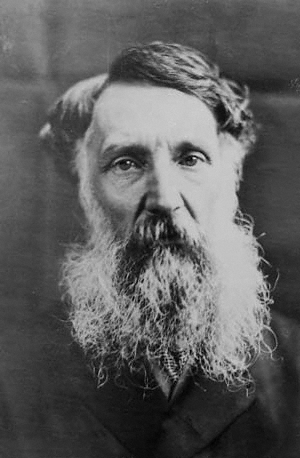
Edward John Eyre (1815-1901) photographed in 1867
by Julia Margaret Cameron
I’ve always been interested in Edward John Eyre, the acting governor of Jamaica at the time of the Morant Bay Rebellion – also known as the Governor Eyre Rebellion – in 1865. Over the years I’ve collected material on him and on the intense divisions that his actions caused among Britain’s intellectual and cultural elite. In 2022 I suggested the idea of a programme on the Eyre Rebellion to the ‘In Our Time’ team at BBC Radio 4 and subsequently participated in the discussion which you can listen to here:https://www.bbc.co.uk/sounds/play/m001dnlr
My recent efforts to collect information about Eyre’s early exploits in Australia, however, have come up against the librarians of the University of Sydney who seem intent on preventing free academic inquiry. The story is worth relating.
Eyre is one the most infamous figures in the history of the British empire because of his overreaction when confronted by a local rebellion of exploited, free black labourers tending sugar cane at Morant Bay in southeastern Jamaica. Their rebellion led to the deaths of 17 whites. Eyre then declared martial law and the summary execution of hundreds of protestors followed, in addition to the hundreds killed by British troops putting down the spreading unrest. Hundreds of houses were also burnt down or demolished.
There was political and public uproar in Britain. Inquiries were held; committees to prosecute and defend Eyre were established; court proceedings were initiated in which Eyre was ultimately acquitted. Anyone who thinks that the empire had no conscience and was inured to acts of violence should study this affair. John Stuart Mill, Thomas Henry Huxley and Henry Fawcett called Eyre a murderer and demanded that he face charges; Thomas Carlyle, John Ruskin and yes, Charles Dickens, defended him as a man who did his duty. After five years of this, during which Eyre was the most talked-about and cursed figure in the British empire, he sloped off into obscurity, dying many years later in Devon in 1901.
Eyre was born in England but only became a colonial official in later life. Before that he had a spell as a farmer and an explorer in South Australia. His first expedition dates from 1839; his second, in the following year, took him from Adelaide to Albany, Western Australia, across land never before traversed by a European. He was celebrated for his feats of endurance, and also – and this is most relevant to this story – for the ‘humanity and tact’ he showed in his relations with indigenous people, Aborigines. Indeed, he was made resident magistrate and protector of the Aborigines on the Murray River in South Australia where he preached the virtues of co-existence to white settlers. In 1845 he published in London a pioneering work, Manners and Customs of the Aborigines of Australia, including in it the journals from his expeditions. Eyre was hardly alone in the 1840s in finding Aboriginal culture inferior to European, but he was respectful and deeply interested in the lives of the indigenous and his book is an important source on early white-indigenous encounters (Oxford Dictionary of National Biography, ‘Eyre, Edward John (1815-1901)’)
Anyone interested in Eyre and trying to understand why he behaved as he did in 1865 on the other side of the world in Jamaica must take his early experiences with native people in the Australian bush and desert into account. At the very least, his interest in, and sympathy for Aborigines calls into question his subsequent dismissal as a ‘racist’.
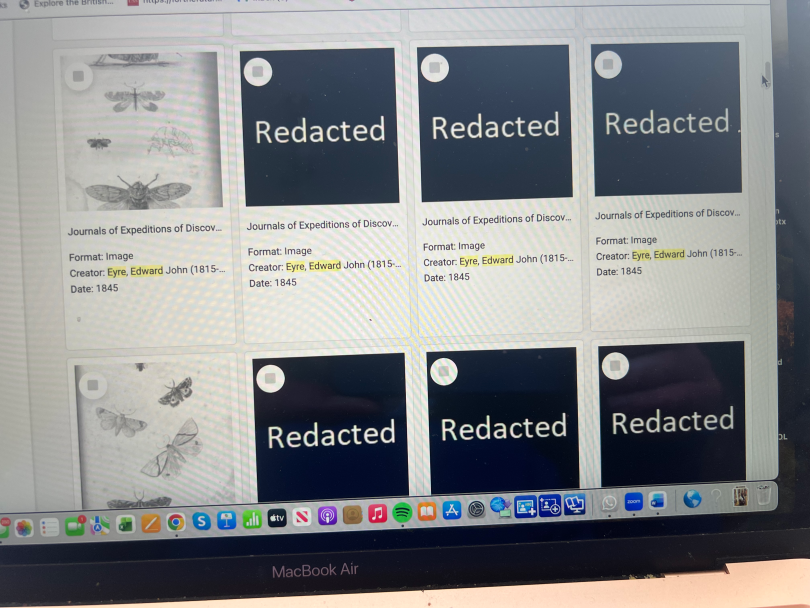
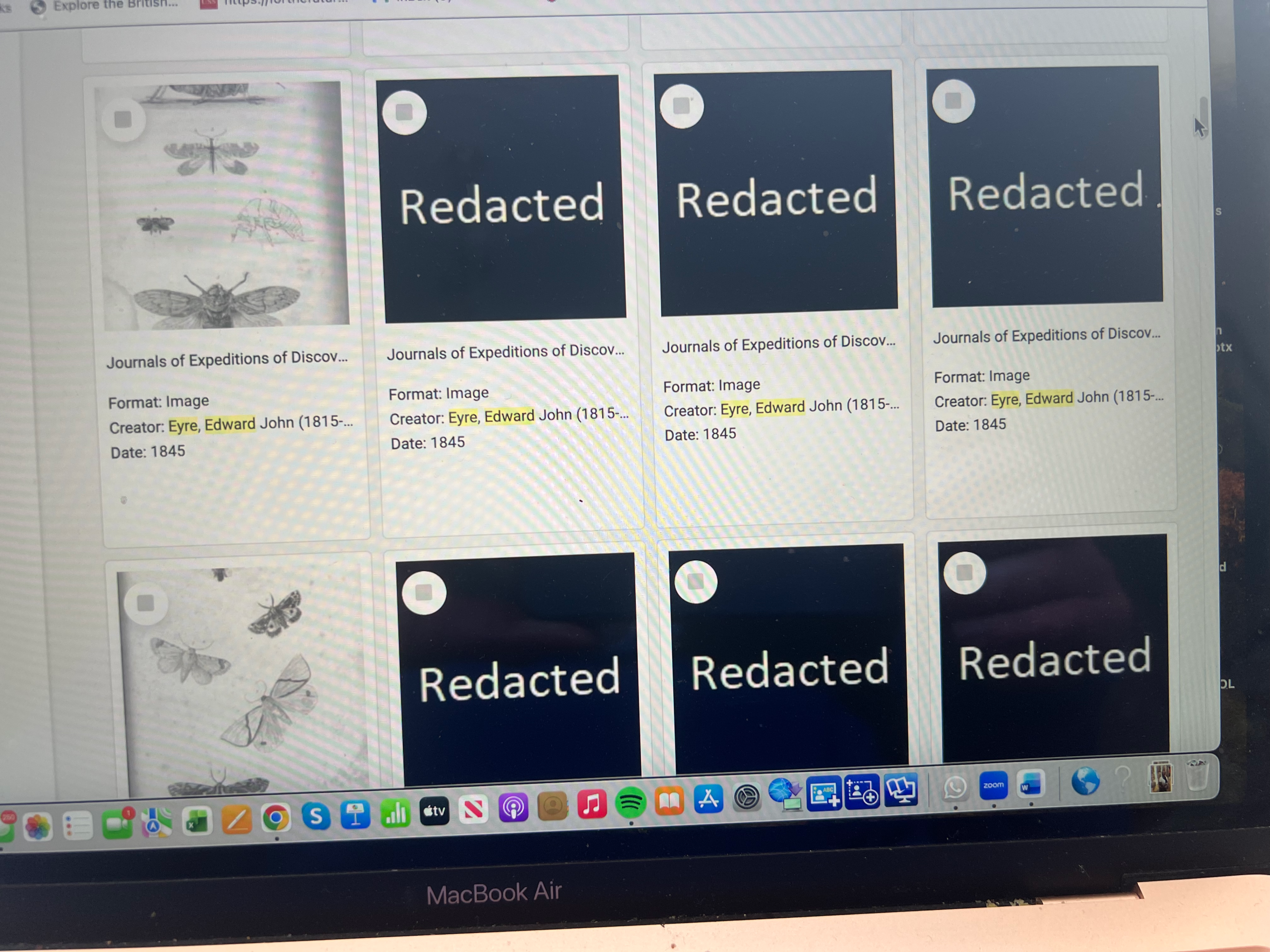
It was in this spirit that I went to the Sydney University Library website to explore what it held on Eyre. But I immediately encountered screens that told me that his publications had been ‘redacted’. At some point before 2010 they had been digitised by the Library, but now they are inaccessible to readers.
https://digital.library.sydney.edu.au/nodes/search?keywords=Edward+Eyre&submitidx=Search+%EF%80%82
It took some time searching the website to understand why this is the case. Eyre’s memoirs described Aboriginal life and ritual, and whether they did so favourably or otherwise, the indigenous people living today in the areas he traversed and wrote about apparently have a veto over accessing them. Whether they have actually been consulted on this matter, and on accessing other texts, is not altogether clear. But the pages that the Library once digitised for researchers to see and use have now been ‘redacted’.
Readers of History Reclaimed are probably aware that over the past generation western museums have returned physical Aboriginal remains to indigenous groups in Australia. About this there can be no quarrel. Respect for the dead and for the customs and beliefs associated with death in Aboriginal society require the return of such material, especially when it is held in museum vaults and plays no role in explaining Aboriginal history or ethnography.
Readers may also be aware – I was not – that it is distressing to some of Australia’s indigenous to see images of the dead and of their ancestors. In which case, warnings might be given in catalogues and listings, though it should be obvious that an ‘account of the manners and customs of the Aborigines and the state of their relations with Europeans’, the subtitle of Eyre’s book, might contain such images.
But why has a university library decided to refuse access to a foundational text, written by a white settler who lived with, and studied Aborigines? Of course we would write it differently today. But that is why Eyre’s text is important: it shows us how whites – a sympathetic white in this case – thought about the indigenous in the early stages of Australian settlement.
If the answer to my question is that a text from the 1840s might cause offence, then the same arguments used to combat restrictions of free speech apply in this case to the restrictions of free inquiry: ‘offence’ is never sufficient grounds for silencing free expression or academic research. Those likely to be offended need not listen or look.
The University of Sydney Library website is full of clues to the outlook of its librarians. A banner running across the webpages reads: ‘Always was, always will be Aboriginal land’.
The website tells us that books and other material written by ‘non-Indigenous people…may not have had the input of First Nations peoples themselves’, as if that should be a condition that all academic work must obey.
The Library has published its own ‘Aboriginal and Torres Strait Islander Cultural Protocols, which are intended as a set of principles and guidelines to enhance and embed culturally competent practice within an Australian academic library context’, whatever that means.
https://www.library.sydney.edu.au/about/first-nations-hub#acknowledgement-of-country
The Protocols tell us that indigenous peoples have ‘the right…to determine use and access provisions for materials which reflect their cultural heritage, traditional knowledge, and traditional cultural expressions’. We are being told that sets of people – librarians and Aborigines – have the right to control what readers and researchers may consult.
Read further and it appears that there is an equivalent of the infamous papal ‘Index of Forbidden Books’ which for centuries listed and banned heretical works considered dangerous by the Catholic Church. The University of Sydney Library excludes access ‘to any published monograph that has been restricted on the AIATSIS (Australian Institute of Aboriginal and Torres Strait Islander Studies) catalogue’. I assume that Edward Eyre’s 1845 account of his explorations is one such banned book.
The Protocols go on to explain that when someone wants to see some of this ‘restricted material’ a consultation will follow ‘with the relevant First Nations community to negotiate appropriate conditions of access’. To the best of my knowledge, no such consultation occurred in regard to my request.
But that’s not the end of it. ‘Non-indigenous clients’ (I think that refers to me) may gain access to restricted material ‘if they provide written permission from an organisation or member of the First Nations community from which the cultural information originates’. Those of us living in Suffolk may find this a tad difficult to arrange.
There is more – much more – of these Kafkaesque directives and conditions over the 35 pages of the Protocols.
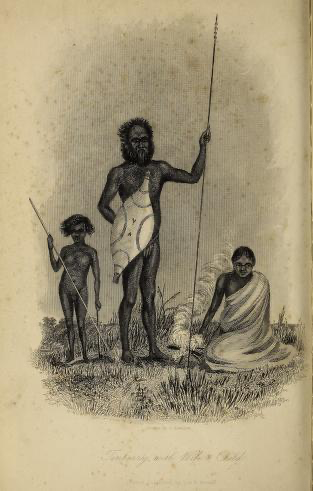
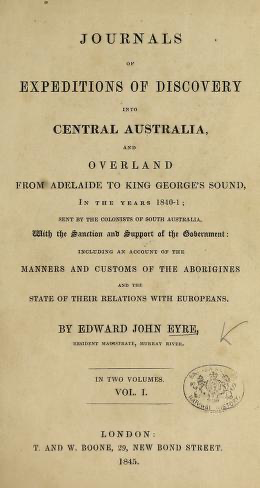
Image from the frontispiece of Eyre’s Journals
Over a period of two months I wrote to two different librarians to try to find out what the redacted images depicted and to gain access to them. I was asked what I intended to do with the material should I be allowed to see it and replied that I could not say for certain. Perhaps it will be a book about Eyre and the whole controversy, or perhaps a learned article about his comparative racial attitudes to the Australian indigenous and Jamaican blacks. It rather depends on how much new material I find.
At no time in these exchanges did I get the sense that the Sydney University librarians knew who Eyre was, or were aware of his significance in British and imperial history. To them he was a white man who wrote about indigenous people and illustrated their lives – and for that reason was being ‘redacted’. That Eyre was one of the most controversial figures in the history of the Victorian empire was not recognised and of no consequence, and certainly wasn’t enough to get me access to whatever it is they’ve redacted.
It’s quite likely that the redacted images on the website contain nothing beyond the images published in Eyre’s 1845 memoir, but at no point did the librarians confirm this. After my last message went unanswered I gave up and I’ve written this article in protest at the University of Sydney’s barriers to legitimate academic research.
This censorship is performative rather than genuine. If the Sydney University Library was sincere it would simply take down the offending material and no reader would be any the wiser as to its digital holdings. Instead, the website contains darkened images with the word ‘redacted’ across them in a species of virtue-signalling. The library’s saying, in effect, ‘Look what we’ve done to prove our commitment to the rights of the indigenous: blanked out material from a key text about aboriginal history. How clever and good we are!’
In one perspective this is all painfully silly, unworthy behaviour from a major university. But it is also a serious infraction of free inquiry which should be contested lest more minorities and communities are encouraged to control what can and can’t be read by readers and researchers. I have no quarrel at all with indigenous people in Australia and doubt very much if they have a quarrel with me. Why should they object to an Englishman reading a book by another Englishman about the early history of Australia? More to the point, why should they be allowed to object to such a thing? Why should anyone have the right to control another’s reading and legitimate inquiry? But the problem here is with the librarians, and I most strongly object when they – or anyone else – dictate what can and can’t be seen. That’s censorship.
A final thought. Last year Australians voted in a constitutional referendum and decided to reject proposals that would have entrenched legal and political privileges for Aborigines, preferring to retain civil equality across their institutions. Like so many western universities, the University of Sydney seems to be living in a world of its own, out of step with the outlook of the majority of citizens.


