

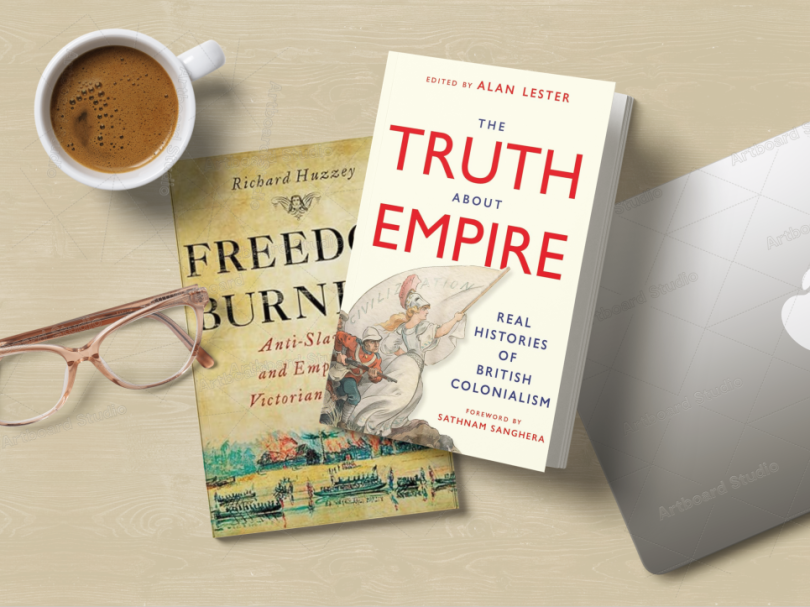

Professor Richard Huzzey of the History Department in the University of Durham has just published a critical assessment of History Reclaimed in a book of essays edited by Professor Alan Lester of the University of Sussex. His essay is entitled ‘Morality and the History of Abolition and Empire’. We are grateful for such attention, especially from a scholar as distinguished as Huzzey who has held posts at Yale and the University of Liverpool as well. Richard’s book, Freedom Burning. Anti-Slavery and Empire in Victorian Britain (Cornell University Press, 2015) was an acclaimed study of the development of anti-slavery thought and action in Britain after slave emancipation in the 1830s. It showed how anti-slavery became public policy and doctrine in a nation dedicated to emancipation, freedom of contract and free labour, and how those commitments led on to the development of a wider humanitarian movement linked to the growth of the empire from the 1870s. Acclaimed by everyone, Professor Catherine Hall of the Legacies of Slavery Project at University College, London welcomed a book that ‘gives us a new understanding of what it means to describe Britain after emancipation as an anti-slavery nation with an anti-slavery state and an anti-slavery empire.’
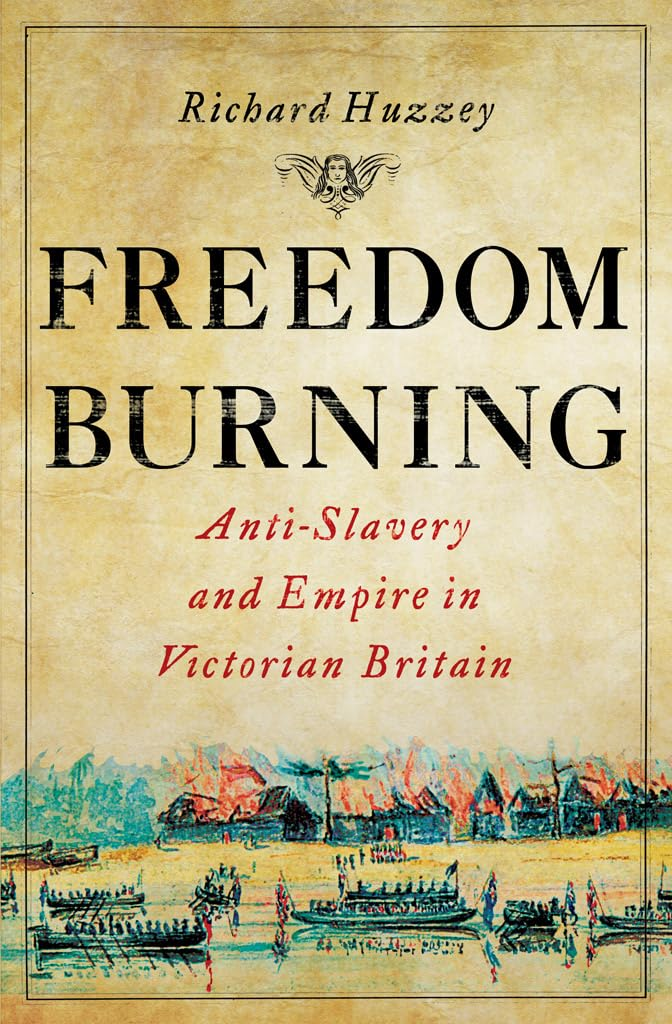
In a most subtle and carefully-contextualised analysis, Richard also showed the arguments, conflicts and contradictions within the forces of anti-slavery. His brilliant article in the Historical Journal on ‘Free Trade, Free Labour, and Slave Sugar in Victorian Britain’ (2010) which won the Alexander Prize of the Royal Historical Society, analysed the intersection in the 1830s and 1840s of the politics of emancipation with the political economy of free trade. Were the liberals who supported emancipation also in favour of free trade if the latter conflicted with the protected market granted to West Indian sugar, and if the removal of the West Indian preference had deleterious consequences for the recently-freed slaves who were still cutting sugar cane? Two types of freedom, economic and personal, were apparently in conflict and Huzzey showed how this confused and split the forces of both anti-slavery and liberalism. Far from being any sort of challenge to the views of History Reclaimed, this is exactly the sort of historical research we applaud and admire: careful, balanced, archival, innovative.
Richard’s subsequent rise through the historical profession has been a source of great personal satisfaction to me. I know rather a lot about his work because I taught him in tutorials for his Oxford undergraduate Special Subject on the history of slavery and emancipation in the United States, and then supervised his doctorate in the following years. I learnt an enormous amount, as one does when teaching highly talented students prepared to graft in the archives and write fairly and objectively about what they find there.
Which leads to two questions: why has Richard published a criticism of History Reclaimed at all, when, in essence, his work is everything we admire and wish to encourage? And why has he published it in a book entitled The Truth About Empire. Real Histories of British Colonialism? Richard’s whole career has been spent demonstrating that there is no such thing as ‘the truth about Empire’. Something as complex as British colonialism, strung out across the globe over the course of three centuries, had so many different phases, aspects, causes, consequences and experiences that there is no single ‘truth’ to be found, as Richard’s careful dissection of Victorian liberal opinion at just one point in time, over just one issue – free trade in sugar – affecting one region of the empire, the West Indies – so ably shows us. The implication of the book’s title – ‘we tell you the truth’ – is that everyone up to now has somehow been telling lies. And if the essays collected in this new volume are ‘real histories of British colonialism’ does that mean that everyone else has been fabricating the history of empire up to now, selling us ‘unreal histories’?
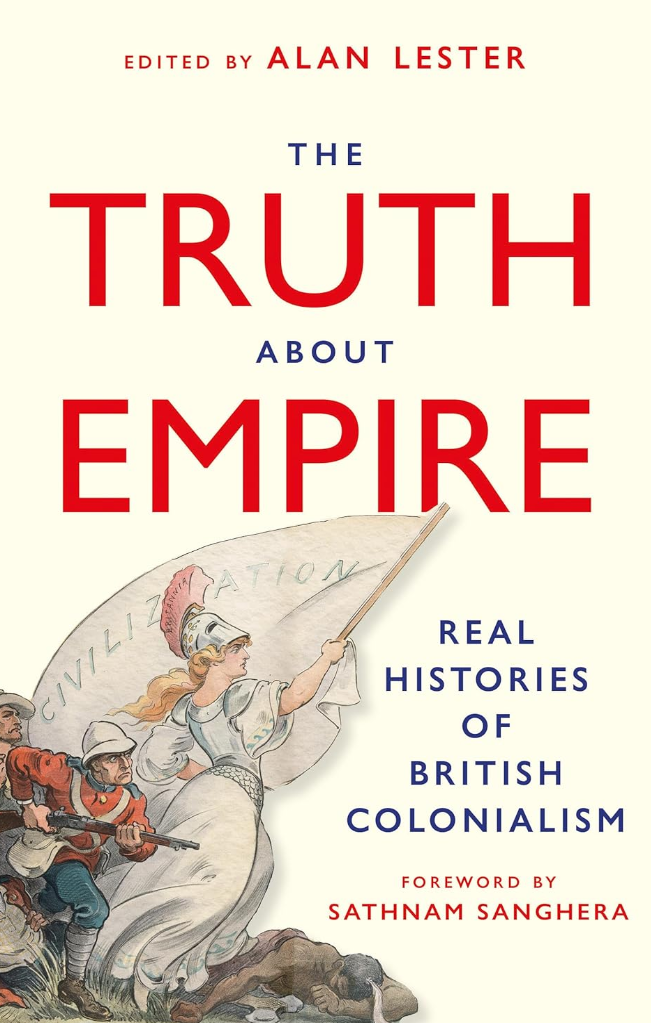
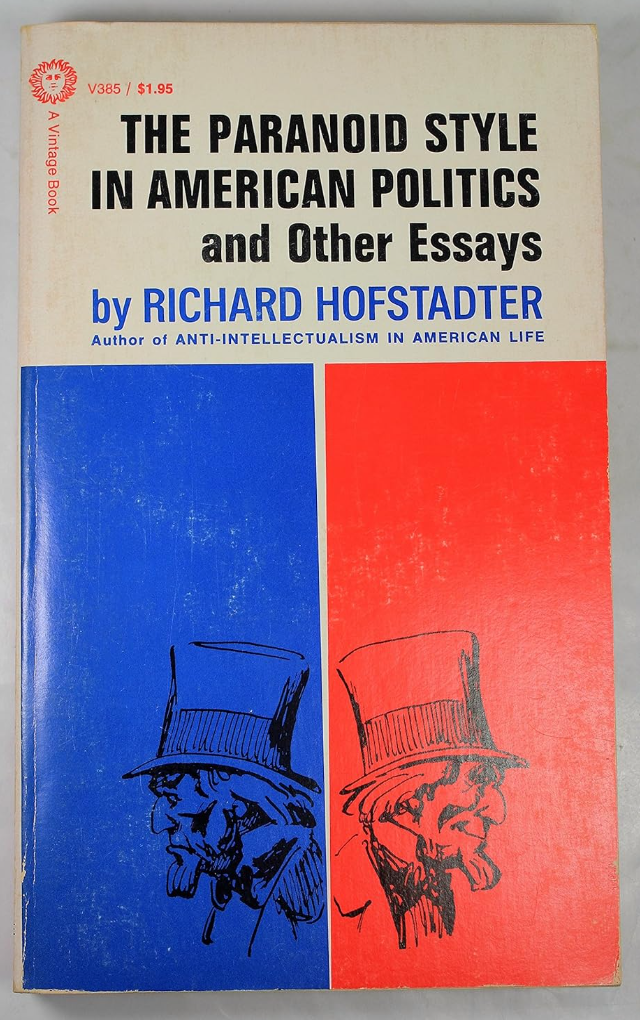
Tell that to the dozens of scholars from around the world who contributed to the five-volume History of the British Empire published by Oxford University Press at the turn of the century, to be followed by a series of companion volumes looking in detail at specific regions and topics. Which should readers rely on? A huge work of scholarship designed to explain the history without adopting in advance an ideological position, or one – and I quote from just the book’s jacket – dedicated to uncovering ‘the dark realities of Empire…Empire’s horrors…[and] British imperial racism and violence’. The jacket also tells us that those who question this particular view of history are part of ‘a disinformation campaign sharing both tactics and motivations with those around Covid, Brexit and climate change’. Someone is in urgent need of a course of historical reading beginning with the famous essay by the American historian, Richard Hofstadter, entitled the ‘The Paranoid Style’.
Richard Huzzey’s criticisms of History Reclaimed are limited to the subjects he knows best, our essays on slavery, anti-slavery and empire. We deal with many more subjects, of course, and to judge us without taking into account our coverage of museums and galleries, the distortion of art history and anthropology, the ‘restitution’ of artefacts, the presentation of history in the media (for example, our report on the BBC) and the history curriculum itself – is to misunderstand us and the problem we seek to remedy. History Reclaimed was formed by scholars from a wide variety of academic backgrounds and with a great breadth of specific interests who were concerned at the way our subject as a whole was being distorted and then used for ulterior purposes.
Many of us have no expertise or even interest in slavery and empire, but the way that research funds, academic positions, and public discussion have been skewed towards a particular view of these subjects in recent years has presented a false image of historical studies and distorted its academic development. Periods and topics of enormous significance, hitherto at the heart of historical education, are being ignored. I have sat in seminars where historians have asked why no one studies Victorian politics anymore? The answer can be found in the recent treatment of William Gladstone, who is remembered (and condemned) because he was the son of a slave owner and not because he was four times prime minister. American historians lament the limitations of their subject to the study of race and slavery: no one is interested – or given an opportunity to be interested – in the making of the nation, its economic, demographic and technological history. The grants, junior research fellowships, and jobs are going elsewhere, to a small range of fashionable subjects, with a consequent narrowing of the academic mind and of what is being taught and learned in History Departments.
Richard seems to imagine History Reclaimed as a tight cabal of like-minded zealots. But until 2021 (and with the exception of Robert Tombs and David Abulafia, who taught in the Cambridge History Faculty for decades) we hardly knew each other. David is a very wide-ranging medievalist whose interests are in the history of the Mediterranean lands; Robert a historian of modern France who has used his knowledge of continental history in his analysis of British history. Meanwhile, Nigel Biggar, as ever the main target because of his very popular and well-received book Colonialism: A Moral Reckoning (2023) read for a History degree and then became a philosopher and theologian.
As for me, Richard Huzzey seems to have forgotten that while I was supervising his D.Phil, I was also the General Editor of the Oxford Dictionary of National Biography. Indeed, when the ODNB was awarded the Queen’s Anniversary Prize for Higher Education in 2008, Richard was one ten Oxford students who accompanied me to Buckingham Palace to receive the award from the late Queen. Editing thousands of biographical articles on Britons ancient and modern, and striving always to achieve ‘balance’ in the presentation of their lives has led me to History Reclaimed. Colin Matthew, the first Editor of the ODNB and also the most distinguished historian of modern British politics of his generation, enjoined those writing for the Dictionary to be ‘wise, liberal and just’ to which the ODNB remains committed. The reverse – immaturity, intolerance and unfairness – is evident in some recent historical writing, and in the decisions of public authorities who generally act on poor advice, or out of ignorance, and sometimes out of malice.
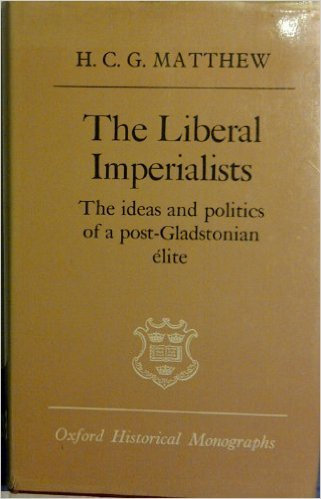
In passing, we should reflect that Colin Matthew would probably have been denied a an academic career today because his doctorate and subsequent monograph were on a deeply unfashionable subject, Liberal imperialism in the period 1895-1914. He wrote about those leading Liberal politicians – ‘the Lib Imps’ – who supported the growth and consolidation of the empire, seeing it as a civilising, progressive and emancipatory force in the world. They included two prime ministers, Rosebery and Asquith, a Foreign Secretary, Sir Edward Grey, and R. B. Haldane, Secretary of State for War and Lord Chancellor. Matthew referred to them in his title as an ‘elite’. Can anyone imagine that subject winning research funding today? Would a historian working on it receive invitations to speak at conferences and seminars? That is the problem in a nutshell.
Huzzey criticises History Reclaimed for publishing articles without footnotes and references, notably pieces already published in the press and media. It’s an academic’s view of an organisation that strives to reach a different and wider audience. Of course, academics do read History Reclaimed and they tell us so; the fuss sometimes kicked up by historians who dislike what we’ve written even suggests that our enemies are reading us. But many historians tell us that to publish on our website or align with us over an issue would entail professional suspicion and shame. Our aims are broader than trying to reclaim lost academic souls for the light (the sort of language spoken by the emancipationists Richard Huzzey writes about) and our audience is much wider: general readers; people who studied History at university in better times; visitors to museums and galleries (and many who work in them – they also contact us); ordinary citizens who want our advice when a street name changes or a cherished monument admired for generations is suddenly under threat. This coalition is more respectful of historical knowledge, more critical of its distortion, more in need of support and a voice, and probably more influential in the long run than academics who undermine their status and respect by undermining the intellectual basis of their subject.
And this leads to another theme that Richard has failed to appreciate in his critique of History Reclaimed. Treating History as a playground in which self-confessed radicals find an outlet for their political instincts risks compounding its decline as a subject worth studying at university. At a time when threats to the Humanities are the subject of daily public discussion, there is no quicker way to weaken the reputation and prestige of History than to turn it into another branch of anti-colonial studies. That happened to English in our universities a generation ago and has led to a rapid decline in its cultural importance and to the value (in non-monetary terms) of an English degree. We don’t want History to go the same way.
It is dispiriting that Richard tips over into blaming History Reclaimed for perpetuating the culture wars. We are, of course, almost wholly reactive: this article is an example of that. We don’t set the trends or make the changes: by definition we react to them. That is the meaning of ‘reclaimed’, isn’t it? Someone has got hold of history and we’re trying to reclaim it from them so that it may be understood accurately, fairly, and proportionately. For the record, it wasn’t History Reclaimed that decided, on misunderstanding an essay written by Thomas Henry Huxley in 1865, that his name should be removed from the campus of Imperial College: that was the work of the then Provost of Imperial and 19 science professors. Our job was simply to point out that if Imperial cancelled Huxley they would have to cancel his friend and mentor Charles Darwin who was also what they ignorantly called ‘a racist’. They backed down. It wasn’t History Reclaimed that consulted on whether to remove statues of great naval figures on the face of Deptford Town Hall. It was Goldsmith’s College, London. We pointed out, as we do, that they’d got their history wrong and were dishonouring a civic building they’d recently purchased from the borough. And it wasn’t History Reclaimed that dreamed up the idea of removing a magnificent marble monument, one of the finest funerary pieces from the early modern period, from the chapel of Jesus College, Cambridge. It was the Master and Fellows – and we stopped them in a consistory (church) court over three days of debate. Does Richard think that when cultural or architectural change is being pursued on erroneous grounds everyone who opposes it should remain silent because otherwise they’re stoking a culture war?
At the end of his essay, Richard convicts Robert Tombs and Nigel Biggar of ‘patriotism’. It is a term, if not of abuse, then employed to suggest that they, too, are slaves to an undeclared ideology. But the evidence adduced is rather thin and does not stack up. Robert is chastised because he referred to the threat to ‘national solidarity’ in versions of history that despise ‘our common past’. Nigel is blamed because of his concern that historical distortion will undermine ‘the self-perception and self-confidence of the British today.’ These comments hardly amount to an assertion of love of country; rather, both men are self-evidently warning that if we are force-fed confected and moralised accounts of the past we are likely to undermine social and cultural cohesion in Britain with all the adverse effects that follow. Note that Robert’s reference to a ‘common past’ has scope in it for the experience of the slave and slaveholder, the landholder and the labourer, the industrialist and the machinist. There is no desire to exclude individuals or groups. But neither is there a desire to use history as a form of cultural subversion.
In any case, what would be amiss if they are patriots? Richard himself writes about many abolitionists and emancipationists who were also patriotic, proud that Britain had taken the lead over all the other developed nations of the world in extirpating slavery and the hated trade. Even those more critical of Britain’s role in the history of slavery wanted human bondage to end so that the nation might be purged of its sins and return to righteousness: that, also, was a kind of patriotism and Richard gives some examples of it in his essay (p.195). No one on today’s ‘left’ cares any more for the great socialist thinkers and reformers in the history of the British labour movement, but the greatest of them all, R. H. Tawney, was a profoundly patriotic Englishman who volunteered in the First World War and who deeply admired Winston Churchill in the Second. He referred to him as ‘Winston’ in his letters, and asked his brother-in-law, another great reformer, William Beveridge, to buy him Churchill’s biography of Marlborough – perhaps Churchill’s greatest historical work – for his birthday. No one knew and cared more about the social and moral failings of the English and of the British state than Tawney, but he was a patriot nonetheless. What is wrong with that?
Reaching for a rather too familiar argument, Richard contends that History Reclaimed is as ideological an enterprise as any that we criticise. Our contention that History should be written objectively and from the evidence is just another ideology, like any other, and those who claim neutrality are just selling another form of political snake oil. That is a counsel of despair, of course: all we can hope for, in this view, are endlessly contending versions of the past. That’s sure to attract readers and students to the study of History, isn’t it? But it is also to confuse a professional and academic argument for a political one. We ask that everyone, public institutions included, work from the sources rather than imposing the nostrums of today on the history they’re studying or conserving. Too many scholars and too many organisations just follow the fashion, doing what they think they’re expected to do and say, rather than examining the history as it was and thereby demonstrating to readers and audiences some of the things that Richard shows so well in his own work: the complexity of the past, the requirement to understand it in its own terms, and its difference (and not its moral inferiority) from the present.
When Richard came to my room for tutorials on the history of American slavery, the Civil War and Reconstruction, he had prepared each week by reading hundreds of pages of documents from the era. Much of our time was spent discussing those documents, focusing on small but revealing extracts from the texts (‘gobbets’, a rather infelicitous term) on which he and his fellow undergraduates were subsequently examined. The discussions and debates in our tutorials and seminars came from the sources, and the sources covered North and South, slaveholders and abolitionists, free blacks and slaves. In Richard’s case, my Oxford colleagues and I seem to have succeeded admirably in training a historian alive to all the historical complexities. That is the purpose of History Reclaimed: to remind people to work up from the sources rather than down from some fashionable – and likely divisive – ideology. Do that and there can be no argument or dispute and no ‘culture war’. But when authors start yoking the study of ‘the truth about empire’ to ‘Covid, Brexit and climate change’ you know something has gone wrong. Richard, that’s not what we taught you.
(Readers may be pleased to learn that Richard and I are in close contact and will be meeting to discuss these questions further when I go to the Durham Union Society in November to debate the ‘decolonisation of the curriculum’. No one should be in any doubt of my deep respect for Richard and our continuing friendship)


