


One of the least impressive but most controversial publications of recent years is the National Trust’s ‘Interim Report on the Connections between Colonialism and Properties now in the Care of the National Trust, Including Links with Historic Slavery’.[i] Published in 2020 and the work of many hands, it’s a gazette of properties of the National Trust with links to slavery, colonialism (which is never properly defined in the document), or both. Some of the properties listed were built or extended with proceeds derived from slavery and the empire. Some of their builders or their inhabitants were linked to these aspects of our history. Notoriously, Chartwell was included in the list because Winston Churchill had once been Colonial Secretary, had helped draft the Anglo-Irish Treaty of 1921, and had opposed granting dominion status to India. In other words, a National Trust property was blacklisted because one of its occupants had been a senior politician engaged in the affairs of his era, a party to the collective decisions of governments of which he was a member, and who had views of his own.
Quite what readers were meant to make of this list remains unclear. Boycott these National Trust properties? Or go along and loudly denounce the architects, builders, garden designers, owners and occupants for complicity in historic crimes? If the authors’ reply is that there should be full disclosure, then indeed, they should make it really full by telling us about all the other sources of wealth on which these properties were based, and all the other groups, notably the agricultural labourers, who were exploited and paid a pittance so that the occupants might live in luxury. Landed wealth was just that – wealth derived from rents and farming, and these always dwarfed the proceeds of slavery in the accounts of the gentry and aristocracy.
As a former General Editor of the Oxford Dictionary of National Biography it pains me that much of the information used in the Report was taken from there, but never the whole story. In the National Trust’s report, biographies are only presented in relation to slavery and empire: of the good deeds of these people, of their contributions to politics, public life and culture, and of their full service to the nation, we are told nothing.
This is the worst way of writing History, ransacking it for damning ammunition in support of a cause driven by the nostrums of today, rather than presenting people from the past, their careers, their families, their houses and their estates, in full historical context.
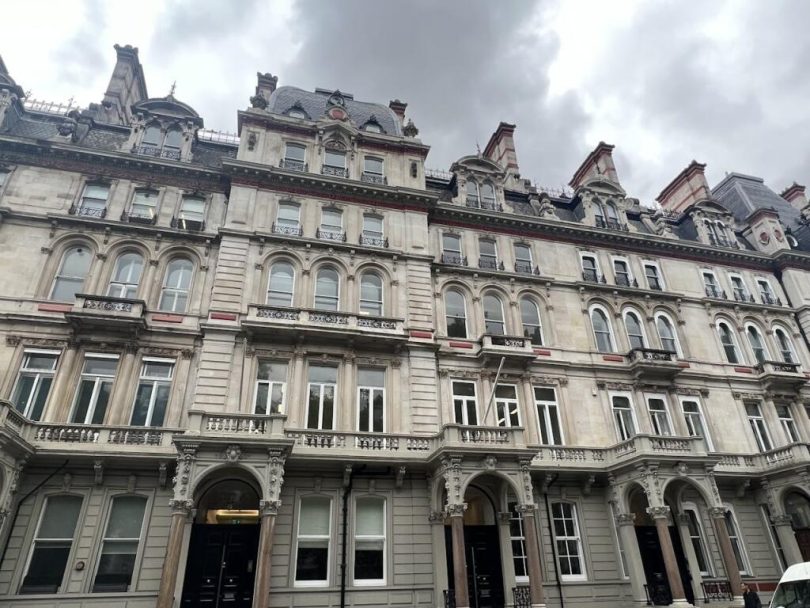
But one eagle-eyed reader of History Reclaimed, Mr Neil Everitt, noticed something and to his great credit, began a correspondence with the National Trust. He noticed that the Trust’s former regional London office at 20 Grosvenor Gardens had once been the headquarters of the Eugenics Society of Great Britain. Yes, indeed.[ii]
The British eugenics movement was a very moderate affair when compared with those in Germany, Sweden and the United States before the Second World War. British devotees steered clear from enforced (as opposed to voluntary) sterilisation and euthanasia, and never succeeded in winning parliamentary support for their cause. They included such liberal and socialist luminaries as John Maynard Keynes, William Beveridge, Sidney and Beatrice Webb, George Bernard Shaw, and the great statisticians Francis Galton, Karl Pearson and R. A. Fisher. But in the contemporary hierarchy of past sins, eugenics is almost as bad as slavery, and all three of these statisticians, though their contributions to science, bureaucracy and commercial life are incalculable, have been cancelled in recent years.[iii]
The grand town house near Victoria Station is apparently leased by the Trust. It is now undergoing extensive refurbishment and we can only speculate about its future use. In 2016 I went there for the launch of a book essays on the life and work of Octavia Hill, one of the Trust’s three prime founders, to which I’d contributed.[iv] I did not see a blue plaque or notice of any kind confessing to the sin of inhabiting a building once used by enthusiasts for eugenics. The National Trust has been proud to take aim at all the properties and people mired in empire, and yet was blissfully unaware that it resided in London in rooms where inter-war eugenicists plotted the sterilisation of ‘mental defectives’ (as the phrase then was) and those with other congenital conditions.
Neil Everitt wrote to the National Trust about this in 2020. Their replies suggested that they’d flag it in the near future. Two years passed, he heard nothing; nor could he find anything about the matter on the NT website. He wrote to them again for an update. Once again they gave the impression that they’d address the issue at some stage but nothing seems to have come of it. The Head Curator of the National Trust, one of the authors of the report on slavery and colonialism, wrote to him to aver that ‘it is certainly an area that I would like to be able to explore in greater depth going forward’ (9/3/22). But enter the word ‘eugenics’ in the NT search engine and it generates ‘no search results’.
Lest the reader get the wrong idea, let me reassure you that not for one moment do I think an apology, plaque, notice, further report, or rending of garments is required from the National Trust just because its key personnel worked in a building once used by eugenicists. The last thing I want is an appendix to the report on the Trust’s hitherto unknown connections to the eugenics movement. That’s because the whole exercise in shaming the dead and the houses they lived in is without moral or historical integrity. Anyway, from Mr Everitt’s correspondence with the Trust, it is clear that no apology was thought to be required and none has been forthcoming. But if that’s the case, why is the Trust publicly shaming dead people and old buildings that were once connected with things in the past that are best left to good historians, those who will write history contextually and therefore properly?
As has become clear in regard to so many aspects of contemporary culture and in so many of our institutions, if you embark on shaming and virtue-signalling you had better be absolutely sure that your own conduct and history are squeaky-clean. The National Trust was established to preserve our heritage: it should stick to that mission and cease pointing the finger. To adopt a wise saw: people who lease fine houses in London as a grand setting for their very important work shouldn’t throw stones.
Lawrence Goldman applied to be a candidate for election to the Council of the National Trust in March 2024. History Reclaimed was contacted by Mr Everitt with details of the house in Grosvenor Gardens two months later in May. One of his aims in standing for election, in which he was unsuccessful, was to put a stop to National Trust investigations of this type.
[i] https://www.nationaltrust.org.uk/who-we-are/research/addressing-our-histories-of-colonialism-and-historic-slavery
[ii] See List of Fellows and Members of the Eugenics Society (1930). British Library, x.s.10/10952
[iii] For example, in 2020, rooms and buildings in University College, London named after Galton and Pearson were rededicated, and Caius College, Cambridge removed its window honouring R. A. Fisher. See our article on Fisher by the geneticist and fellow of Caius, A. W. F. Edwards: https://historyreclaimed.co.uk/r-a-fishers-comment-on-otmar-von-verschuer-in-1948-an-explanation/
[iv] Lawrence Goldman, ‘Octavia Hill, Beatrice Webb and the Royal Commission on the Poor Laws, 1905-09: a mid-Victorian in an Edwardian World’ in E. Baigent and B. Cowell (eds.), Nobler Imaginings and Mightier Struggles. Octavia Hill, Social Activism and the Remaking of British Society (London, 2016), 255-74.


