


Part 1:
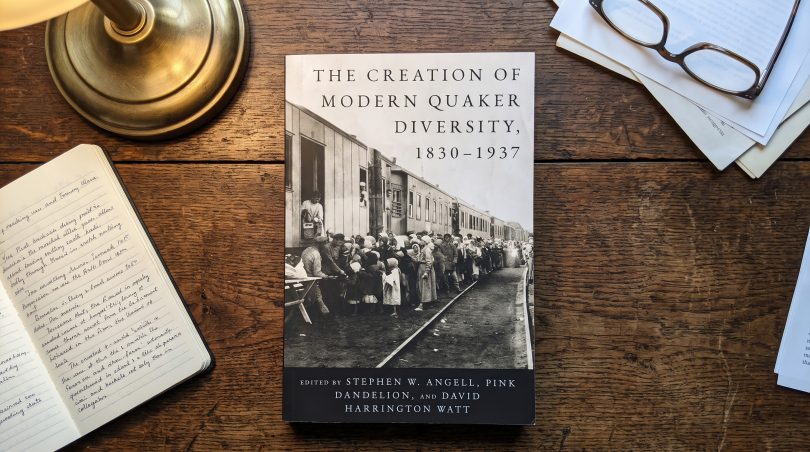
In an earlier article for History Reclaimed about postcolonialism, I examined the book The Creation of Modern Quaker Diversity, 1830-1937, criticising its moralisation of history and hyper-critical comments on Quaker abolitionists.https://historyreclaimed.co.uk/quakers-and-the-post-colonialist-fallacy/ In this second essay I will focus on the book’s discussion of ‘Quakers and Empire’, which misrepresents both the history of racism and slavery in the British Empire.
According to the authors,
If empire was the larger frame for action on the global stage, racism and the practice of slavery were major pillars, connecting the conditions of elites and colonial riches with those whose lives and bodies were subjected to the most extensive forms of domination and marginalisation.[1]
This statement, which might apply to the British Empire of the eighteenth century, is inapplicable, however, to the period after 1830, the subject of their book. By 1830 the Atlantic slave trade had been outlawed by the British for over twenty years. In 1833 the British abolished slavery in the Empire and began a campaign against slavery globally. As for colonial riches, it was not only the metropolitan elites who benefited but also the middle and working classes in the metropolis, together with collaborators amongst the colonised. As for racism being a pillar of colonialism, from the early 1800s the Empire was committed to abolishing the slave trade in the name of a Christian conviction of the basic equality of all human beings.
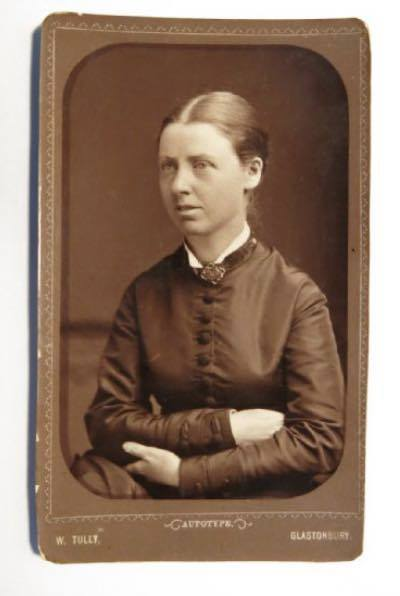
Catherine Impey (1847-1923)
This Christian conviction was shared by Quakers such as Catherine Impey and John Hobbis Harris. Impey was a metropolitan opinion-maker who founded a ground-breaking news-sheet, ‘Anti-Caste’ in 1888, the first declared anti-racist newspaper in Britain, and worked to create a global network of anti-racist progressives. Harris began his career in the Edwardian era as the Secretary of the Anti-Slavery and Aborigines Protection Society and was knighted in 1933 for promoting the cause of anti-slavery at the League of Nations. Without mentioning his own role he explained,
The recent decision of the League of Nations to adopt the British proposals for committing the task of the abolition of slavery and emancipation of the slaves to an international expert commission under the Council of the League of Nations was a signal triumph for the British Foreign Office.[2]
Opposing apartheid Harris remarked,
It has always been a fundamental maxim of British overseas policy that the Empire must be broadly based regardless of race or creed, and this for the obvious reason that once colour or race becomes an acute Empire controversy it would require statecraft of divine calibre to avert Empire disaster.[3]
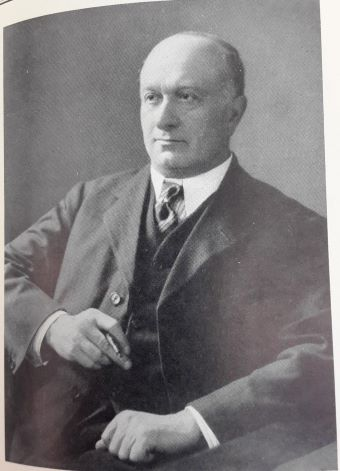
John Hobbis Harris (1874-1940), Anti-Slavery Campaigner
The treatment of Quakers and the Empire replaces nuance and detail with pejorative truisms.
Across dimensions of piety, commerce, race, gender, slavery and national security, the story of Quaker religion and its entanglement with empire emerges as a foundational one supplying outspoken humanitarian articulations while often actively bolstering or quietly complying with burgeoning imperial structures.[4]
Here again we see the fallacy of postcolonialism, referred to in my earlier article, which is its one-dimensional treatment of empire as an all-defining, all-determining real-world structure rather than a concept helping the scholar to set in context the experiences, thoughts and actions of historical players. The postcolonialists’ claim to omniscience that their fallacy entails is apparent in the remark that ‘Friends lived their lives within the context of Western imperialism whether or not they fully realised it.’[5] In other words, no one can escape the stain of exploitation and colonialism, whether conscious of it or otherwise, whether directly involved in imperial commerce and administration or living a life entirely unrelated to it.
When we read in the chapter ‘Quakers and the Social Order’, that ‘Allegiance to state and Crown did not undermine the work for social good that Quakers were doing between 1890 and 1913’,[6] we can sense immediately the ideological distortions that characterise the book. There was nothing inconsistent about the Quakers working for the social good and at the same time supporting the ‘state and Crown’, since the period 1890-1913 was one of progressive reforms by both Conservative and Liberal governments, in which Quakers took a lively interest.
This was the era in which the welfare state was founded in a succession of social reforms between 1906 and 1914. Even earlier, the Conservative Education Act of 1902, the so-called Balfour Act, was supported by the Quaker social reformer and parliamentarian T. Edmund Harvey, who drafted changes to meet the sectarian objection of those like the scriptural scholar Rendel Harris, who protested that the Act meant local taxes would go towards Church of England schools.[7] Harvey was a close friend and colleague of the socialist reformer, Christian and historian, R. H. Tawney, one the founders of the welfare state.
It is deeply unfortunate that postcolonial scholars are often in error and apply shallow moralisms to complex historical situations. In so doing, the Quakers’ record on anti-slavery, racial equality and social reform has been fundamentally distorted.
————————————————
1Johnson, S. A., and Angell, S. W., ‘Quakers and Empire’, in Angell, S. W., Dandelion, P., Watt, D. H., (eds), The Creation of Modern Quaker Diversity, 1830-1937, Penn State University Press, 2023, p. 36
2Harris, J. H., Century of Emancipation, London: J.M. Dent, 1933, chapter xiv.
3Harris, J. H., ‘The Empire’s racial peril’, National Review, July 1939.
4 Johnson, S. A., and Angell, S. W., ‘Quakers and Empire’, p. 36.
5 Watt, D. H., ‘Afterword: Rufus Jones and Quaker History’, in The Creation of Modern Quaker Diversity, 1830-1937, p. 278.
6 Sleapwood, N. and Hamm, T. D., ‘Quakers and the Social Order’, in The Creation of Modern Quaker Diversity, 1830-1937, p. 179
7 Frankel, M. S., T. Edmund Harvey: Liberal Ascendant, (Brill 2025)


